July 18, 2026
How Typeface's Agentic Platform Works for Enterprise Marketing Teams

Ashwini Pai
Senior Copywriter

AI summary
Orchestrate agents for multi-channel campaigns:
- •Ground content in brand rules; use automated checks for faster reviews
- •Create in a shared canvas for team-agent collaboration
- •Brief Arc Agents to generate emails, ads, blogs, landing pages, social posts, and reels
- •Build no-code workflows, connecting your existing AI assistants using Typeface's MCP
- •ISO/SOC 2 certified, granular access, ethical AI use
Most enterprise marketing teams are running a content operation that wasn't built for the speed they need. Campaigns that should take days run into weeks. Brand consistency breaks down across regions, channels, and vendors. And when the market moves, teams are too buried in production to move with it.
Typeface is an agentic AI marketing platform built for those living this reality.
With Typeface, how you create changes. AI agents take on the volume and complexity that consumes your team, working within your brand guidelines at every step.
Here's what your team can do with Typeface.
TL;DR
Orchestrate AI agents to generate multi-channel campaigns from a single brief
Keep content on-brand across every market, format, and channel
Bring campaign creation, review, and approval into one place
Build and deploy custom agents without writing code
Run it all within built-in compliance and governance controls
What makes Typeface agentic?
Typeface uses agentic orchestration, which coordinates AI agents, tools, and systems to run multi-channel campaigns. Brand guardrails and human reviews maintain quality control.
How does it work?
An orchestration system can have adaptive agents that take your goal and dynamically decide the steps and tools to use. Or it can have workflows with pre-determined steps for tasks that run the same way each time.
Enterprise marketing orchestration generally combines the two, using agents' reasoning capabilities while ensuring task boundaries.
Typeface sits in this hybrid zone. Arc Agents — conversational channel specialists — generate web, email, ad, and video campaigns out of the box. Workflow agents are the no-code agents you build for your specific marketing requirements.
Where does agentic intelligence show up?
Agentic intelligence shows up in how agents adapt to context and automate decisions. For example, one agent selects an email layout matching your request and adapts messaging to each segment’s traits and past interactions. Another scrapes competitor sites every day for new feature launches, maps out what each feature does, and drafts a competitive battlecard for marketing and sales teams.
What stays in control?
The deterministic layer defines the guardrails agents operate within, including brand voice, messaging, language, positioning, and approved workflow paths. These rules ensure agents stay aligned with your brand while executing tasks autonomously.
Without clear guidelines, agents can create generic content and send mixed signals to your customers. And allowing agents too much autonomy in execution can introduce unnecessary changes to the customer journey.
Let’s look at the specifics.
What agentic orchestration looks like for your team
Enterprise teams understandably worry about AI diluting their brand or changing workflows. Typeface addresses these concerns to make agentic orchestration safe and collaborative.
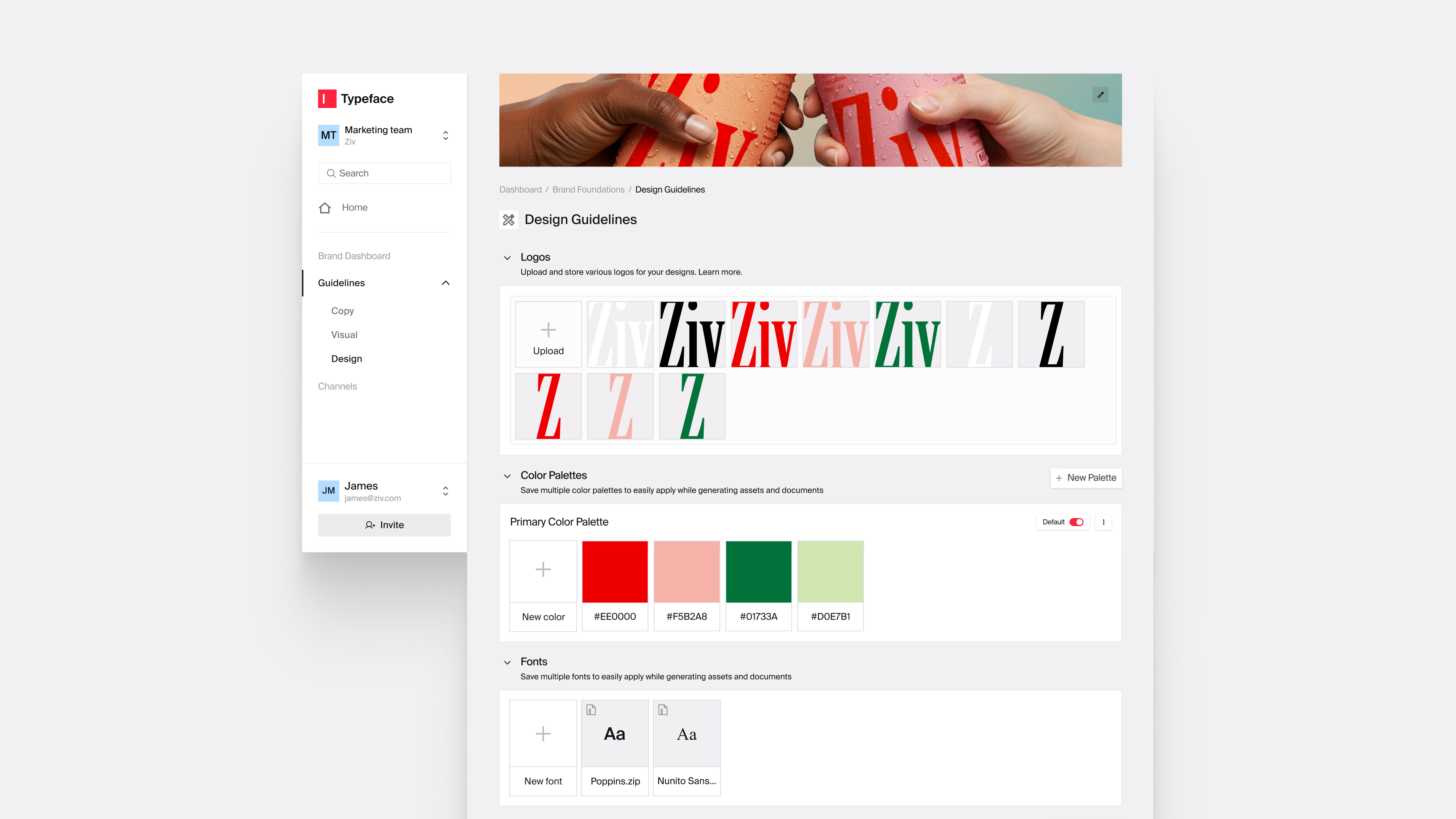
Content follows your brand standards
Typeface's approach to brand governance is Arc Graph, a knowledge graph of brand knowledge from your CRM, DAM, and knowledge bases, that informs every piece of content. It's a living system that updates continuously with your updated guidelines and real-time brand signals.
The other side of brand governance is automated evaluation. Typeface brings text and visual evaluations into content creation workflows, cutting hours of manual review work.
Brand Agent checks copy against voice, tone (how you sound on LinkedIn vs Instagram), language (capitalization, date formats, approved terms, punctuation rules, etc.), and compliance rules (industry-specific legal safeguards). Visual Brand Evaluator checks images and assets against your visual standards.
Real-world impact
Real-world impact
A global beverage company uses Brand Agent to help regional teams and agency partners create on-brand content without relying on reviews from a central brand team. Campaigns launch faster, and brand voice and visuals stay consistent across markets.
Get started:
Connect third-party applications with Typeface and select from flexible access options for individuals, teams, and your organization. Typeface integrates with AEM, Figma, Braze, Salesforce Marketing Cloud, SharePoint, Google Ads, social media sites, and more.
Upload brand guidelines through your DAM, PDFs, or channel-specific documentation. Typeface automatically extracts and organizes the rules inside Arc Graph.
Create Brand Kits that apply your brand voice, channel-specific tones, visual styles, and messaging rules during content generation. You can set up kits at the organization level and for each of your sub-brands.
Campaigns and teams come together in one place
By the time a marketing team wraps a campaign, they've bounced across half a dozen tools and lost hours to 'can you send me the latest?' Agentic marketing unifies tools and teams in one place to make creating with AI smooth and visible. In Typeface, Arc Spaces is that shared workspace where teams and agents orchestrate campaigns. Arc Spaces is a visual canvas where AI agents and teams collaborate on campaigns.
It consists of a conversational interface where you direct channel agents and a collaborative canvas where creative and content teams create campaigns and move them forward. A few things stand out about this experience:
Your team sees exactly how a finished email or ad will look, including how the same campaign looks across email, ads, web, and social, in one place. No more waiting on engineering for HTML previews.
Reviews happen right in the canvas. Ask the agent to regenerate an image, use the inline editor for quick copy fixes, or swap text, images, and video using semantic search.
Compare A/B versions or regional adaptations side by side, without toggling between files.
When you're ready, update status, send for approval, and publish without leaving Spaces.
Arc Agents create multichannel campaigns
Typeface’s channel agents help teams expand campaigns without familiar constraints. They use your asset library and your brand and audience contexts to create new assets across the campaign lifecycle. There’s a lot you can envision with this agentic team, including:
Broader personalization
Tailoring assets to large audiences is one of the first intensive tasks that agent teams can get started on. You can easily create personalized email, ad, and video experiences that resonate with every segment.
Consistent ad testing
Creative variations in minutes. By making it faster to refine campaign elements, agents can encourage more frequent testing and improve results against your most important KPIs.
Improved content ROI
Getting the most out of your best assets still takes work. With Arc Aagents, turning them into different formats at different stages of the buyer journey remains a ritual, only now with hours and team capacity to spare.
Localization at scale
Arc Agents can translate copy, generate localized images, and keep brand voice consistent across dozens of languages and markets. But campaigns stay authentic only when workflows preserve human contextual judgment and close the loop with transparent feedback. With Typeface, all three work together.
Adaptive marketing
Adaptive marketing needs four things: real-time data, quick decision-making, content that keeps pace, and continuous learning. Working with your latest brand intelligence, Arc Agents keep your team ready to move, whether you're jumping on a trend or gearing up for a major event.
Put our channel agents to work:
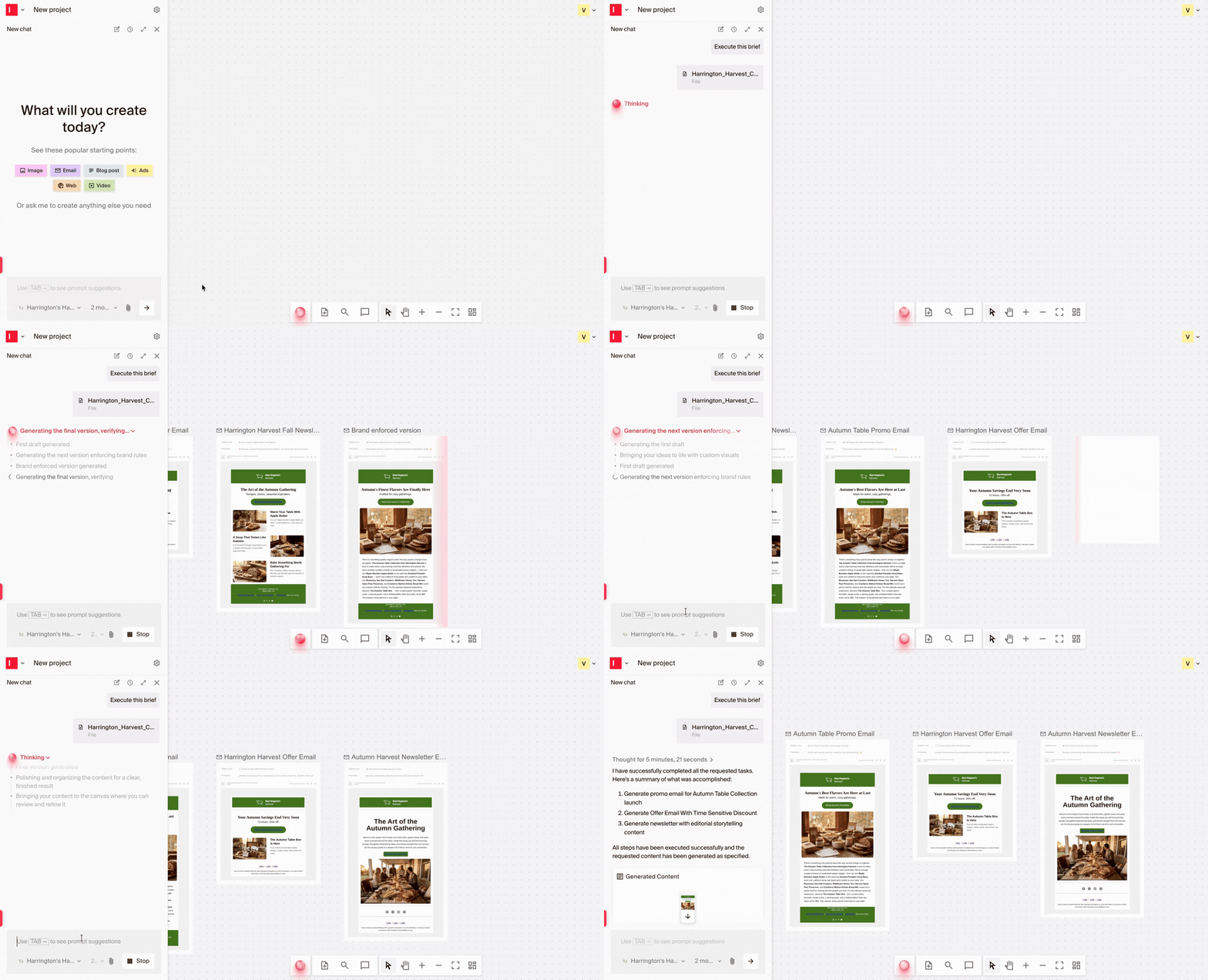
Email Agent: Drop in a campaign brief to generate an email journey
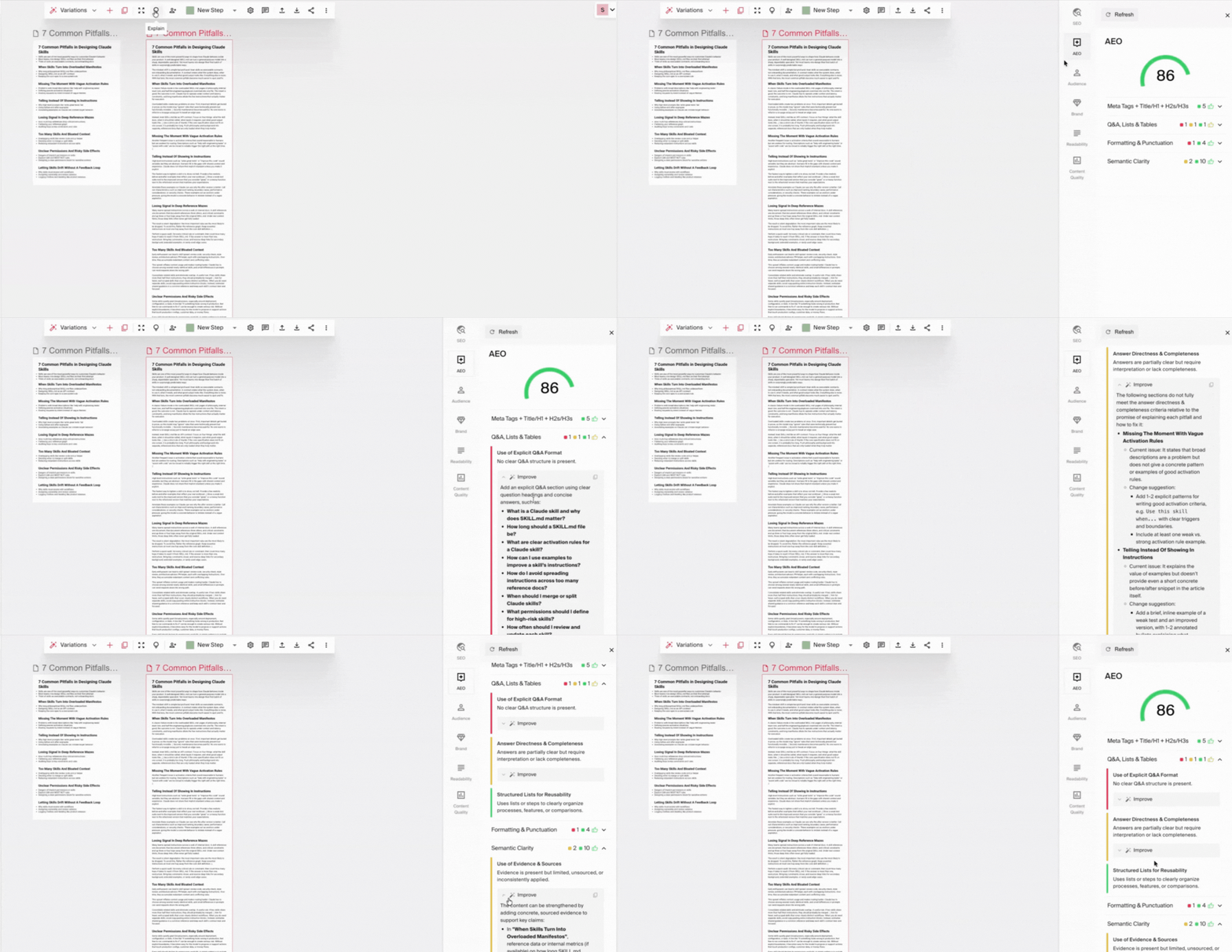
Web Agent: Try out a blog by sharing a topic, word count, tone, keywords, and any grounding documents. Check for AEO and get recommendations with AEO Analyzer.
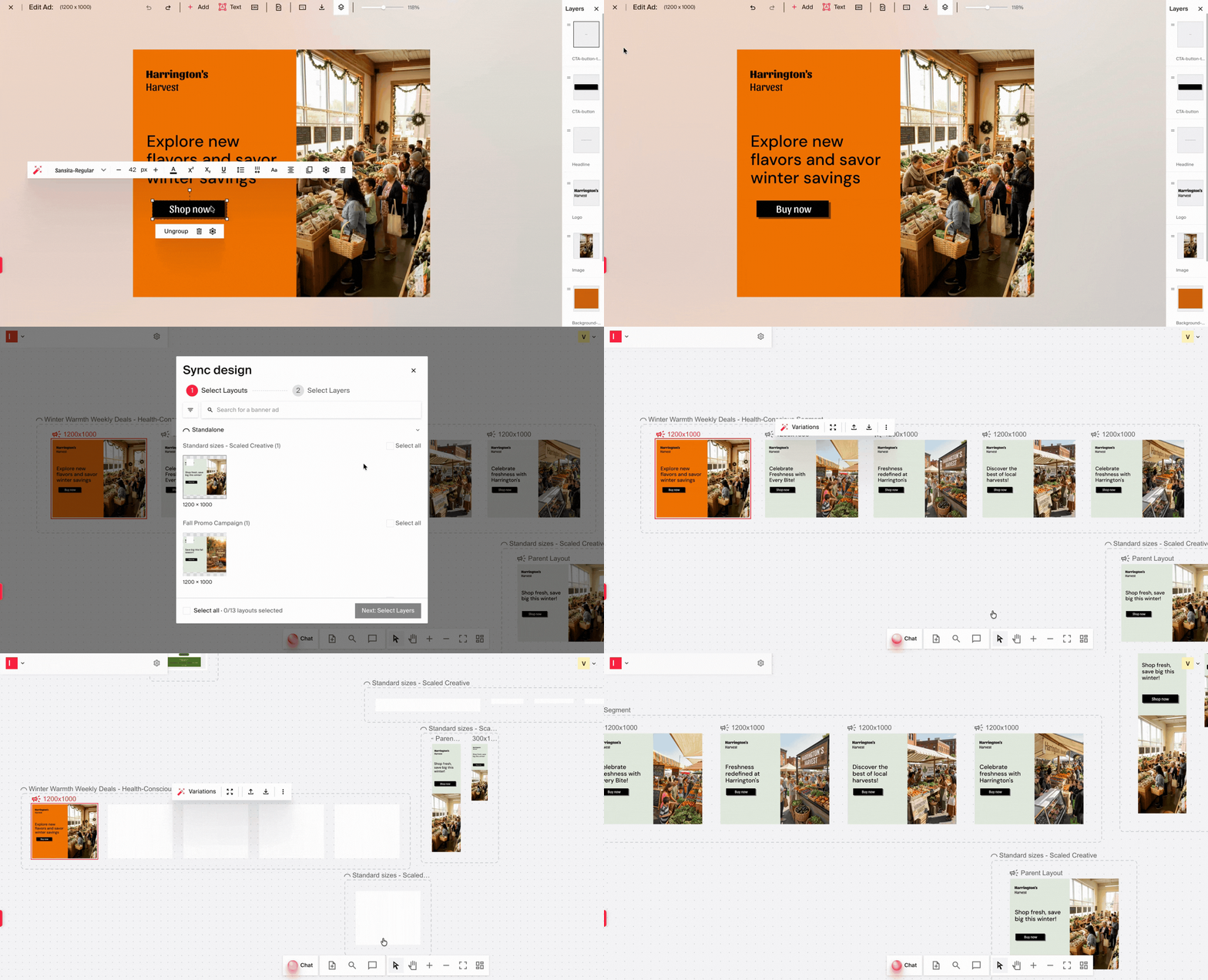
Ad Agent: Already have a parent ad? Create audience-personalized variants from it in minutes.
Video Agent: Turn your existing videos into sizzle reels, with transitions, captions, and text overlays.
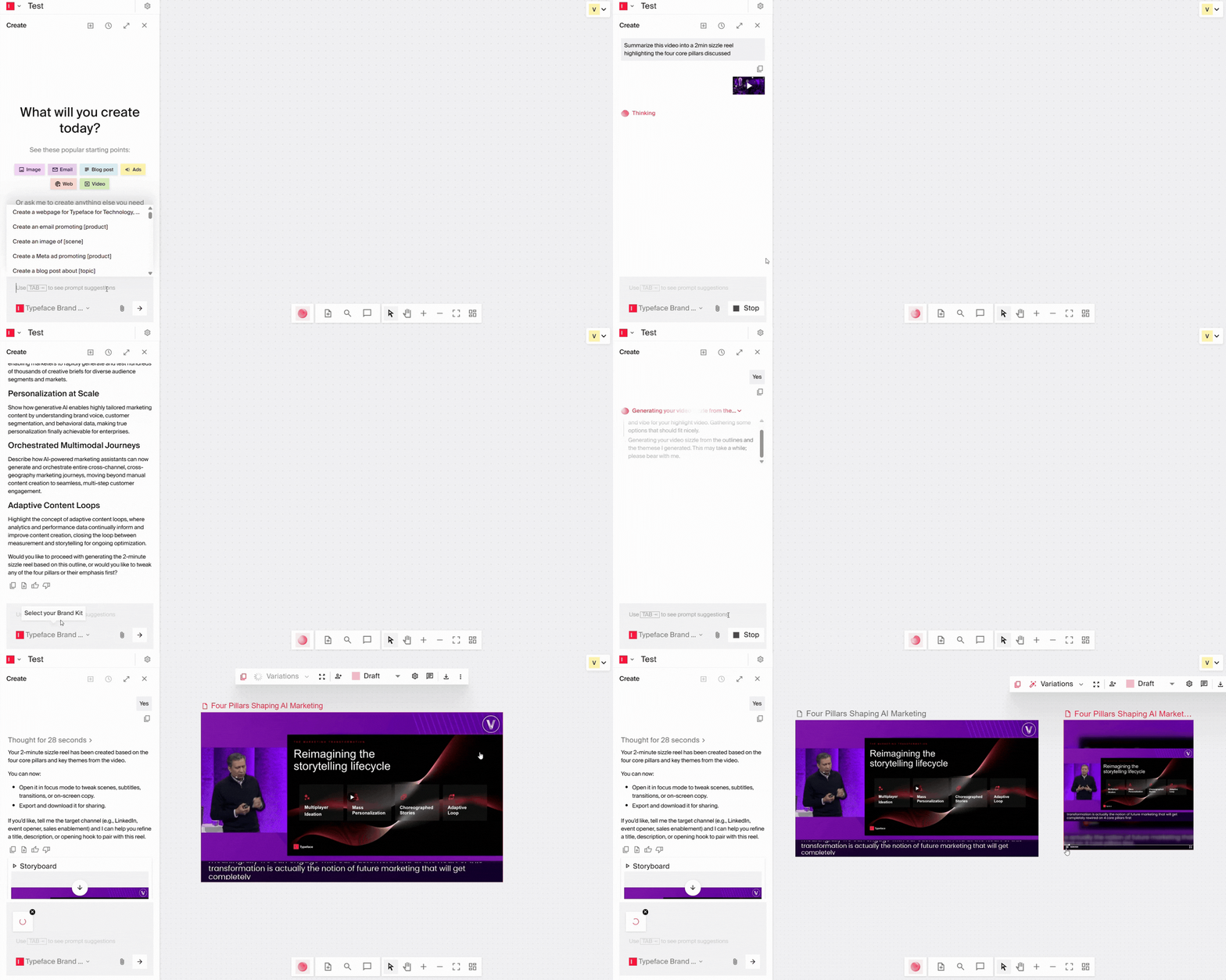
Real-world impact
Real-world impact
The Typeface marketing team used Email Agent to create multiple personalized email variants for the same webinar, each tailored to a different persona. By testing which version performed best, we achieved 4x higher email-to-registration conversion rates for webinar sign-ups.
IT and marketing build what they need, together
Your marketing team may have ideas for workflows and map the logic and tools, but not know how to build and deploy them for everyone. Arc Fabric is where marketing and IT come together to make that happen.
Marketers assemble workflows in Agent Studio without writing a line of code.
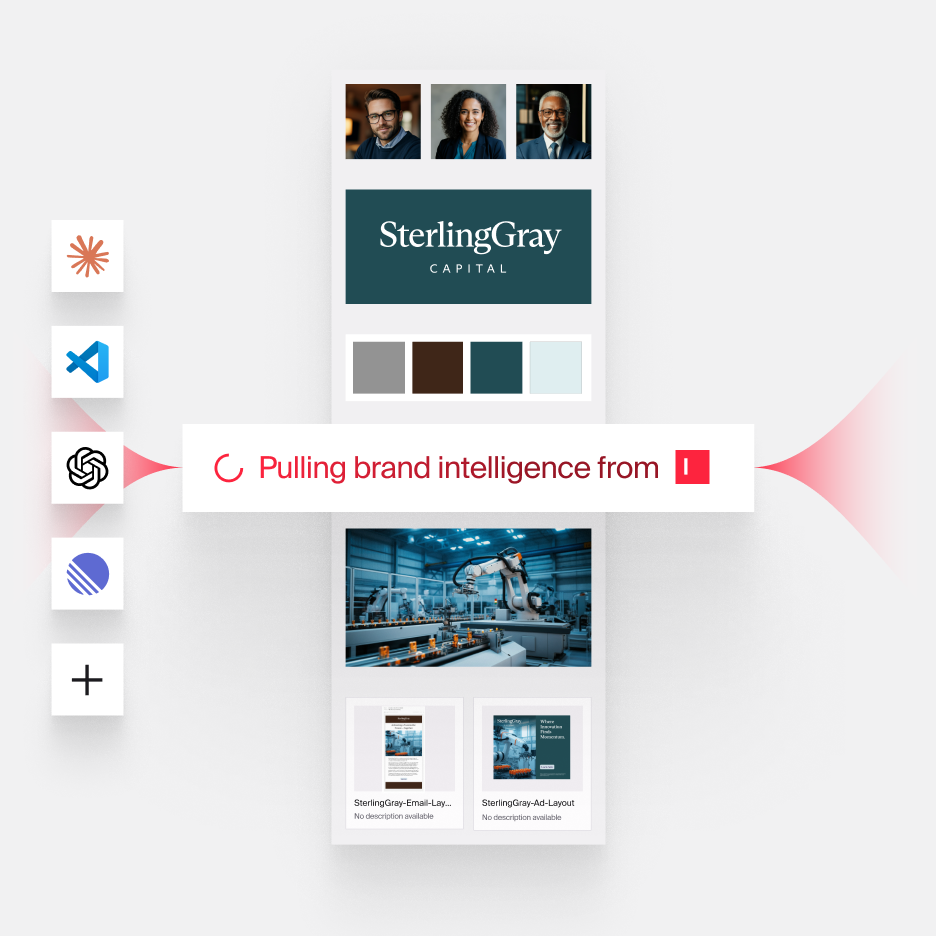
IT deploys them as agents into existing infrastructure using Typeface’s MCP, APIs, webhooks, or custom code, or runs them directly in MCP-compatible clients.
With MCP, tasks can start in any interface and flow to wherever they need to go. You can use your existing workflows or customize new ones spanning LLMs, third-party applications, and internal tools.
Real-world impact
Real-world impact
A Fortune 500 CPG brand was spending significant time manually rewriting PDP copy for every retailer, SKU, and formatting requirement, slowing down launches and overwhelming the performance marketing team. With Arc Fabric, they built a custom agent that adapts master product copy into retailer-compliant versions, applying brand and keyword rules across every SKU.
Coming soon: Arc Loop extends Typeface’s agentic capabilities by feeding campaign performance data back into Arc Graph, helping content improve with every campaign. Agents can generate copy more likely to resonate with a specific micro-segment or recommend ideas with a higher probability of success based on past performance patterns.
Your data and outputs stay protected
An AI marketing platform holds proprietary knowledge and assets that must stay secure and private. As agentic AI expands what teams can create, it also introduces the risks of biased outputs and copyright infringement, which could impact customer trust and brand reputation. Typeface's governance and safety frameworks manage these risks through safeguards that:
Fine-tune AI models to your brand data and assets to produce outputs aligned with your brand.
Use prompt filtering, post-generation output filtering, and monitoring tools to prevent misuse.
Keep custom agents and enterprise data private in a secure, hosted environment.
Follow the C2PA standard to ensure regulatory compliance and preserve consumer trust.
See Typeface in action
Leading enterprise brands use Typeface to build more competitive marketing systems and free up their teams for creative and strategic work. With brand safety guardrails and IT-marketing collaboration baked in, teams can embrace agentic AI with confidence without losing their brand touch or their own creative agency. Try Typeface with a demo or contact sales.
FAQs
Q. What is an agentic marketing platform?
An agentic marketing platform runs campaigns autonomously or semi-autonomously by coordinating AI agents. It grounds content in brand knowledge and adds human checks at critical points. Performance feeds back into creation to improve future campaigns.
Q. What type of platform is Typeface?
Typeface is an enterprise AI marketing orchestration platform that teams use to create personalized, on-brand campaigns. AI agents handle content creation within brand guardrails and existing workflows, connecting to LLMs, third-party tools, and internal systems through APIs and the Typeface MCP.
Q. How is Typeface different from other AI tools?
Most AI tools are built for single tasks. Typeface orchestrates agents across the full campaign workflow, from brief to publish. It has a brand intelligence layer, a unified workspace for marketing, creative, and IT, and built-in governance that meets the compliance requirements of highly regulated industries.
Q. Do you need engineering resources to get started?
You need it during initial setup, particularly when integrating Typeface with internal tools and third-party applications. After that, your marketing team can build workflows in Agent Studio and publish them as agents without writing a line of code. Engineering comes back into the picture when deploying custom agents into existing infrastructure or extending them into external applications.
Q. How much control does your team retain?
As much as you want. Agents work within the guardrails you set, inside your existing workflows. Human reviews can be specified at any point in a workflow. The goal is to get agents to handle the orchestration and execution while your team steps in where it counts. Reviews are a critical part of the process, and nothing goes out without a human sign-off.
Q. Does Typeface work for regulated industries like finance and healthcare?
Typeface gives regulated industries the brand safety and governance controls they need to create confidently with AI. Industry-specific messaging rules embed directly into workflows, and automated content checks catch violations before anything reaches customers. Typeface has globally recognized ISO 42001, SOC 2 Type II, and ISO 27001 certifications, and partnerships with Microsoft, Google, and Salesforce.
Q. What LLMs does Typeface use?
Typeface integrates a variety of large language models for multimodal creation. You access the underlying models and their full capabilities, layered with your brand data and safety guardrails. For more information, talk to an expert.
Related articles

June 15, 2026
AI has sped up a lot of the foundational work in marketing: planning, ideation, content production, SEO and keyword research, among other things. Most teams have that part down by now. What hasn't cha

June 4, 2026
An agentic marketing platform is enterprise software that uses AI agents (autonomous programs that can plan, act, adapt) to run content workflows from start to finish. Unlike a writing assistant that
July 8, 2026
Welcome back to Feature Focus! June brings major upgrades to Ad and Video Agents. Your creative team can produce more ads and videos, on-brand and sized for every channel, while performance marketers