June 15, 2026
What is AI Campaign Orchestration? Why It Matters for Modern Marketing Teams

Akshita Sharma
Senior Content Marketing Associate

AI summary
AI has accelerated content creation, but campaign execution is still slowed down by manual reviews, approvals, localization, and publishing workflows. AI campaign orchestration connects those disconnected steps into a single workflow, so teams can scale campaigns without losing speed, quality, or brand consistency.
In this guide, you'll learn:
- •What AI campaign orchestration actually means
- •The four biggest scaling gaps enterprise marketing teams face
- •How AI campaign orchestration addresses these gaps
- •How Typeface orchestrates campaigns end to end
AI has sped up a lot of the foundational work in marketing: planning, ideation, content production, SEO and keyword research, among other things. Most teams have that part down by now. What hasn't changed is how long campaigns still take to ship.
Our survey of 200+ U.S. marketing leaders found that 69% of campaigns still need 3-4 weeks before they reach market. That’s because reviews, approvals, localization, brand compliance, quality checks, and campaign optimization are all handled manually.
AI feels productive on its own but doesn’t plug into the actual campaign workflow.
AI campaign orchestration is what changes that. This post breaks down what it is, what goes wrong when teams try to scale without it, and how teams can orchestrate campaigns end to end on Typeface.
TL;DR
AI campaign orchestration connects content generation, brand governance, workflows, approvals, activation, and performance insights into one system.
Most scaling problems, including inconsistent quality, off-brand output, slow launches, and disconnected learnings, happen because marketing workflows are fragmented.
Orchestration platforms like Typeface solve this by combining shared brand intelligence, specialized AI agents, automated workflows, and human oversight.
Teams using AI campaign orchestration launch campaigns faster, scale personalization more efficiently, and improve consistency across channels and markets.
What is AI campaign orchestration?
AI campaign orchestration ties your knowledge, workflows, approvals, activation, and performance feedback into a single flow. It focuses on how content is created, reviewed, adapted, and improved over time, so campaigns keep moving without getting stuck between steps.
You can think of it as a system of connected layers that work together to move campaigns from brief to launch.
The starting point is the shared brand intelligence layer, which contains your brand guidelines, audience segments, product details, and channel requirements, encoded in a way that every part of the system can reference. This is what ensures that every output (regardless of channel, market, or team) draws from the same brand context.
On top of that sits the execution layer: specialized AI agents that each handle a specific part of the work, content generation, localization, compliance review, asset formatting, and testing. They run in parallel, pulling from your brand intelligence, and hand off outputs automatically.
Above that is the orchestration layer: the part of the system that coordinates the agents, manages dependencies, sequences the work, and routes decisions to the right people at the right time.
Throughout this, humans stay in the loop: reviewing outputs, setting direction, and making decisions when the system needs sign-offs. All of it happens through a unified interface, so teams can manage campaigns and workflows without switching between platforms.
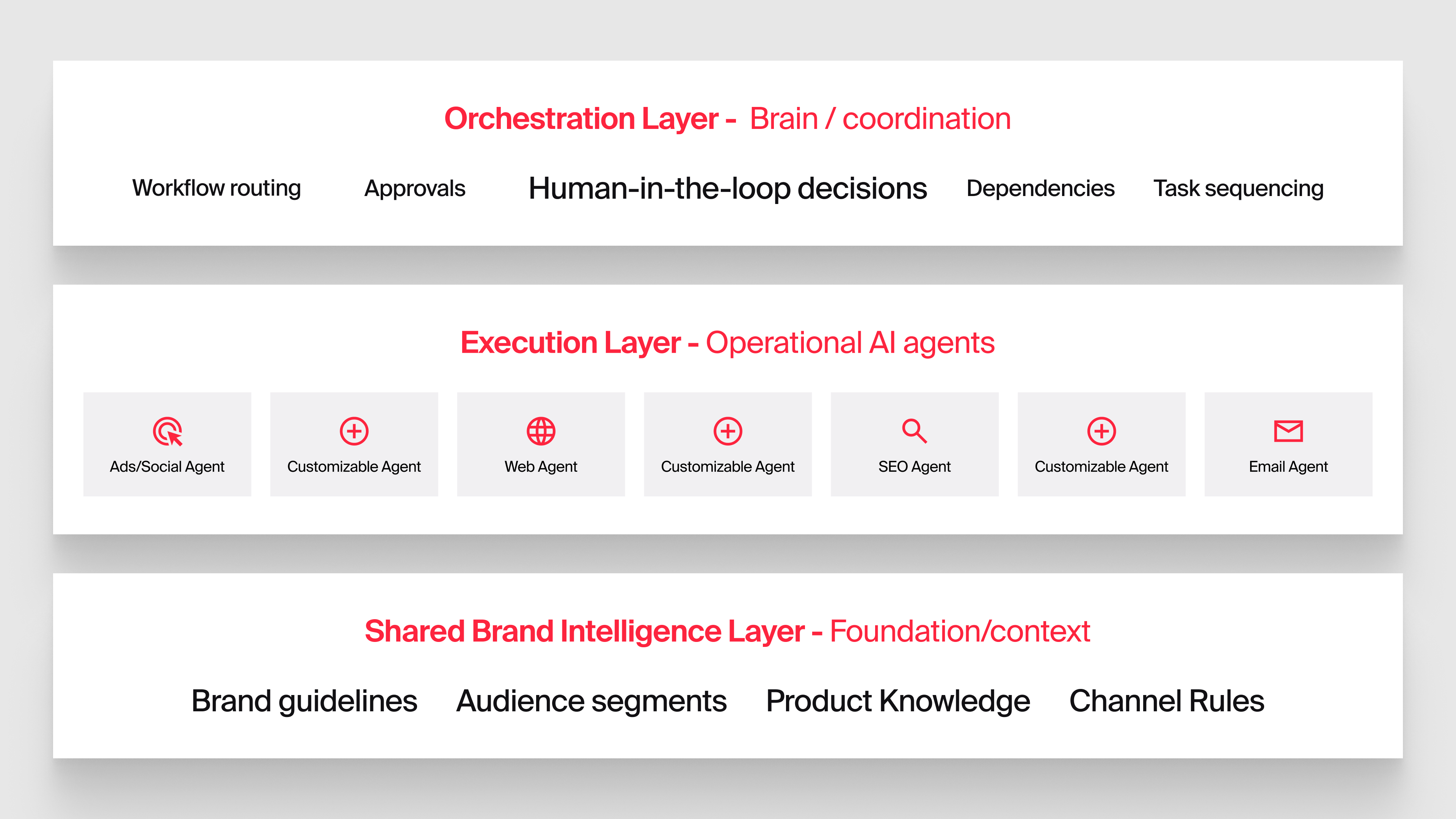
Unlike point solutions that usually solve one kind of problem for one team, an AI campaign orchestration platform like Typeface connects the work across all of them. The system carries the context: what the campaign is trying to do, what your brand requires, and what your audience responded to last time.
💡 If you found this definition useful, check out our guide on AI marketing terms that decodes more marketing terminology for CMOs to stay ahead of the curve in the current landscape.
Why you need AI campaign orchestration
When you try to scale campaigns across channels, teams, approvals, and systems, new challenges surface. Challenges that require coordination.
AI campaign orchestration handles that coordination, connecting your tools, context, and workflows, so campaigns keep moving without requiring manual intervention at every step.
Take a look at the questions below. If these keep coming up for your team, it’s a sign your campaigns have likely outgrown the system running them. And they each point to a gap that AI campaign orchestration is built to close.
“Why does our AI-generated content keep missing the mark?”
This is usually the first problem that teams run into once the initial productivity lift fades. Your AI tool can generate content pretty fast and at scale. What it can't do (without the right infrastructure) is generate from the full brand context your marketers carry:
Which tone fits a specific channel
Which product features apply to an audience tier
Which terminology is current
Which value props are approved for a market
This context lives in Slack threads or scattered documents. As a result, your AI produces content that's fast consistently a little off. This means your team spends as much time editing as they would have spent writing.
How to close the knowledge gap?
The reason first drafts usually miss is because AI doesn't have access to the brand context your marketers know. Fix that, and the output quality changes significantly.
That’s what Arc Graph does. It stores all the details of your brand voice, product catalog, audience segments, channel requirements, and approved messaging, structured in a way that agents can use it while generating content.
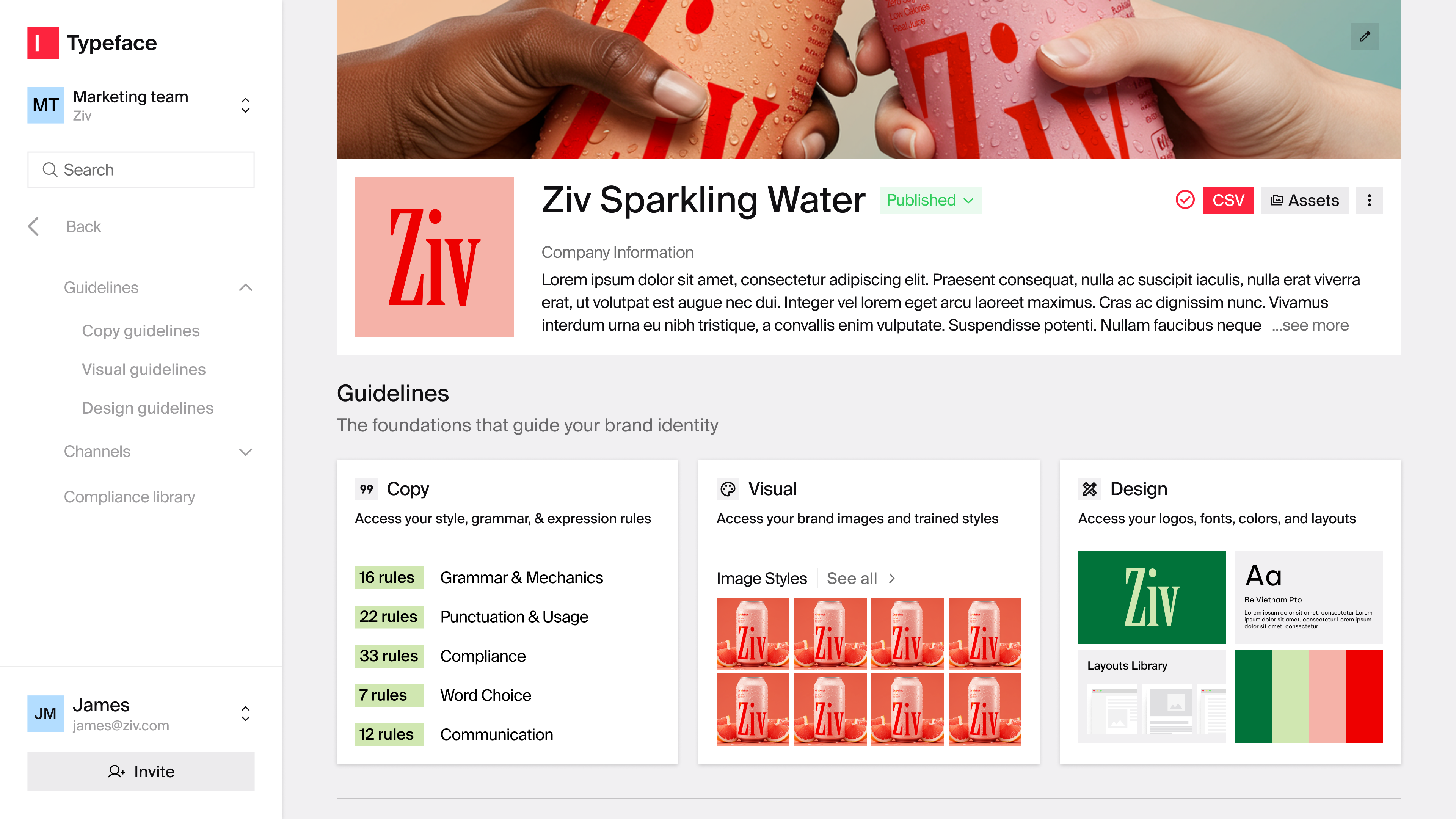
The result is first drafts that are already brand-specific and audience-aware. It’s close enough so that your team’s job is refining it rather than rewriting it.
“How do we maintain quality when volume goes up 5x?”
At low volume, quality is a human judgment call. The team has a shared sense of what good looks like. The same group reviews every asset. Institutional knowledge fills the gaps that formal documentation doesn't cover.
But when AI scales your output across more variants, markets, and channels, the review process doesn't scale with it.
Different reviewers apply different standards.
Brand guidelines get interpreted differently across teams.
Feedback from one campaign doesn't consistently reach the next
Quality falls as you scale campaigns because there was never a formal system underneath the judgment calls.
How to close the evaluation gap?
The answer is to make quality standards explicit and apply them consistently as you scale campaigns. If you've already set up Arc Graph with your brand context, you've done the first part.
Brand Agent takes care of the next step. It checks content against that brand guidelines in real time as it's being created, so issues are caught at the source rather than flagged late in the review cycle. By the time an asset moves forward, the obvious errors are already resolved.
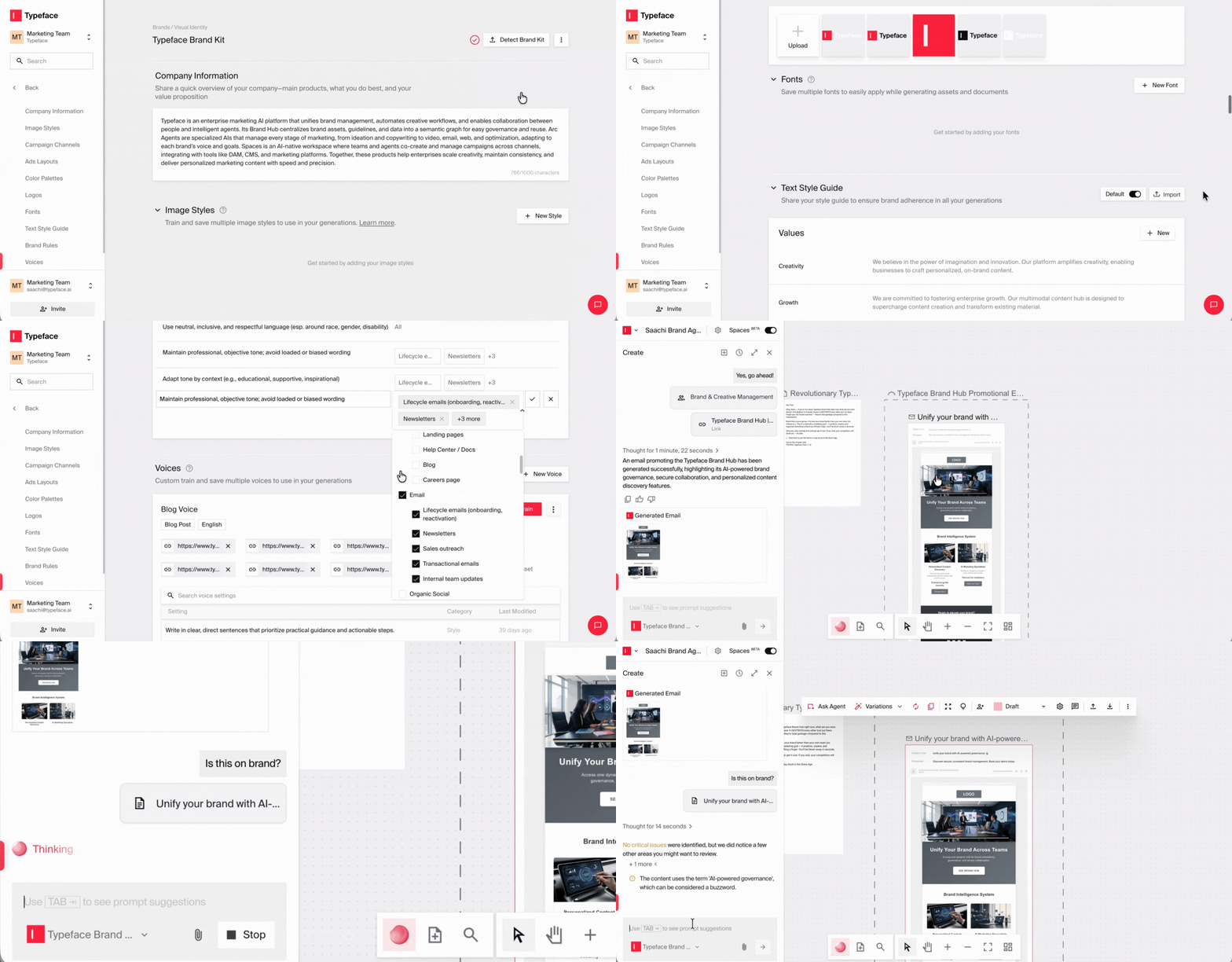
From there, Typeface lets you set up review workflows tailored to how your team works. Collaborators get automatically notified when action is needed, and every status change is logged, giving you full visibility into status of the campaign.
“Why does it still take weeks to get a campaign out the door?”
This is the most visible sign that AI sped up one step without connecting the rest. The content is ready. But now it needs to go through legal review, get adapted for three regional markets, be reformatted for six ad placements, queue for a creative sign-off, and route to a channel manager for scheduling.
Each step waits for the previous one to finish, and each handoff happens manually across Slack threads, email chains, and project management tools that weren't built to speed up campaign production.
And once content is approved, someone still has to manually push it to the right publishing platforms. This adds another round of coordination before anything goes live.
How to close the orchestration gap?
Campaigns take weeks because the handoffs between steps are still manual. The fix is simple: build the handoffs into the system.
Instead of assets moving through Slack threads and email chains, you can build content workflows where each step (copy review, legal review, regional approvals, creative sign-off) is set up as a defined stage with the right people automatically notified when something lands in their queue.
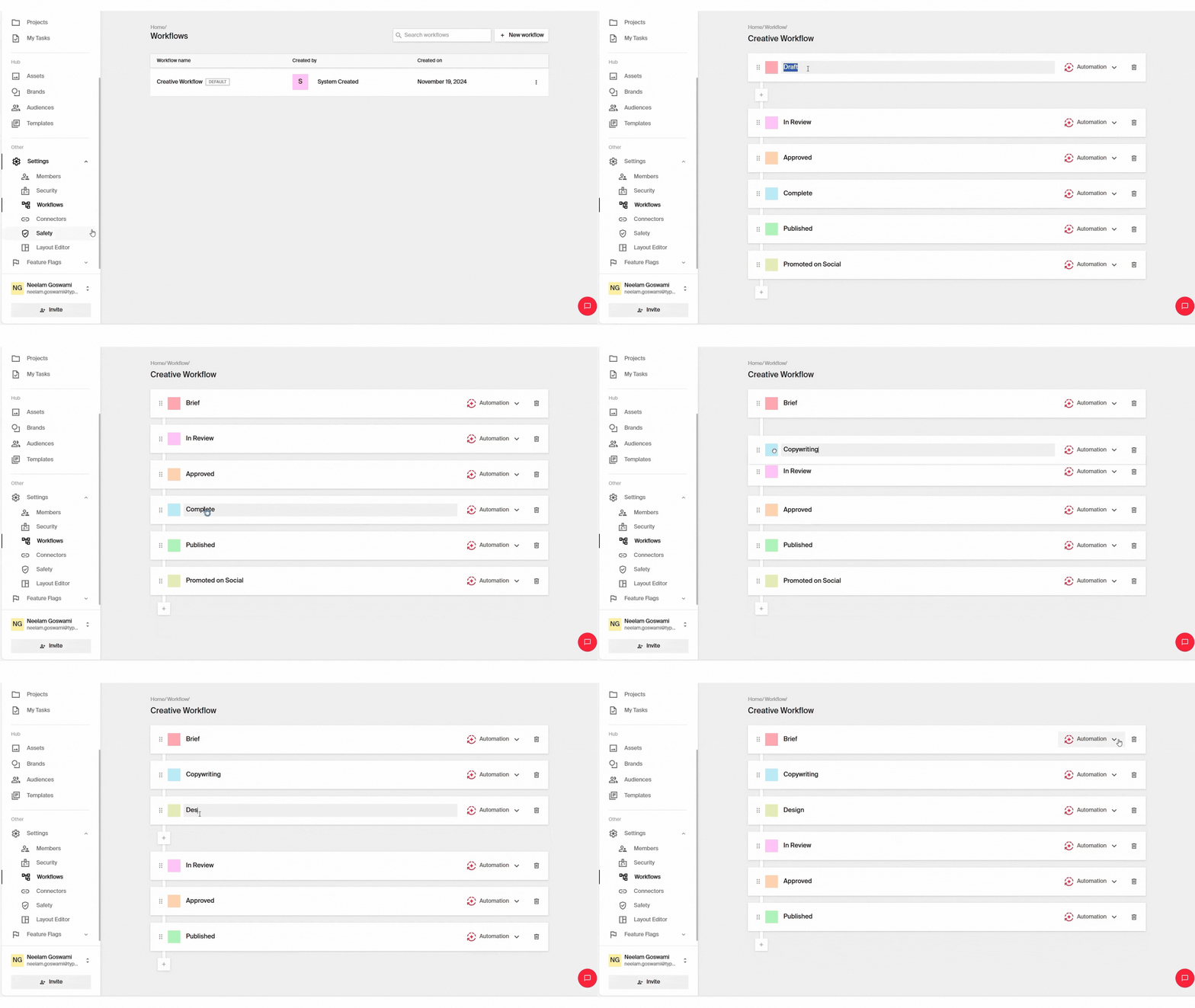
And once content is approved, it goes live without another round of manual coordination. Pre-built connectors to Adobe Experience Manager, Salesforce, HubSpot, Braze, and other popular marketing platforms means you can push campaigns directly to the right destinations from Typeface.
A less visible but equally common source of campaign delays is tool switching. Every time a marketer leaves their environment to check brand guidelines, pull approved copy, or hand off to the next stage, momentum breaks.
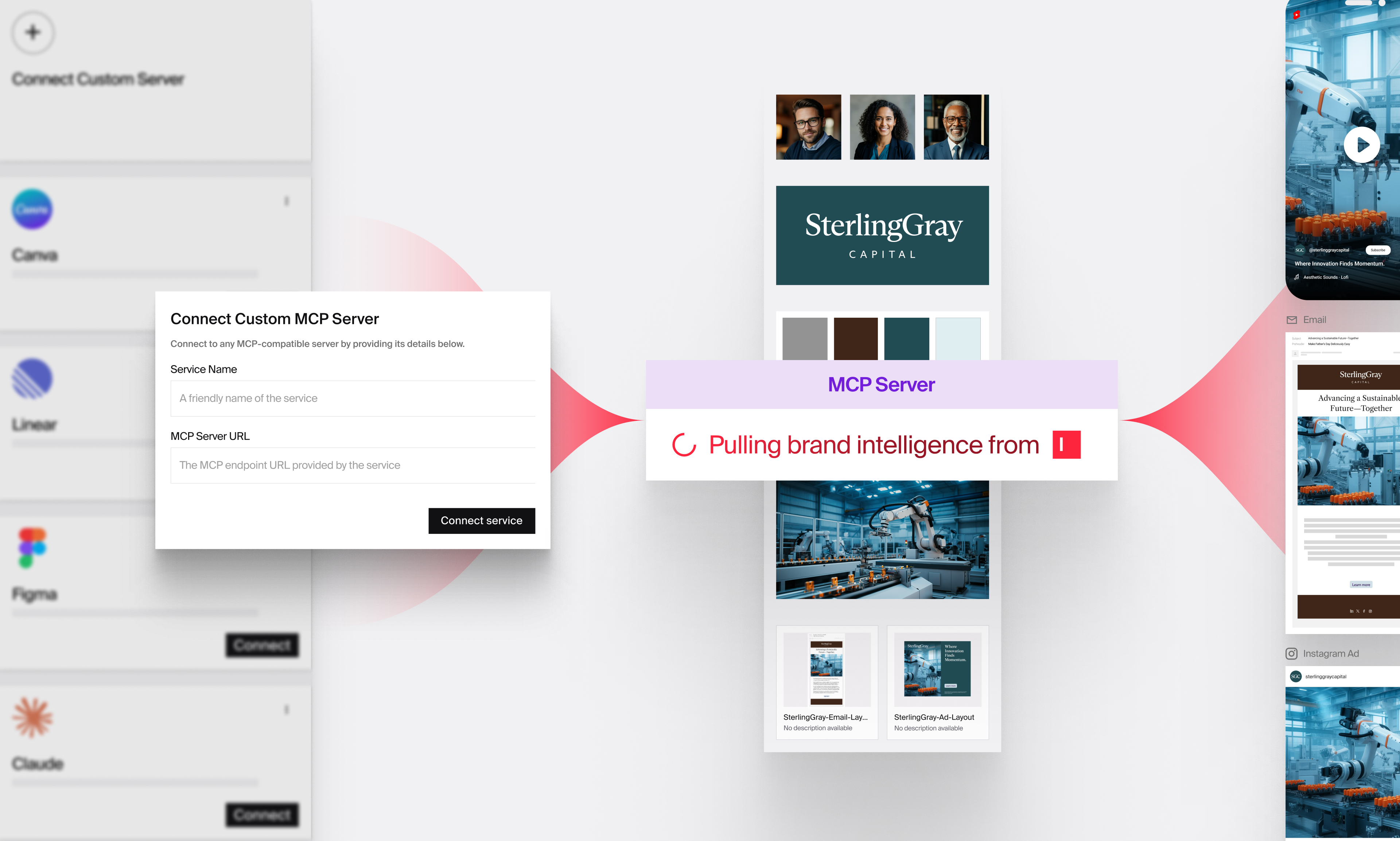
Typeface MCP keeps that from happening by bringing your brand context, approved workflows, and AI agents directly into the tools your team already works in, whether that’s Claude, ChatGPT, or any other MCP-compatible environment.
“Why does every campaign still feel like we're starting from scratch?”
This is probably the most expensive problem because it builds over time.
After a campaign runs, the findings sit in an analytics dashboard: which variants performed, which markets responded, which CTAs converted. Useful information. But how can you put it to use when there's no direct path from that dashboard to the next campaign brief?
Someone has to manually pull the report, extract the key findings, translate them into creative direction, and hand them to the writer or the agent. That step gets deprioritized, and the next campaign starts from roughly the same place as the last one.
This is why most teams produce more content without getting meaningfully smarter about it.
How to close the insights gap
The fix is to build that performance feedback loop into how the system operates. This starts with connecting your analytics to your creation workflow, so findings from a completed campaign are available to the agents planning the next one.
As campaigns run, performance and engagement signals feed back into how agents plan, create, and prioritize, with marketers determining the direction and IT governing how that learning gets applied.
The system gets more precise with each campaign, adjusting messaging angles, format choices, and audience targeting based on what has actually worked rather than what general ‘best practices’ suggest.
Over time, this creates compounding intelligence. Orchestration becomes a system that continuously raises the bar on quality and consistency.
How AI campaign orchestration works in Typeface
Take a typical ad campaign. You need copy and creative for multiple audience segments, reviewed for brand compliance, and pushed live to Meta and Google. For most teams, that process can take up to two to three weeks.
Here's how the same campaign is Typeface-orchestrated end to end:
1. Brief and planning (30 minutes)
The first step is to build a campaign brief using specialized agents. Instead of starting with a blank brief, prompt the agent to create a brief around your campaign objectives. It pulls context directly from Arc Graph to generate a campaign brief that's aligned to your audiences, product details, channel requirements, approved messaging and campaign goals.
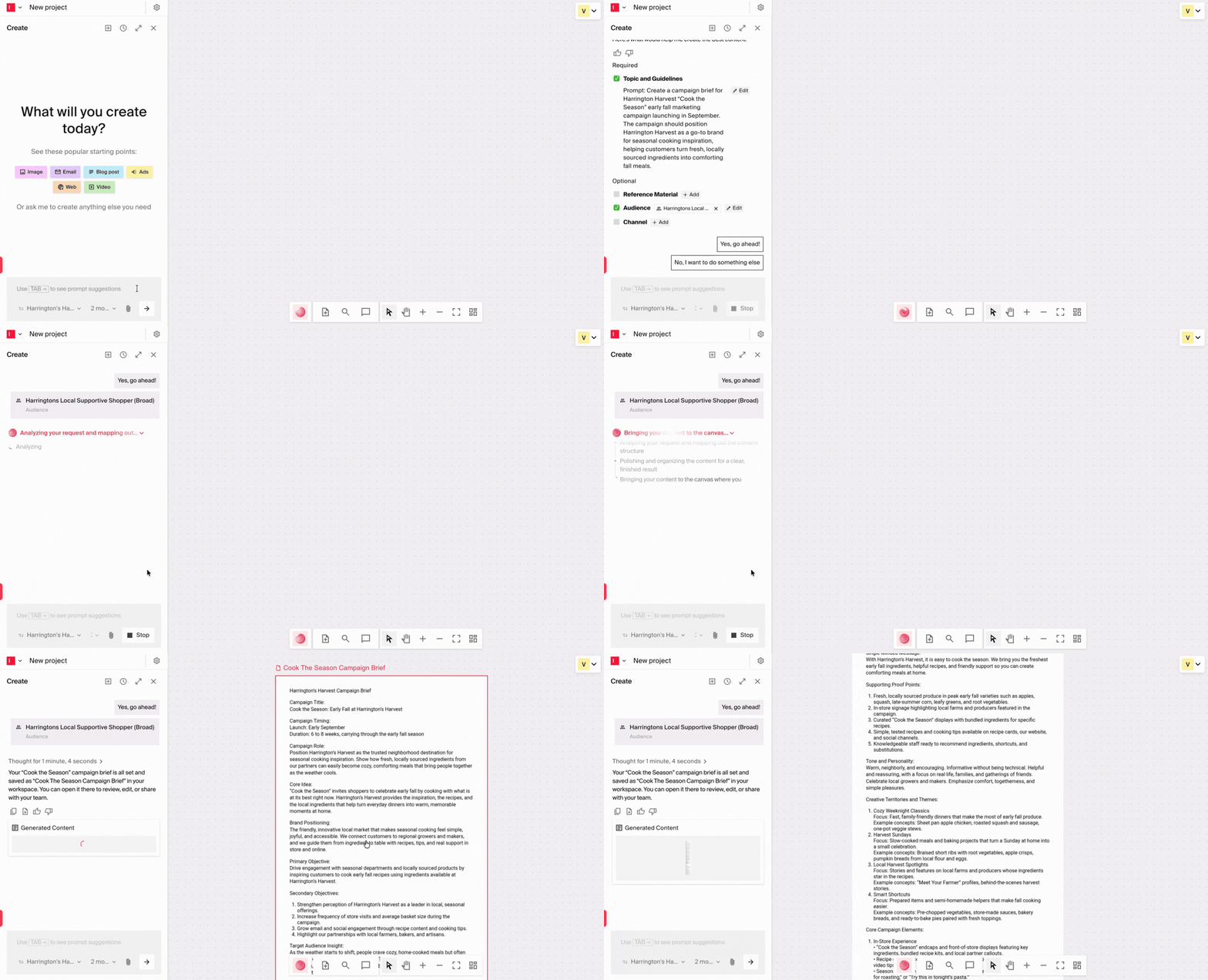
The strategic decisions are yours, but the groundwork is done.
2. Content creation and scaling (30-60 minutes)
With the brief in place, agents can start generating campaign assets in the format you need.
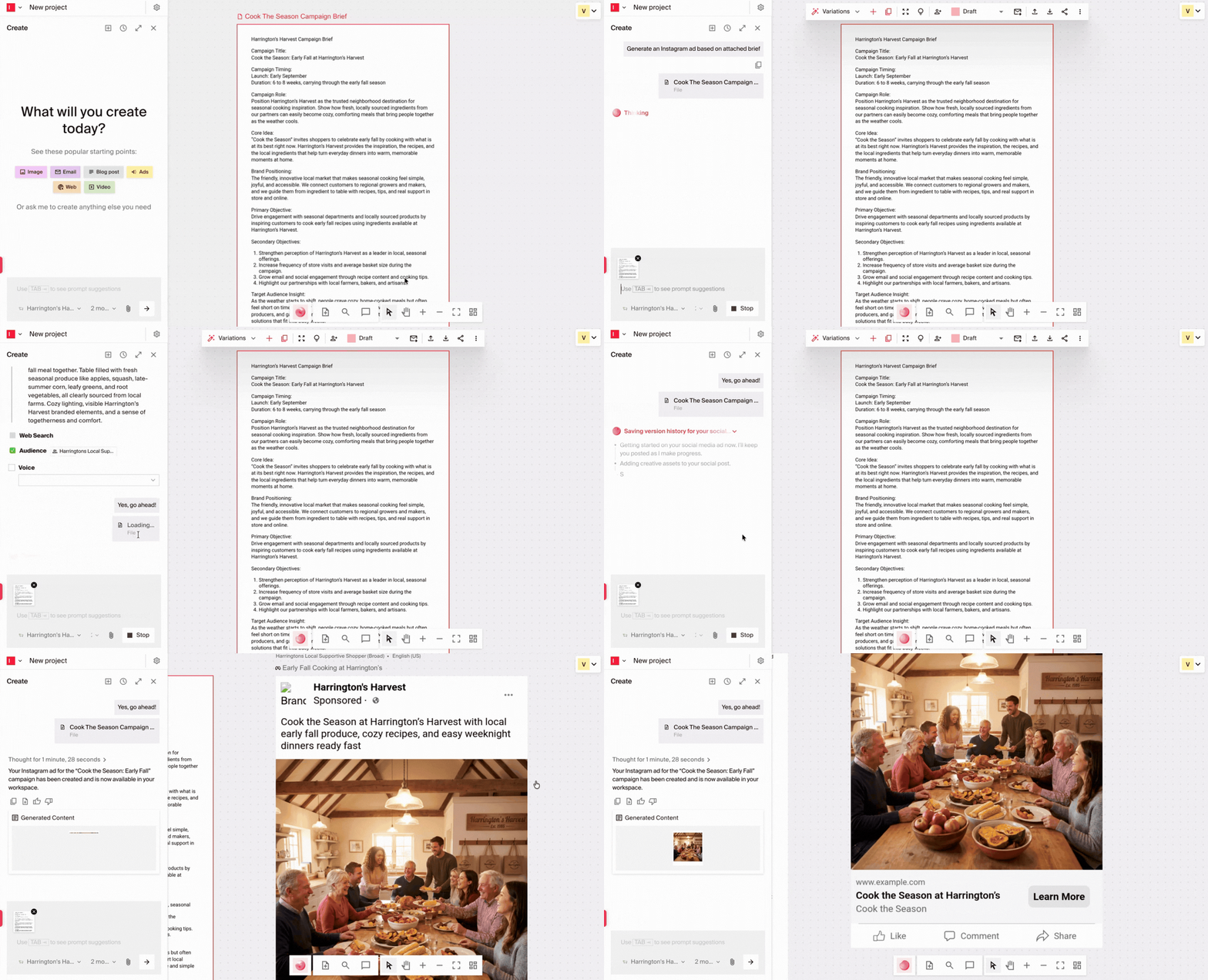
Because they're drawing from the same brand context, every asset reflects the right tone, messaging, and visual standards for each channel.
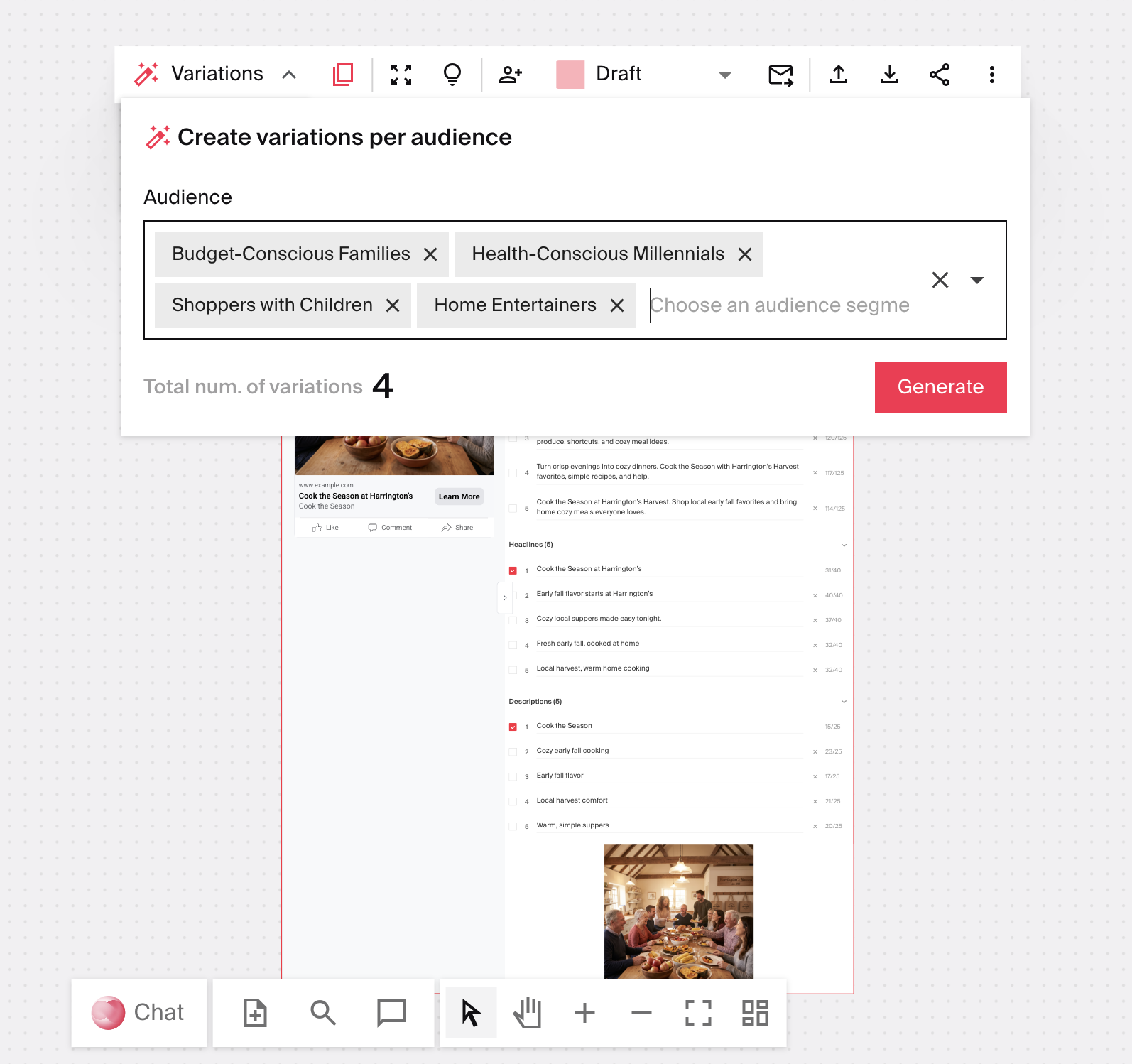
From there, the same master creative can be automatically scaled into variations for different audience segments, languages, and sizes, without manual reformatting.
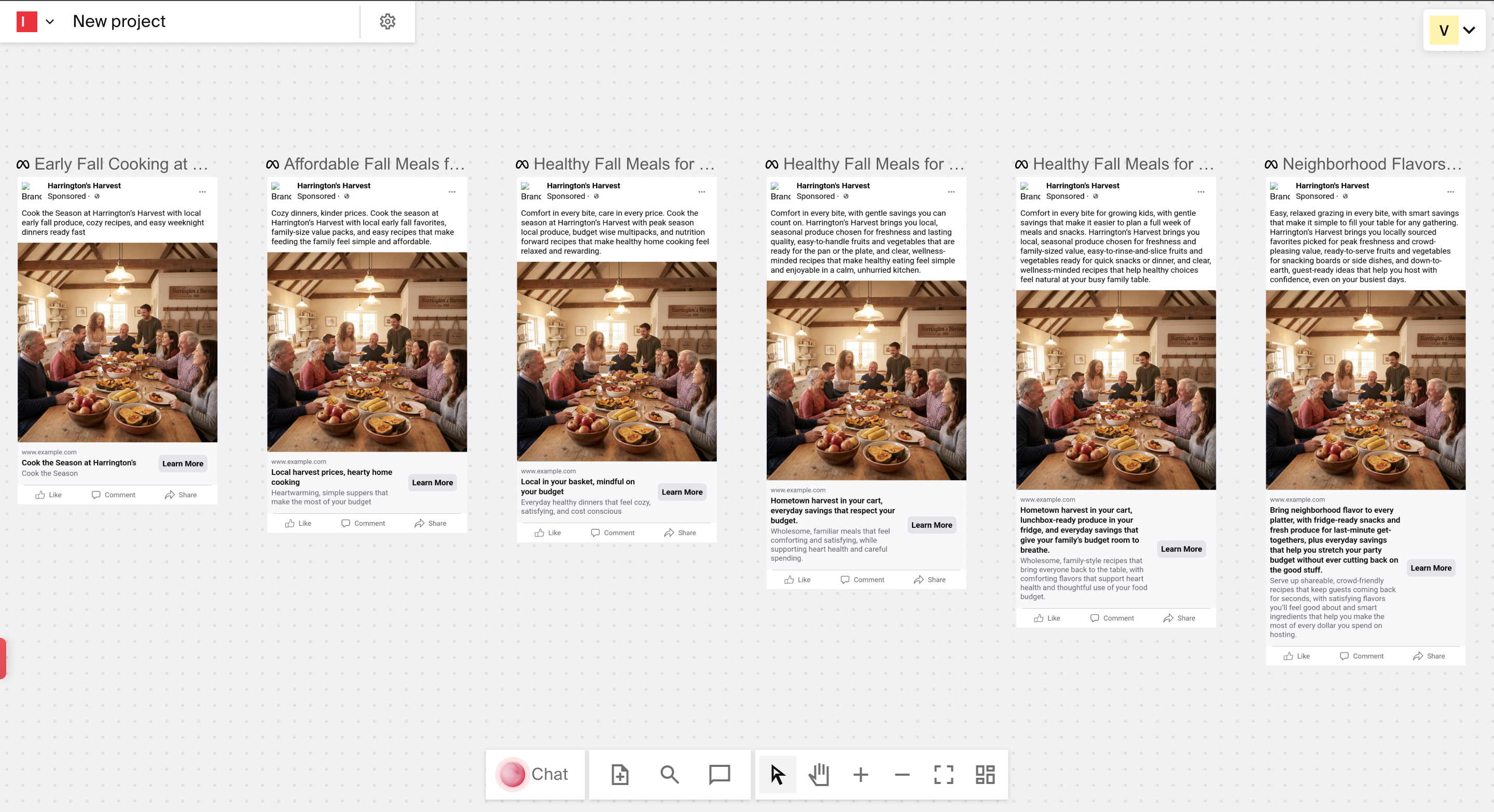
3. Review (24-48 hours, depending on the scope of campaign)
With your campaign assets ready, they’ll need to undergo a round of review before they can be published. But before anything reaches a reviewer, Brand Agent checks every asset against your brand rules in real time, tone, terminology, channel-specific requirements, and compliance constraints.
What enters the review queue is already clean. From there, customizable workflows route each asset through the right approval stages (copy review, legal sign-off, regional approvals) with the right people automatically notified at each step.
4. Publishing (5 minutes)
Once approved, pre-built connectors to your marketing platforms let your team publish directly from Typeface.
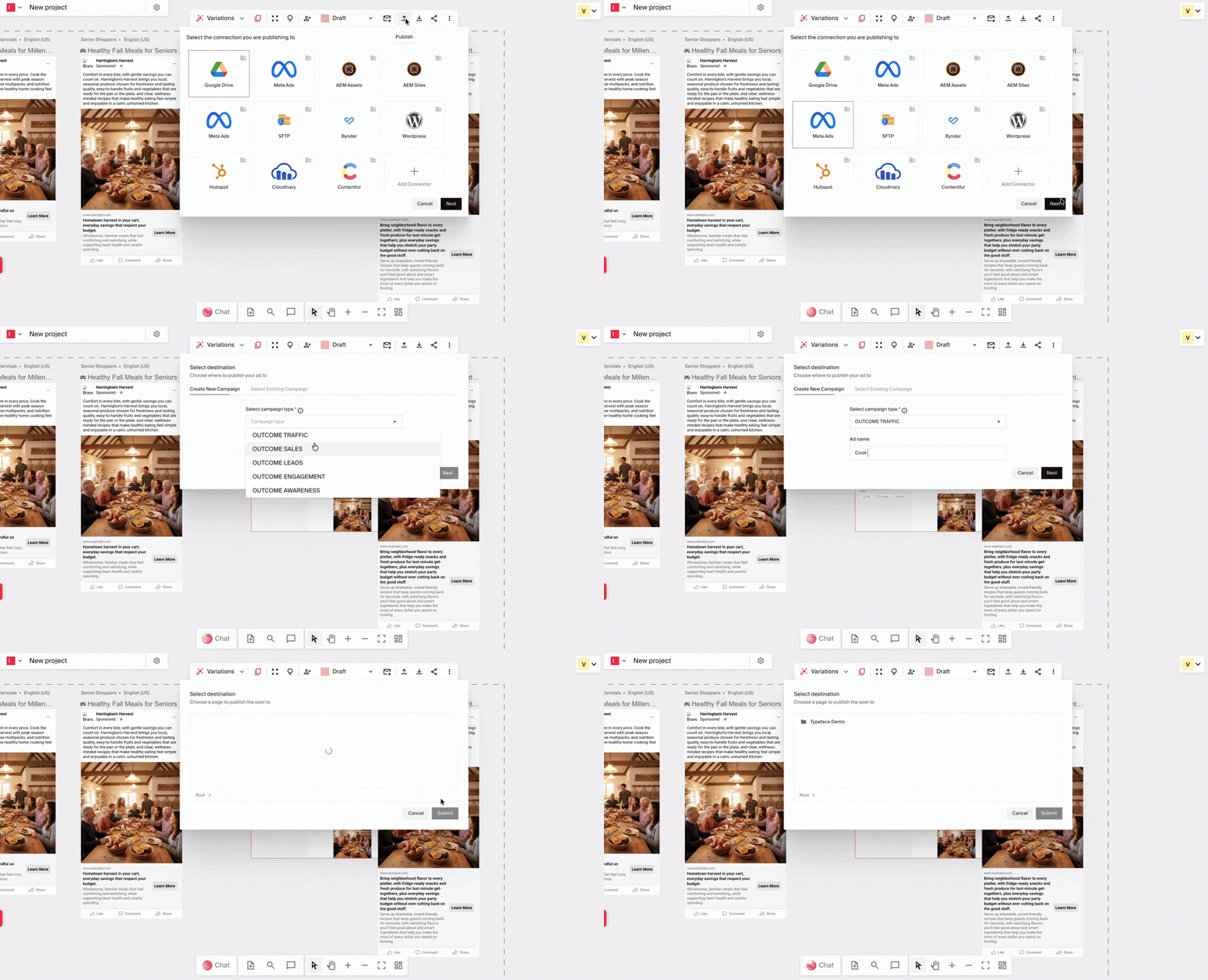
Time saved: from 2-3 weeks to 1-3 days
What results can marketing leaders expect from AI campaign orchestration?
The outcomes of adopting AI campaign orchestration are both immediate and compounding over time.
1. Faster campaign launches: When creation, review, and activation run through a single connected workflow, the coordination steps that used to stretch timelines become far more efficient.
Real-world impact
Real-world impact
A Fortune 100 financial services company reduced campaign launch time from six weeks to under eight hours after bringing paid social, web, and email into a single workflow.
2. Higher conversion rates: With a shared knowledge layer supplying brand context, agents can produce audience-specific and market-specific variants automatically, not as a manual reformatting step at the end of the workflow. When content is personalized to what a specific audience responds to, it performs better in market.
Real-world impact
Real-world impact
A Fortune 500 consumer electronics brand used Typeface to generate hyper-personalized landing pages and storefront content across 90+ global markets, producing 2-10x more on-brand, localized content than before.
3. Enhanced team productivity: When repetitive execution work (like content reformatting, routing, regional adaptation) runs through automated workflows, your team's capacity goes toward the work that needs their judgment.
Real-world impact
Real-world impact
A Fortune 500 CPG brand used custom agents to automatically convert master product page copy into compliant, retailer-specific versions. What previously required manual formatting for each retailer now runs in a single workflow, without adding proportional effort or team size.
Where to go from here
The real opportunity with AI marketing isn't generating more content, or even updating content. Most teams are already doing that. Instead, it’s about connecting the people, workflows, approvals, and insights behind every campaign through AI campaign orchestration.
Here's where to start:
Assess your current workflow to identify manual dependencies in workflows and bottlenecks that orchestration can address.
Identify high-impact use cases. Start with pilot programs focused on areas where orchestration will deliver visible, measurable results quickly. Early wins build organizational buy-in and momentum.
Align cross-functional teams. Bring marketing, creative, and IT leadership together around shared objectives, governance frameworks, and standardized measurement practices.
Once those pieces are in place, you can deploy an AI campaign orchestration platform to move campaigns from strategy to launch without losing context, compromising on brand, or stitching outputs across disconnected tools.
Book a demo to see how Typeface's Marketing Orchestration Engine works for your team.
Frequently asked questions
Q. Will AI campaign orchestration replace my marketing team?
No. Orchestration works best when your team defines strategy, brand standards, and approval thresholds, and agents handle coordination and execution within those boundaries.
The goal is to move your team out of manual coordination work and repetitive generation, formatting, and back into the work that needs their judgment.
Q. How is AI campaign orchestration different from marketing automation?
Marketing automation typically manages predefined, rules-based tasks within a single channel or workflow, such as sending a triggered email sequence. AI campaign orchestration operates at a higher level: it coordinates across all channels simultaneously, applies predictive analytics to inform proactive decisions, and adapts campaigns based on real-time performance signals.
Consider automation as a single instrument playing a set piece, while orchestration is the conductor ensuring every instrument plays together in harmony, adjusting the tempo as conditions evolve.
Q. How do I know if my team is ready for AI campaign orchestration?
A few signals worth checking:
Campaigns slow down in review and coordination rather than in content creation
Your team runs the same localization or formatting steps manually every cycle
You have brand standards but struggle to apply them consistently as volume grows
Post-mortems happen but the findings rarely make it into the next brief.
Q. How does orchestration reduce brand risk as we scale content production?
As organizations scale, multiple teams creating content across multiple channels using different tools inevitably leads to inconsistency. Orchestration platforms enforce brand standards at the system level, so every output stays aligned with approved guidelines regardless of who created it.
Q. What if our organization is not ready for full-scale orchestration?
That is a common starting point, and orchestration platforms are designed to support incremental adoption. Begin with a focused pilot program targeting a specific campaign type or channel where you can demonstrate measurable impact. Use those results to build internal support and expand gradually.
Typeface's modular architecture means you can start with specific capabilities-like brand-governed content creation through Arc Agents, and layer in broader orchestration workflows as your organization's readiness and confidence grow.
Related articles
May 1, 2026
Marketing automation handles the tasks your team would otherwise have to do manually, on repeat, at scale. It’s useful — of course — but limited. A CMO at a financial services company I spoke to recen

May 12, 2026
You can now build AI agents for most marketing tasks. Each specialized agent is useful on its own but can start to feel limiting when you move from smaller tasks, like creating an email to running mul
April 23, 2026
Last month, we shared that Typeface has evolved into a Marketing Orchestration Engine. That raised an important question: what does this evolution mean in practice for modern marketing teams? The ans