

AI summary
Multimodality gets more mileage out of your existing video, images, and documents. See how Typeface's platform handles text content production, with brand and legal guidelines applied automatically.
The biggest advantage of multimodal AI for written content is efficient repurposing. A multimodal AI marketing platform can turn a successful webinar into blogs, FAQs, and a summary for the sales team, besides short-form video clips and social posts.
It’s also open to various other use cases, including competitor research, ad analysis, social listening, and alt text generations. For example, it can analyze your competitor’s landing page and tell you that the CTA is dominant and the value proposition is visible without scrolling. And extract brand mentions and product context in user-generated photos.
Any time you need to read charts, diagrams, screenshots, and scenes, multimodal AI is better — for capturing context that a text-to-text generator can’t access directly.
Is multimodality enough?
As leading foundation models today are multimodal, this capability is for everyone to use, but output quality depends on the brand consistency and human oversight.
The blogs, FAQs, and summaries should have your brand’s stamp on them. When the AI-repurposed content drifts off-brand for a regional market or internals emails lose your CEO’s familiar tone, engagement can erode bit by bit.
You can avoid this with an AI marketing platform that applies your brand guidelines during content generation to maintain voice, tone, and grammar and punctuation consistently across every global team, product line, and market.
Contextually rich, multi-format inputs can improve multimodal outputs, but they aren't a substitute for original thought. To create content that's meaningful and unique to your audience, ground AI's outputs in relevant knowledge, like documents, URLs, slide decks, meeting notes, or audio recordings. For this to work, your knowledge base should be current and searchable for teams.
Human review of AI content is a necessary step in the workflow, not only for editing or refinement, but to monitor output quality over time. AI content workflows can build in these review checkpoints, keeping the right team members involved at each stage.
How it works in Typeface
Typeface has Arc Graph, a knowledge graph that integrates brand style guides and knowledge to apply guidelines and guardrails (editorial rules, compliance requirements, and brand voice) to every draft without teams re-entering instructions each time.
You can connect your audiences and knowledge sources through Arc Graph, naming each file correctly, so outputs have the current statistics and updated product information. Multimodal AI can search inside videos and text, but accurate file naming still helps teams find the right grounding sources faster.
Your existing review and approval process stays intact. Arc Graph brings the full content lifecycle into Typeface, with Slack and email notifications keeping reviewers in the loop.
Use Typeface for text generation:
Create blogs, landing pages, emails, and social posts from product briefs, research reports, presentations, meeting notes, images, and videos.
Turn webinars, podcasts, and interviews into blogs, newsletters, FAQs, knowledge base articles, and social posts.
Create SEO content from webpages, product documents, analyst reports, customer research, and campaign briefs.
Refresh existing articles using updated product announcements, recent performance data, and new supporting information.
Localize content using brand guidelines, product information, and market-specific documents.
How to create landing pages in Typeface
Landing pages are one of the clearest examples of multimodal AI in action because they depend on much more than copy. Every page combines product information, brand messaging, page layouts, images, audience targeting, and visual design.
Creating or updating hundreds of location-specific landing pages or localized versions can take weeks or even months, depending on your team size and agency support. A multimodal AI marketing platform Typeface helps you get the job done in a fraction of the time, often in days.
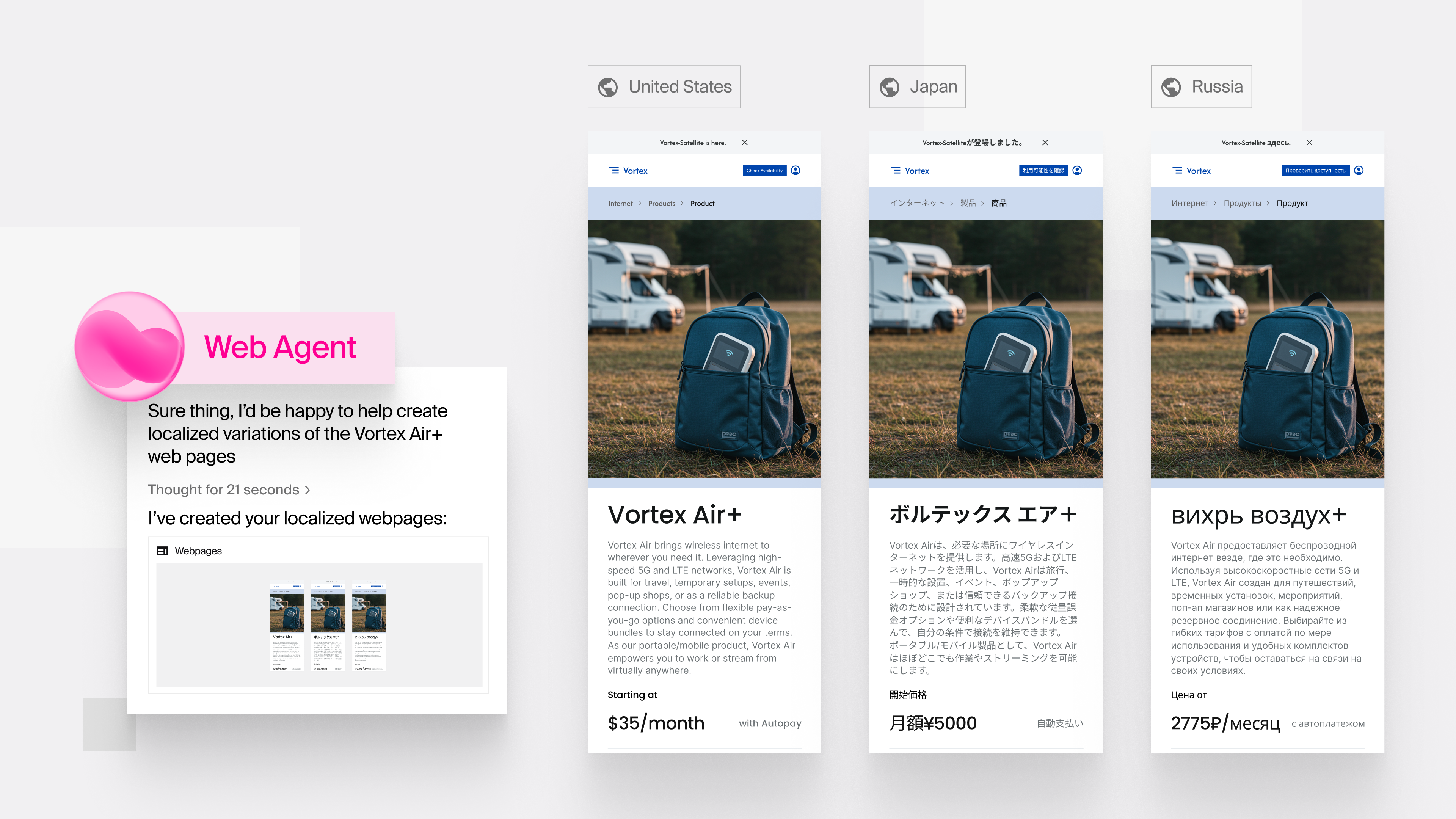
Typeface's Web Agent brings these inputs together to generate product, service, and location landing pages. For example, a multinational insurance company can create pages tailored to regional markets within days, while a home improvement brand can easily build and maintain hundreds of city-specific pages.
Import your brand style guides and grounding content
Before generating content, Web Agent needs the same context your marketing team would use. That includes page layouts, audience segments, brand guidelines, product sheets, images, and knowledge documents.
You can bring these assets into Typeface through integrations with your CDP, DAM, Figma, and other marketing platforms. Arc Graph extracts and organizes your brand voice, messaging guidelines, and visual standards, while page layouts and connected knowledge assets provide the design and product context used during generation.
Collaborate with Web Agent through a chat interface
Once this foundation is in place, Web Agent can generate landing pages grounded in your approved content rather than relying on a prompt alone.
Describe the landing page you want to create.
Attach relevant layouts, audience segments, and supporting documents.
Web Agent generates the page, including copy, visuals, and layout.
Review the page, edit copy inline, and regenerate visuals if needed.
Localize the page for new regions or languages, then publish directly to your CMS or export it in your preferred format.
Related Reading: How to Use Multimodal AI for Visual Content
Try Typeface for multimodal content creation
Typeface's multimodal AI helps copywriters repurpose existing content, create on-brand copy, and check it against brand standards. Turn meeting notes into blogs, build localized pages, and expand into more channels with less production work.
Book a demo to see Web Agent (and our other channel agents) in action, or talk to our team to know how Typeface can support your marketing goals.
Related articles

April 2, 2026
With 70% of people preferring to learn about brands through articles, it’s clear content should be every marketer’s priority. Yet most marketing teams start each quarter with ambitious content plans,

August 11, 2026
To repurpose a whitepaper or e-book into a blog post series, feed the full document to an AI agent, have it identify three to five distinct themes or chapters, and generate a dedicated, standalone blo

February 4, 2026
Answer Engine Optimization (AEO) is the practice of structuring content so AI systems like ChatGPT, Perplexity, Gemini and Google's AI Overviews can easily extract and cite your information as direct