April 2, 2026
How to Use AI for Content Localization (Without Losing Cultural Nuance)

Neelam Goswami
Senior Content Marketing Associate
AI summary
AI-powered content localization allows you to scale your content marketing efforts for a growing business, without sacrificing local relevance. Here's how to use AI for localized content marketing.
Your global campaign is ready. Now you need it in eight markets, three languages, and four ad formats — by Friday. If that sounds familiar, you already know the core challenge of content localization: the demand is endless; the resources aren't.
Most teams solve this by trimming scope. One version of the campaign goes everywhere, lightly adapted at best. It's the practical call, but audiences notice when content wasn't really made for them. Engagement drops. Conversions lag. The gap between "global reach" and "local relevance" stays wide.
AI changes that equation by handling the volume problem — so your team can focus on getting the message right rather than producing the tenth variation of the same asset.
This guide covers the practical ways to use AI for content localization, from ad copy to visuals to blog content.
What you'll learn in this post:
What localized content marketing means and why one-size-fits-all campaigns underperform
How AI localization differs from basic translation — and why the difference matters
Ways to use AI for localized ads, visuals, and blog content
Quick tips for getting better results from AI localization tools
What is localized content marketing?
Localized content marketing refers to adapting marketing materials to meet the specific needs and cultural preferences of audiences across different geographies. Rather than simple translation, the goal is to create content that truly resonates with audiences in specific markets, driving deeper engagement and stronger brand perception.
With Typeface, you can dramatically accelerate localized content creation in two powerful ways:
First, the platform can generate new custom visuals and copy tailored to specific markets and audience segments, ensuring your content resonates with local preferences and cultural nuances.
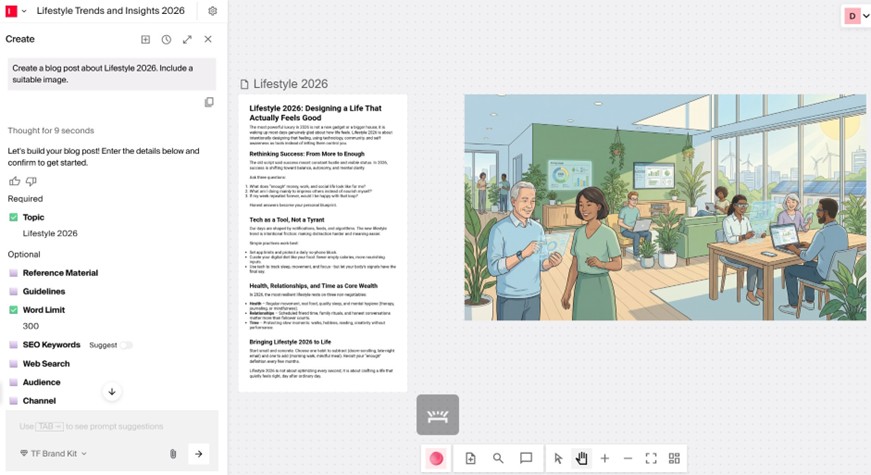
We asked Typeface to create a blog about Lifestyle 2026 and include a suitable image.
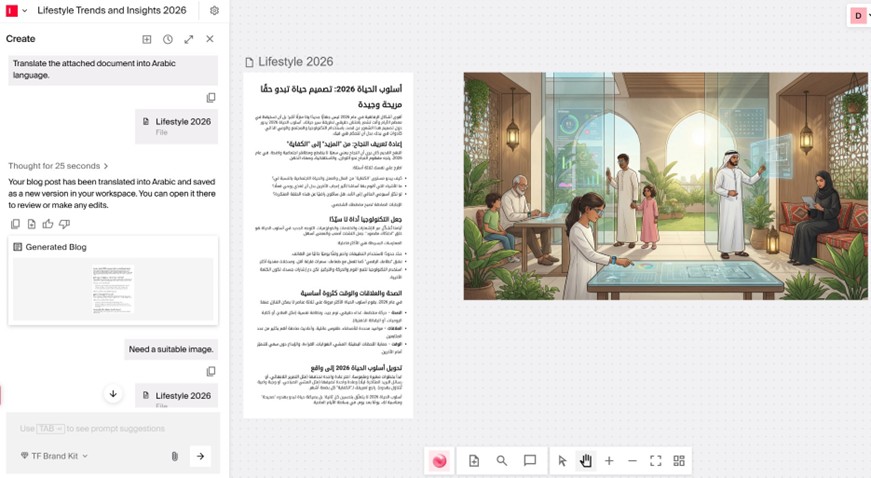
We then asked the platform to translate it to Arabic.
Second, it enables you to efficiently adapt existing content—instantly creating dozens of localized variations from a single approved asset. This approach reduces content production time by up to 90%, allowing marketing teams to deliver both original market-specific campaigns and localized versions of global content without the traditional resource constraints.
How is AI localization different from traditional translation?
Translation converts text from one language to another. Localization adapts the entire message — tone, cultural references, imagery, and context — so it lands the way you intend in a specific market.
Traditional translation is usually handled by human translators working from a finished draft. It's time-consuming, expensive at scale, and doesn't address the parts of your content that aren't words: visuals, humor, seasonal references, or calls to action that mean something different in different cultures.
AI localization handles both the language and the adaptation layer. It uses natural language processing to maintain meaning across translations while adjusting tone and style for the target audience. It can also flag — or generate — visuals appropriate for specific markets. The result is content that feels local, not just translated.
One more difference worth knowing: traditional translation is a one-time task. AI localization can be continuously refined as models learn from feedback, which means accuracy tends to improve the more you use it.
How to use AI for localized content marketing
Here are some great ways to leverage Typeface's AI capabilities to improve your localized content marketing strategy.
1. Using AI ad generator for localized ad campaigns
Advertising is probably one of the most critical areas of marketing where localization is key. An ad that looks and feels relatable to North American consumers may be viewed as too assertive by consumers in Asia. Or a Christmas ad creative designed for the European market, with snowfall and a cozy fireplace, may be strange to people in Australia where it's summer during Christmas.
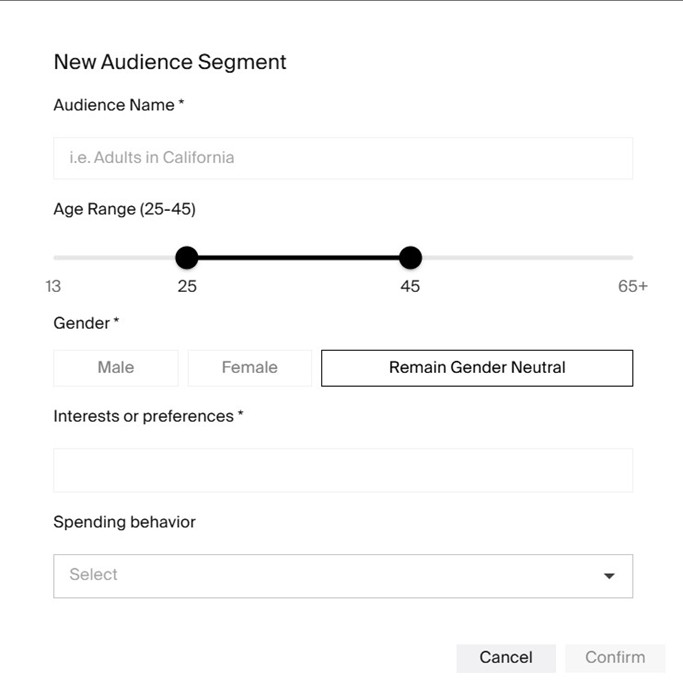
Typeface's Ad Agent helps you create ad campaigns that connect with your target audience. You save multiple audience segments, which you can apply when generating content with AI. You can differentiate audience segments by location, age, gender, interests and more. This ensures that the AI picks up this audience information and generates content that is relevant and appropriate.
Typeface lets you create:
Social posts (LinkedIn, X, Instagram) and paid ads (Meta and Google)
Videos for social
Ad variations for different audience segments and geographic markets
Banner campaigns
Promotional emails
All you have to do is have a “conversation” with Typeface.
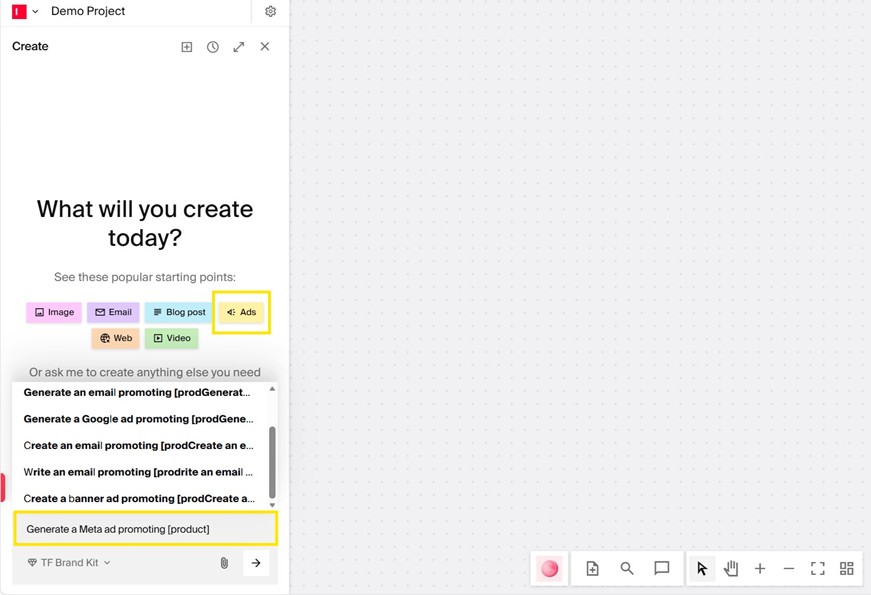
You can create location-specific copy tailored for Meta Ads, and also the visuals to go with it. You can add your own assets or generate custom visuals from text prompts. The platform also offers a preview of the ads in different formats such as Facebook Feed Ad or Right Column Ad.
To further refine and personalize or localize your ads, you can use the quick edit options on the Typeface AI assistant, which lets you change the language and tone, regenerate, or rewrite your content to attain your desired output.
With Ad Agent, you will be able to quickly produce a variety of ad formats customized for different regions, allowing you to scale your campaigns. Your ads still maintain the personal touch necessary for successful local marketing, across multiple locations.
2. Using AI image generator for custom banners, ad creatives, and social media visuals
A key component of a powerful ad campaign is the visuals that you use. The banners and images on your ads and social media posts capture audiences' attention before they even get to the text. Visuals with your brand colors and logo are also a great way to improve brand recognition. That said, the visuals you use must be of high-quality to be able to build brand reputation and trust.
Using an AI image generator can significantly bring down product costs and time involved in visual creation and design. On Typeface, for instance, you have the Image Agent which offers a vast library of pre-set inspiration images which you can customize with your own assets. You also have the option to upload your own inspiration shots to recreate using AI. With Image Agent, you can pick images with backgrounds and settings that match your target market.
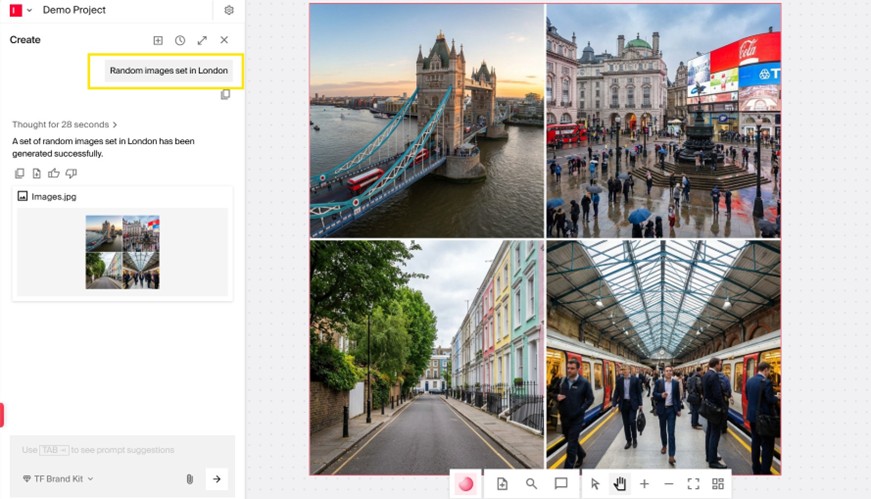
For example, we searched for images set in London, and this is what we could find on Typeface Ad Agent.
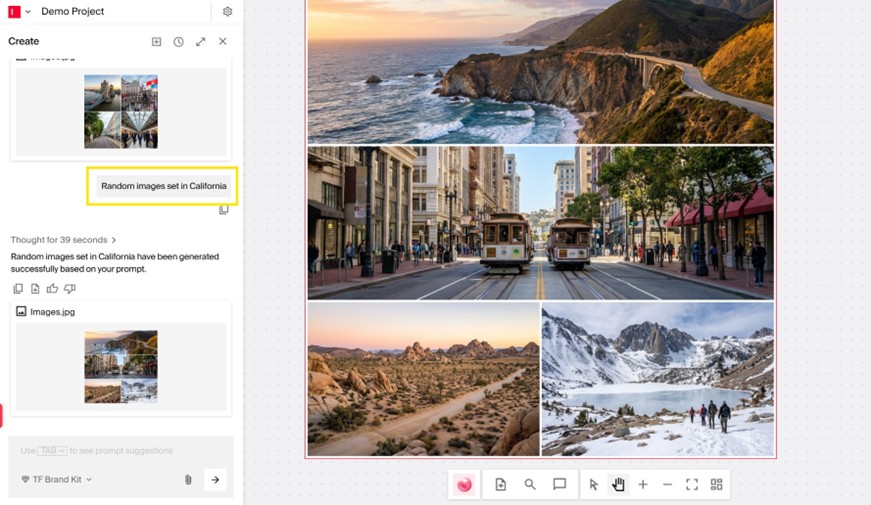
Whereas for California, we got a completely different set of images representing the landscape quite accurately.
3. Using AI to auto-adapt creatives and ads for different channels and audiences
One of the most interesting AI capabilities on Typeface that can help you automatically adapt any ad for any audience is Ad Agent With Ad Agent, you can resize and optimize a single ad creative for various channels, audience and markets. This means what would usually involve days of work, manually resizing, redesigning and rewriting ads, can now be achieved in minutes.
Ad Agent can automatically adapt an already approved ad creative into different formats without affecting the integrity of the design. You can also import your pre-approved headlines, translated copy, and brand elements to generate multiple campaign variations without having to go through repetitive design processes.
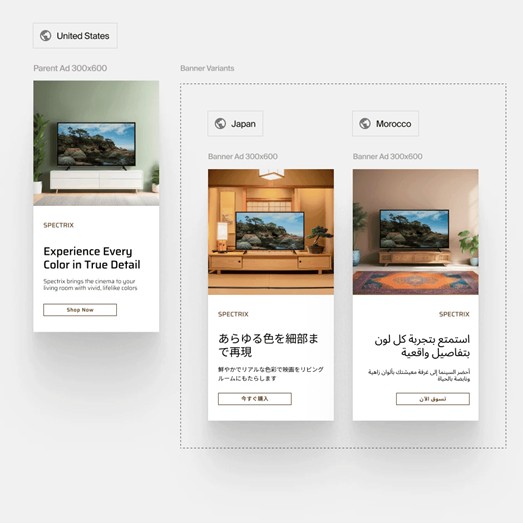
Using Ad Agent can significantly cut down the amount of time and resources needed for content localization in advertising, eliminating a lot of the back-and-forth and rework it would normally demand. Imagine the productivity boost your team would get from this, especially when they have thousands of assets to adapt across global markets.
4. Using AI blog generator for targeted blog content
Your blog is another marketing medium that can cater to a wide variety of audiences across regions and cultures. Blogs are educational, engaging, and great for building authority and thought leadership in your target market. However, localized content marketing with blogs can be quite a time-consuming task as with any long-form content. Add to it the need for translation or writing from scratch in multiple languages, and your team can get overwhelmed with the amount of additional work it brings.
An AI blog generator that supports multiple languages can make their lives easier. With Typeface, you can translate your blog articles to any major language using AI or even generate blog posts from scratch in your preferred languages.
(To change the language from the default US English, you can simply go to Arc Graph’s Brand Kit under Settings and specify the language for AI content generation.)
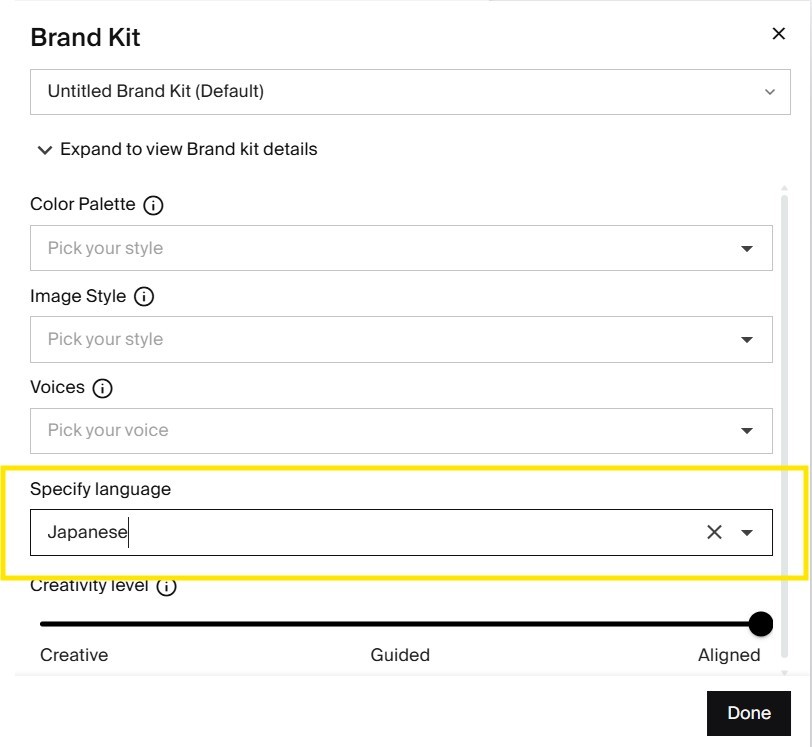
By generating the article draft in the chosen language or translating it automatically, you can reduce content production time and use that bandwidth for reviewing and editing the content to ensure accuracy and relevance.
Apart from language, a successful localized content marketing strategy also needs strong SEO. Using the Conversational Chat on Typeface, you can generate blog articles optimized for local search results. You can specify your target market, based on which it can suggest relevant keywords to improve local SEO in the generated blog article.
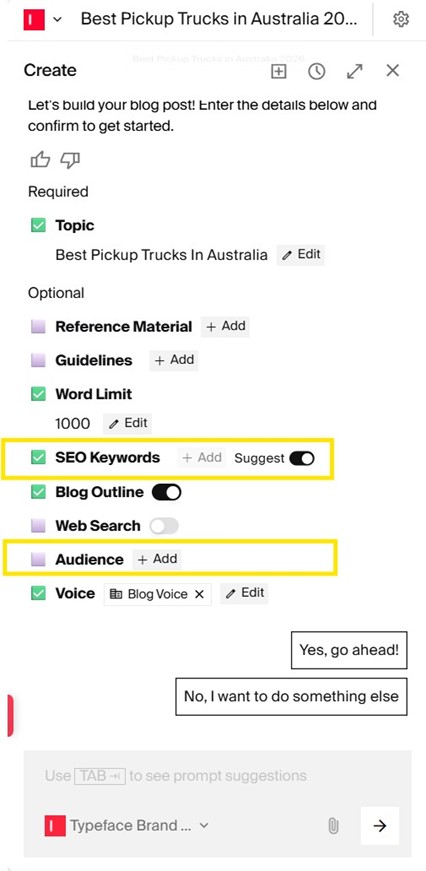
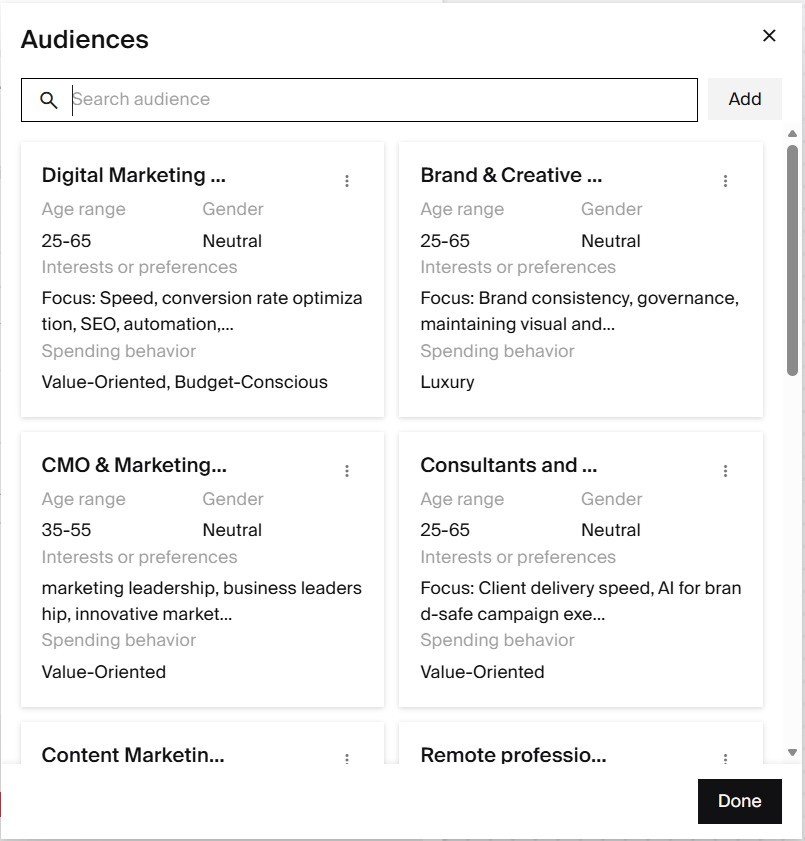
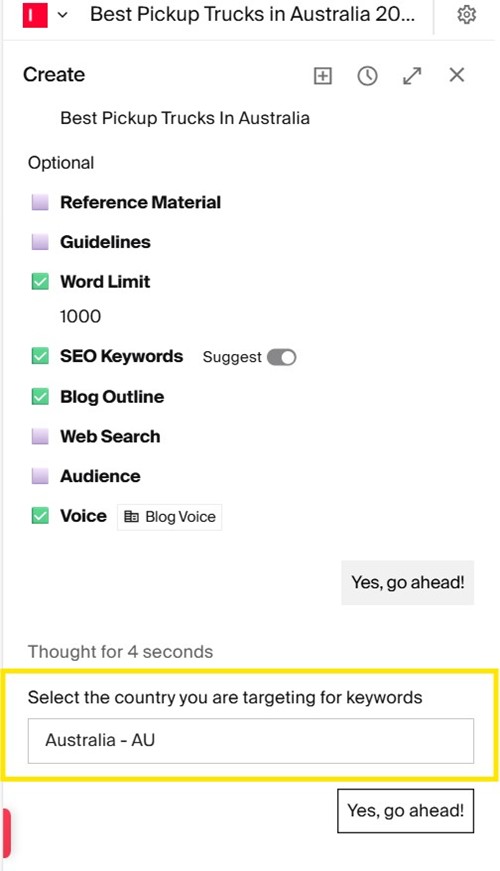
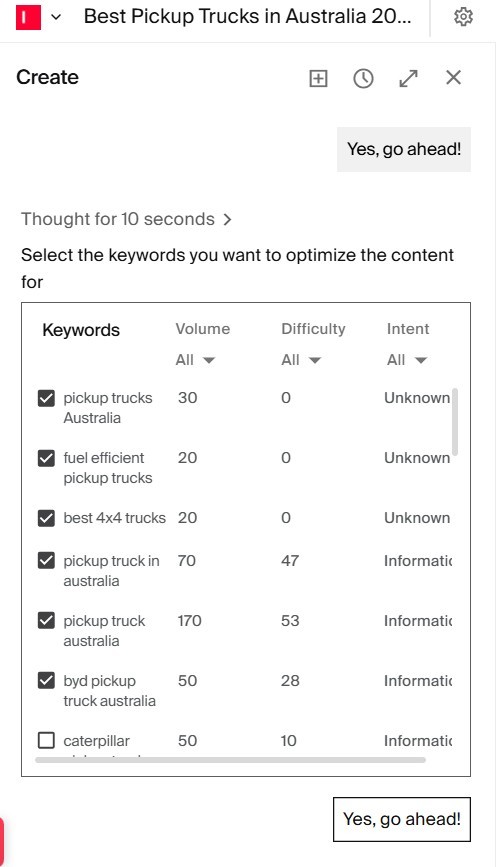
You have the option to select important keywords from those suggested and add more keywords from your own research to further enrich the blog post.
With such data-driven content optimization for local markets, your content is more likely to be found in relevant searches by the right people with intent, driving more traffic and conversions for your business.
One home furnishings company uses Typeface to generate hundreds of location pages across US cities using Web Agent - city-based imagery, SEO keywords, etc.
Check out the location pages created by Web Agent:
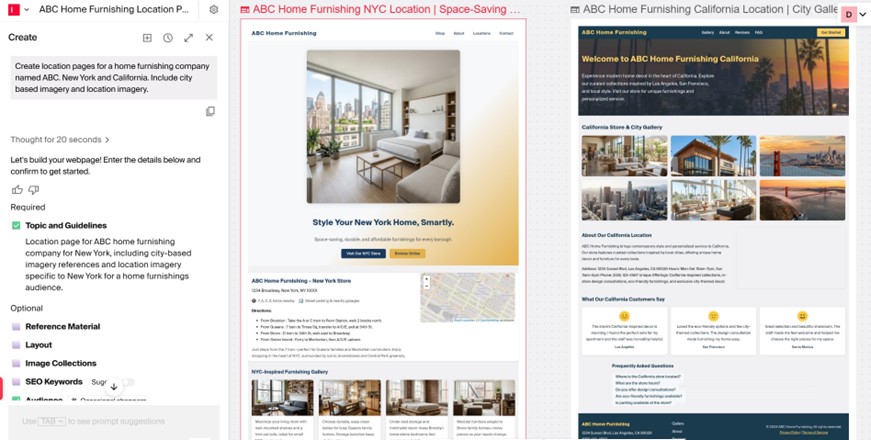
Here, the prompt is only for two cities. You may ask Web Agent to create for all the cities your business has a presence in. Also, you have the option to include keywords or ask the Web Agent to suggest appropriate keywords.
Quick tips for localized content marketing with AI
While AI-driven localization tools can process, translate, and adapt content at unparalleled speeds, there are a few things you should take care of when using AI for localized content marketing.
Quality control and cultural context
While AI writing assistants are constantly being trained and improved, they still need human oversight when it comes to accurately representing different cultural nuances. Cultural context plays a significant role in localization. It is essential to have a human-in-the-loop approach to localization to ensure that localized content is factually correct, appropriate, and resonates well with target audiences.
Maintaining brand voice
AI tools are great at maintaining a consistent brand voice across all the content they generate. However, they must be trained with the right brand and style guidelines. When it comes to creating personalized copy for different markets, there may be different branding and tone requirements. It's essential to have data, strategies and frameworks in place that guide the AI to retain the brand's essence in localized content.
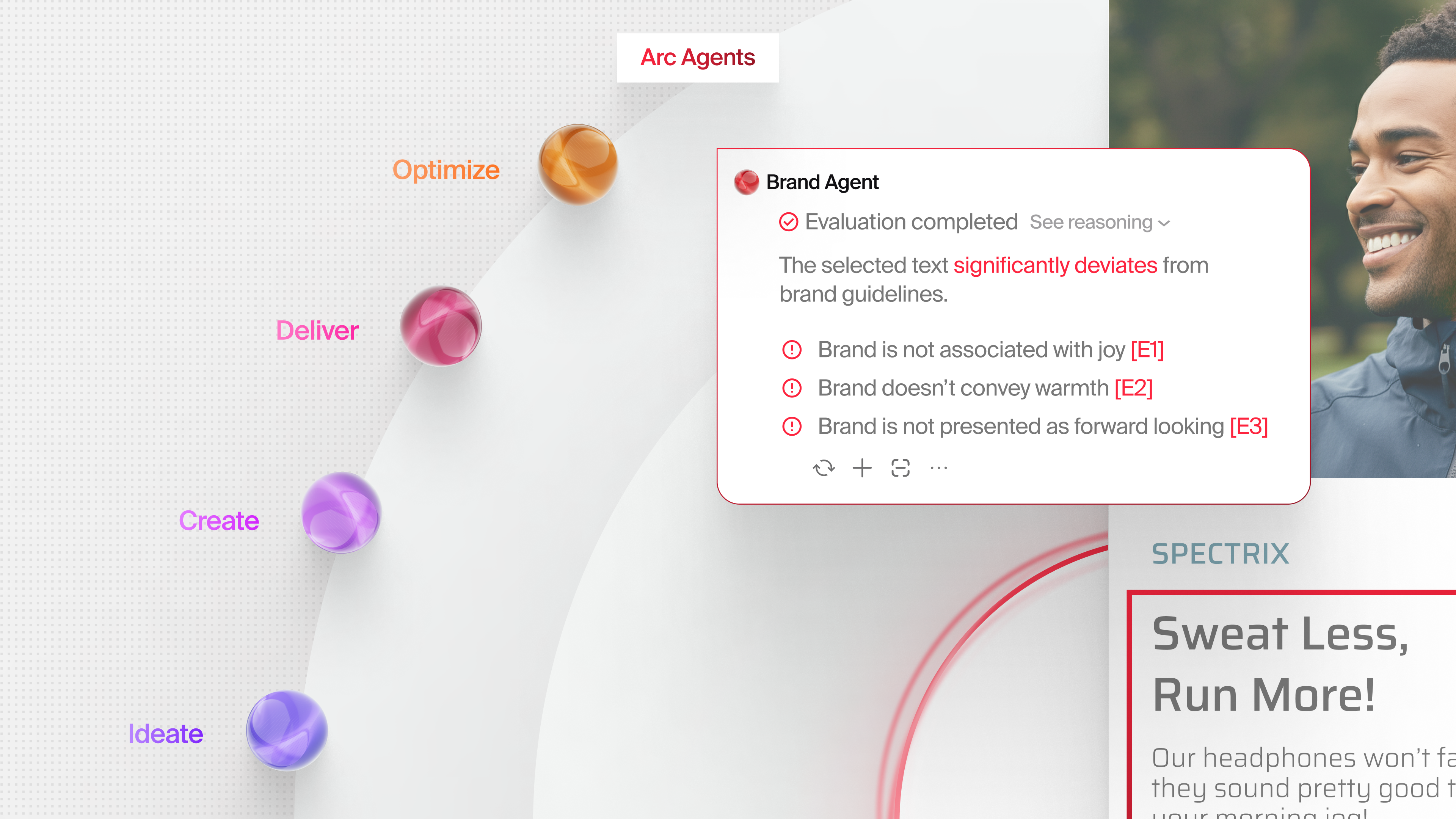
Develop comprehensive style guides that AI tools can refer to for maintaining brand consistency. Typeface's Arc Graph learns and remembers everything about your brand. Our Brand Agent ensures that everything you create, across all channels, stays perfectly ON-BRAND.
Legal and ethical considerations
When implementing AI for localization, legal and ethical considerations cannot be overlooked. Issues such as data privacy and ethical use of AI are paramount.
Adherence to local and international regulations is crucial. Make sure that the AI platform you choose takes these regulations seriously. Typeface, for instance, has very strict data privacy protocols and an AI Acceptable Use Policy in place to ensure responsible and legal use of the technology. Being proactive in these aspects helps safeguard your company from legal issues while fostering trust among your global audience.
Create localized content at scale with AI
For businesses aiming to expand their reach, the combination of AI tools with human expertise is the key to successful localized content marketing. By using AI to handle bulk tasks and streamline processes, marketing teams can have more bandwidth to focus on tailoring content to be culturally relevant and emotionally resonant.
Get a demo to understand how Typeface’s generative AI capabilities can transform your content marketing strategy.
Frequently Asked Questions
How is AI localization different from machine translation tools like Google Translate?
Tools like Google Translate convert text between languages but don't adapt for context, tone, or cultural fit. AI localization platforms are designed for marketing use cases — they maintain brand voice, adapt messaging for local audiences, and can handle visuals alongside copy.
Can AI localization handle visual content, not just text?
Yes. Modern AI localization tools can generate or adapt images, ad creatives, and social media visuals for different markets — including adjusting seasonal imagery, cultural settings, and representation.
How much faster is AI localization compared to traditional methods?
Speed depends on the volume and complexity of content, but AI-powered platforms can typically reduce the time from brief to localized draft from days to hours for standard campaign assets.
Related articles

February 10, 2026
Most brands have the customer data to create personalized content. The problem is, they lack the connected workflows that turn information into relevant experiences. AI can be the connective layer th

August 3, 2026
Content marketing trends are valuable in answering questions ranging from “Should we jump on X now that it’s taking off?” to “Should we start laying the foundation for Y in our five-year plan?” In a d
March 9, 2025
Leveraging breakthroughs in generative AI, visionary enterprises like Microsoft, ASICS, Marks & Spencer, and Johnson Controls are partnering with Typeface's industry-leading Marketing AI Platform to a