September 7, 2026
How to Use AI Ad Generators to Create Personalized Campaigns Faster

Neelam Goswami
Senior Content Marketing Associate

AI summary
AI ad generators help marketers create personalized, high-converting campaigns up to five times faster by automating copy and visuals. With enterprise AI marketing platform Typeface, you can create, adapt, and scale banner and social ads across channels and run rapid A/B tests while staying on brand.
Creating high-converting ad campaigns can take countless hours of brainstorming, crafting the right message, ensuring it resonates with the right audience and so much more. Even then, your ads may still miss the mark on personalization or fail to motivate the customers you’re targeting.
Thankfully, with an AI ad generator in your arsenal, you’ll be creating dozens of personalized variations in the time it takes you to write one. You can test which ones resonate with your audience and create a feedback loop that helps AI refine campaigns over time.
In this blog post, we’ll show you how AI ad campaign generation improves speed and personalization while maintaining brand consistency.
What are AI ad generators?
AI ad generators create personalized, multi-size ad sets from your inputs. To create targeted, on-brand ads aligned to your campaign objective, they need a few things from you, like your campaign brief, ad layouts, writing and visual guidelines, persona docs, and reference material like product sheets, FAQ lists, and sales transcripts. Together, these form the grounding content to inform AI’s understanding of your campaign, brand, and audience.
In Typeface, these inputs are stored in a knowledge graph called Arc Graph that informs every ad generation in the platform. Arc Graph connects to your CDP and DAM to stay current with your brand, and your existing ad creation tools like Figma, to bring in your ad layouts for copy and visual generations. Set up your brand system and workflows once, and create campaigns that stay on-brand.
Why should you use AI for advertising campaigns?
Having an AI ad generator in your tool stack is like having a team of seasoned copywriters and visual designers available 24/7. For example, a Fortune 500 automaker used Typeface to produce 4x more personalized ad variations with different product lines and landscapes to match each target segment and market in half the time they usually invest.
Some of the key benefits of using AI for advertising include -
Speed: Traditional methods often involve multiple rounds of brainstorming, drafting, and revising. AI ad generators streamline this process, producing compelling ad copy and visuals in a fraction of the time.
Personalization: AI excels at analyzing data from diverse sources to understand your audience's preferences, behaviors, and needs. With this insight, it can generate personalized ad content that speaks directly to your customer, enhancing engagement and conversion rates.
Consistency: Maintaining brand consistency across different campaigns and platforms can be challenging. AI ad generators ensure that your brand voice and visual identity remain cohesive, regardless of the medium.
Scalability: Publish ad campaigns to more regional markets, audience segments, and product lines, without the equivalent effort.
5 ways to use AI ad generators for your campaigns
The first step is choosing the right AI ad generator for your requirement. Ideally, you should look for an AI ad generator that:
understands your unique brand and context to give you more accurate, relevant results;
integrates with your existing platforms and workflows; and
offers intuitive tools and workflows, so it's easier to train and upskill with AI for everyone without being a prompt engineer.
In Typeface, you can create end-to-end ad campaigns with integrated workflows for campaigns and testing. So, you don’t only generate ads but also remove the friction that holds up reviews and publishing, giving your team the confidence to act when the moment matters. See how AI ad generation improves your operational readiness and increases bandwidth for strategic and creative work.
1. Use AI for creative briefs in advertising
If you're working with a team of copywriters and marketers, the traditional way makes it essential to have a creative brief for every ad campaign. This step of creating a brief may often be skipped because it takes time and effort. Getting an idea into production takes a lot of back-and-forth to create briefs between siloed teams and agencies.
AI can greatly reduce the time it takes to get a creative or marketing brief for your next campaign to your internal creative team or marketing agency. AI can quickly generate comprehensive briefs outlining the goals, message, and requirements for any ad campaign.
The AI-generated creative brief also includes budget and timeline, metrics and KPIs, and more. You can even prompt the AI to include target keywords and other critical information in the brief. With Typeface, we can integrate with your existing content libraries. Thus, by selecting the relevant documents and plans you’ve already created, this will inform the creative brief further to make it even more accurate and relevant to your team and project.
2. Generate ad copy using AI
When it comes to creating high-performing ad campaigns, copy is everything. However, coming up with copy ideas that hit the bull's eye every time is not easy even for experienced copywriters. Or sometimes, we are just running on fumes and could use a little creative inspiration. This is where AI ad copy generators can be your creative partner.
An AI ad copy generator can help you create multiple versions of copy for different audiences, channels and advertising goals in a fraction of the time. That means you can:
Expand personalization to more segments
Test more variants to surface winners faster
Localize copy without always relying on local agencies
Create campaign on-demand without burnout
3. Generate images with AI for ad campaigns
Images or any other visual assets in your ad campaigns play a very critical role too. Whether you're giving your customers a taste of your product with stunning product shots or trying to capture their attention with eye-catching visuals, getting these assets right is imperative.
Capturing these images can be expensive. Especially product photography, where you need to hire professionals and even go on location in some cases.
AI ad generators can make this a lot simpler, and cheaper. From generating custom images with simple text prompts to incorporating your image assets into your ads, an AI photo generator can help across personalization, localization, and testing use cases.
4. Use AI to auto-adapt ads for multiple channels and markets
Adapting your ad creatives to different platforms and placements is a grind and exactly the kind of boring stuff AI can easily handle. AI can resize your ad creatives to fit any format for any channel, without affecting your design or layout. Your visual designers can save hours of work manually producing creative variations or resizing existing designs.
5. Maintain brand consistency across channels
Creating ads that reflect your brand's personality and also resonate with your target customers is by far the most challenging part of advertising. AI trained in your brand grammar and visual style helps you maintain tonal and visual consistency across channels. It applies the same logic to each piece of content, sticking to the exact palette, voice, and rules you specify, even when creating thousands of ads.
How to use Typeface’s AI to generate ad campaigns
Much of ad creation today is a workflow of disconnected tools and lengthy approvals, leading to missed moments and burnout. Typeface’s Arc Agents and collaborative workflows speed up ad production and act as creative multipliers while maintaining brand consistency.
Ad production in Typeface agentic marketing platform
A quick look at how Typeface supports enterprise ad production workflows:
Specialized agents: Typeface is multimodal, with each agent owning a channel, like web, email, ads, and video, and the full team working together on every campaign. Ad Agent leads ad creation, tapping the agent network to pull it all together.
Knowledge graph: Arc Graph is your brand's memory, centralizing your style guides, ad layouts, company facts, audiences, messaging docs, product sheets, all in one place. Every ad pulls from it automatically to keep your ads on-voice and visually-compliant.
Create in Arc Spaces: One canvas for generating, handing off, and publishing ads. Plug in your tools and move brand context across them through purpose-built connectors and Typeface Model Context Protocol (MCP). Shuttle ad layouts between Typeface and Figma. Brainstorm CTAs in Claude. Build fast, stay on brand.
Use cases
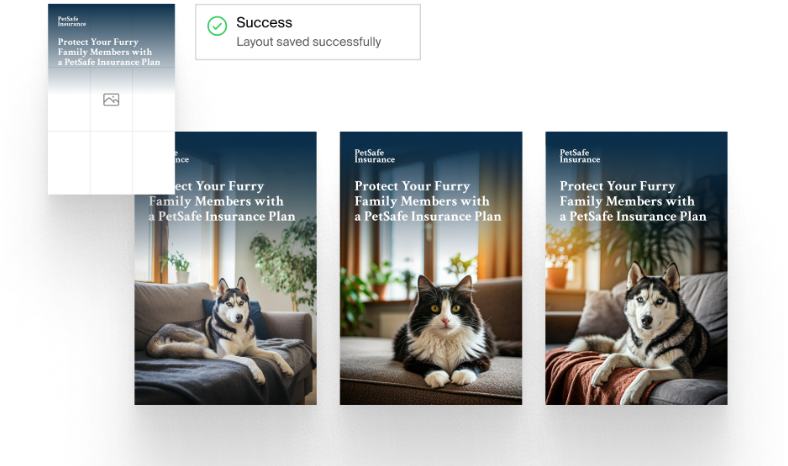
Bulk create banner ads for Google Display Network and partner sites
Create ads for Meta, LinkedIn, and X
Repurpose existing brand content into ads through multimodal creation
Create ad variations across audiences and languages
Automatically adapt your design for different channels and sizes
Create campaign teasers and seasonal promos
How to create a personalized banner ad campaign in Typeface
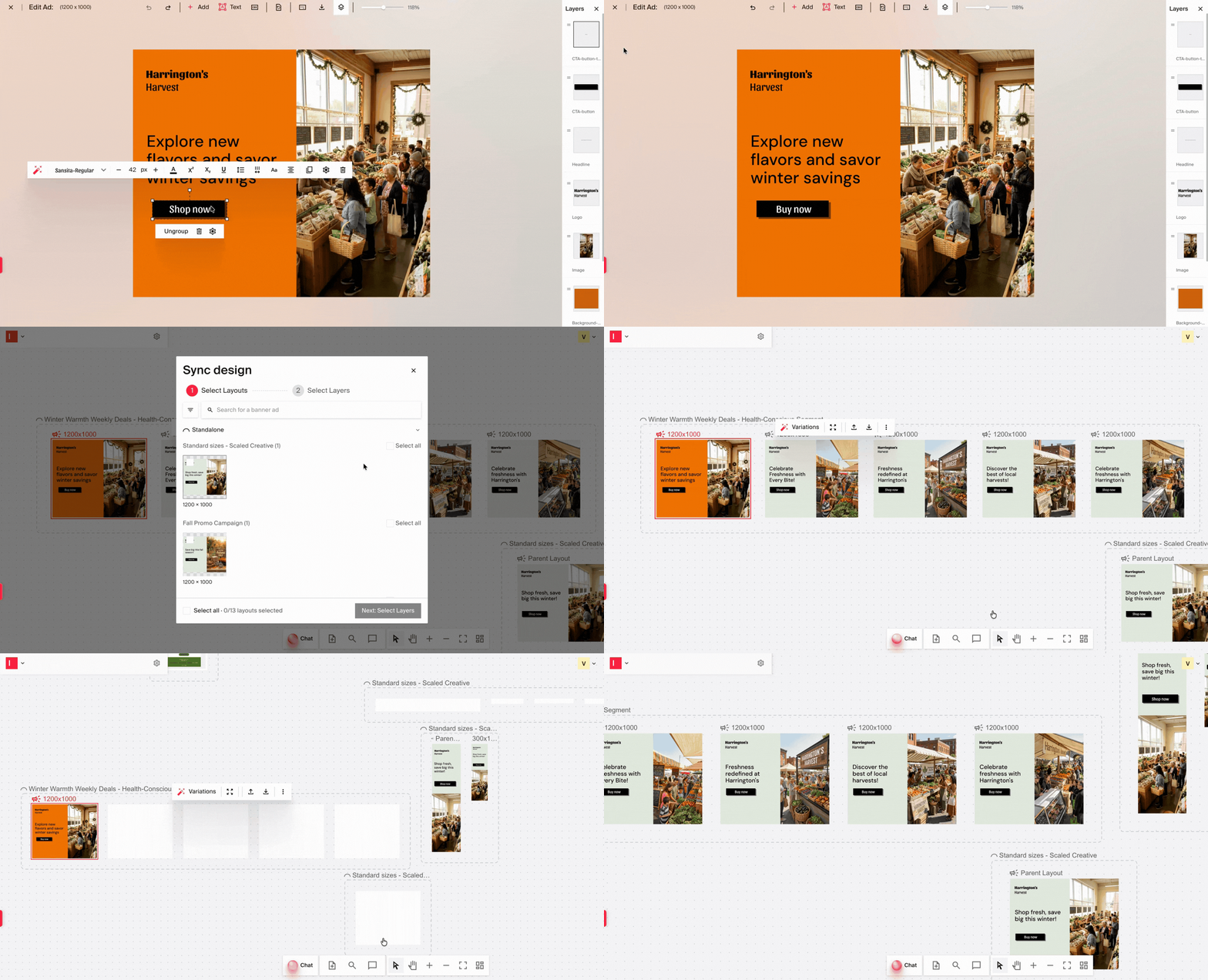
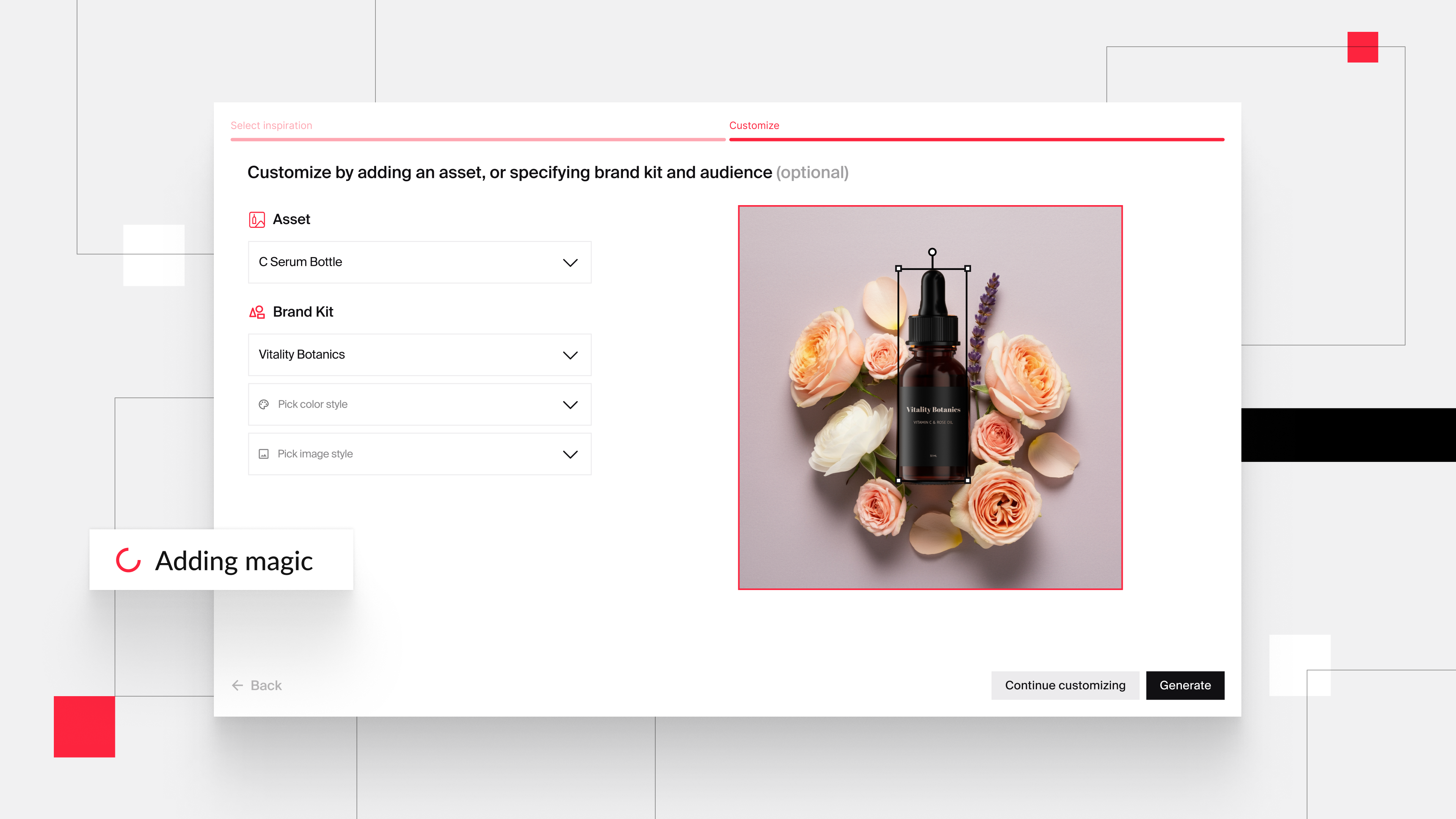
1. Add your inputs: Use natural language search to select an ad copy layout to use for the generation. Attach the necessary context, like your campaign brief, audience, and product documents.
2. Ad Agent generates banner ads: Ad Agent uses your inputs to create banner ads. Review and edit them using built-in tools. A few things you can do:
Replace images or generate new ones
Edit headlines and copy
Rearrange text and visuals
Change CTA button colors
3. Publish to multiple platforms: Make AI work some more to have your campaign ready faster:
Auto-resize ads for different formats and placements
Select different audience segments to generate personalized variations, copy and image included
Create ad sets tailored to different offers without repetitive manual design
Auto-resize ads for different formats and placements
4. Test and publish: Run more A/B tests or rotate creatives quickly to combat ad fatigue.
Related reading:
Best practices for creating personalized AI ad campaigns
Key points to keep in mind when using AI for ad campaign generation:
Maintain brand consistency: Ensure that your ads reflect your brand's voice and visual style, even when personalized for different audiences. Set up your brand system in the AI ad platform to create compliant campaigns every time.
Test and learn: Implement A/B testing to gauge the performance of different ad variations. Use insights from these tests to inform and improve subsequent campaigns. Using AI ad generators makes this easier as you can generate multiple variants in seconds.
Monitor performance: Keep a close eye on key metrics such as click-through rates, conversion rates, and engagement levels. Use this information to continuously improve your inputs to the AI ad generator for better ad campaigns.
Iterate quickly: One of the greatest strengths of AI ad generators is their agility. Capitalize on this by frequently updating and optimizing your campaigns based on real-time feedback.
Your path to faster, smarter ad campaigns
AI ad generators can dramatically accelerate the creation of personalized ad campaigns. By integrating these intuitive tools into your marketing strategy, you can achieve faster turnaround times, micro targeted campaigns, and significantly improved ROI.
If you haven't yet, now's the right time to test out the potential of AI ad generation on Typeface. Get a demo to experience a smarter way to design ad campaigns.
Related articles

April 2, 2026
Most enterprise marketing teams are already using some form of generative AI. The real question isn't whether to use it — it's which workflows are actually worth your attention, and which ones will cr
October 9, 2024
As AI becomes more commonplace, marketers and creatives have looked to this technology for efficient ideation and on-brand content creation. However, many find themselves struggling with prompt engine
May 10, 2024
Made with Typeface This blog was generated using Typeface’s blog post template based on an outline, resulting in: • Total time savings of 5 hours for this blog • 63% decrease in composition time Pict