November 26, 2025
From Creative Chaos to Consistency: Measuring ROI of AI-Driven Ad Personalization

Michal Bloch Ron
Director of Product

AI summary
AI-driven ad personalization helps enterprises quickly create, test, and optimize hundreds of on-brand ad variants, cutting production time and costs while improving performance. ROI isn’t just clicks and impressions; it also includes faster launches, consistent quality, and stronger engagement. With Typeface, teams scale creative, stay on brand, and continuously improve results over time.
For most enterprises, it’s now normal to be managing multi-brand portfolios, reaching diverse audiences, and delivering rapid, personalized ad creative across channels. Ad personalization is non-negotiable today, and it’s no wonder, as personalized campaigns can improve the efficiency of marketing spend by nearly 30%.
Still, many organizations still struggle to achieve this, tangled in manual processes and fragmented workflows.
Traditional ad creation processes mean making certain trade-offs — between speed and quality, between personalization and brand consistency, between campaign ambition and team bandwidth. Most teams rely entirely on copywriters and designers to resize, rewrite, and repurpose variants manually, leading to:
Long lead times and high production costs
Reduced experimentation and fewer creative tests
Generic campaigns that may drive clicks, but not conversions or return on ad spend (ROAS)
In our interactions with enterprise marketing leaders, we've seen firsthand how they often measure misleading metrics like CTR, while losing out on lead conversions as their content is not sticky, timely or meaningful enough.
However, generative AI and creative workflow automation are redefining how large organizations approach ad creative personalization. By helping teams scale ad personalization while maintaining brand consistency, AI eliminates the traditional trade-offs that limit campaign effectiveness.
For CMOs and marketing operations leaders, understanding the real ROI of AI ad variant generation matters more than ever.
In this guide, you'll learn:
Why traditional ad personalization hits a wall at enterprise scale — and what it's really costing you
How AI-driven ad creation changes the math on production time and cost-per-variant
Six metrics that matter more than clicks and impressions when measuring AI ad ROI
How to build a performance loop that makes your creative output smarter over time
What to look for in an AI creative system that actually scales with your team
Why scaling ad personalization remains a major challenge
Most enterprise marketing teams hit the same wall: they need hundreds of ad variants to stay competitive, but their current processes weren't built for that volume.
Take a global beverage brand we worked with. They needed geo-specific imagery pairing their drinks with local cuisine for hundreds of point-of-sale banners across Latin America.
Under their manual process, this meant creating 200+ unique assets at roughly 3 hours each — that's 600 hours of creative work, or about $45,000 in production costs alone, before media spend.
The bigger problem? Manual workflows mean 3 to 4 week lead times from brief to launch. In fast-moving markets, that delay kills opportunities.
This creates a cascade of problems that every marketing leader recognizes:
High costs and long lead times for content creation, especially when managing multiple brands and regions. This ends up slowing brand presence, which is critical in marketing today where content has to be delivered frequently.
Inability to create a long tale of a highly personalized campaign. Instead, brands end up creating generic ads that measure in CTR but not in lead conversion or ROAS.
Inability to pivot as needed and adapt to changes in market trends on the fly.
Creative teams are overburdened, slowing down responsiveness, and focused on redundant and tedious manual tasks.
Marketers struggle to scale and repurpose assets, limiting campaign reach and performance.
Here's how the beverage brand overcame these roadblocks
Here's how the beverage brand overcame these roadblocks
They leveraged Typeface to scale their creative process. Instead of weeks, our Ad Agent and powerful image generation capabilities allowed them to produce hundreds of creatives in minutes, while staying on-brand and relevant to customers in their target markets.
Typeface's built-in prompt knowledge made the job easier for their creative team. No complex prompt engineering or extensive manual editing meant they could focus on the finer details of the campaign.
The result? Faster time-to-market, better personalization, and creative teams that actually enjoy their work again.
How does AI ad personalization differ from traditional rule-based personalization?
Rule-based legacy systems for ad personalization tend to be more deterministic, with limited ability to change on the fly or personalize messages where needed. AI-driven ad creative personalization is significantly more flexible and faster in comparison, offering scalable ad production while still maintaining quality and consistency.
Here's what an AI-driven process looks like in practice: once you've set up your brand guidelines and templates, AI can generate 50 ad variants in the time it takes to create 2 manually. That's not theoretical — it's what teams using creative workflow automation are actually doing, right now.
On Typeface, for instance, you can save all your brand assets, approved messaging, and audience segments. The AI understands your brand voice (not just matching keywords, but grasping what your brand is really about), then creates variations that align with the audience preferences. The Ad Agent can automatically gather brand and audience data from the Arc Graph and create targeted ads, ensuring dynamic creative optimization for your target audience and advertising platform of choice.
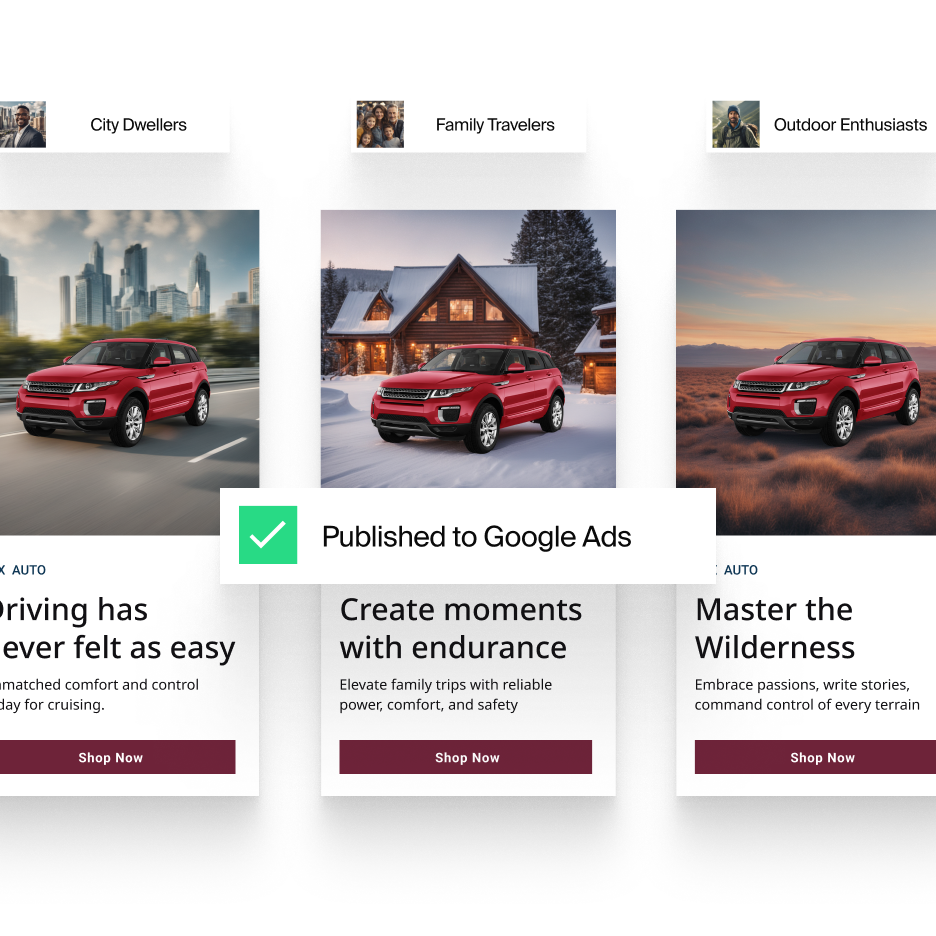
The aim with AI ad creative personalization is to dramatically lower the barrier for marketers to launch high-quality, high-performing ads across all key formats.
Key benefits from AI ad personalization
Campaign speed gains: Generative AI dramatically reduces the time required to develop and launch campaigns. For instance, before their year-end sales event, a Fortune 500 automotive company used Typeface to create personalized ad variations for different audience segments 52% faster with 4X more tailored ad creatives, significantly boosting campaign effectiveness.
Creative diversity: Creative teams can efficiently customize ad templates and tailor ads for various audience segments and global markets with AI.
Demand gen: AI can help generate demand, drive performance, and deliver strong ROI with multi-format ads across social media and other channels.
AI ad testing: The quick turnaround times with AI allow marketers to test more variations at scale to personalize the ad experience faster and more efficiently.
AI creative governance: AI with creative governance ensures better compliance with brand rules and legal requirements as well as consistent quality at every stage.
How can CMOs and marketing teams measure the ROI of AI ad personalization?
Traditional performance metrics — impressions, clicks, conversions — only tell part of the story. The deeper ROI of AI ad personalization isn’t just faster production; it’s smarter optimization, consistent branding, and ultimately, more revenue per dollar spent.
Here’s how to think about measuring that shift.
What metrics matter beyond impressions and clicks?
Marketing leaders need to think beyond just performance. ROI in AI ad personalization should also take into account employee experience (how their work is impacted), audience experience (what keeps audiences engaged for longer), and more.
Some key KPIs to track for of ROI from AI ad personalization could be:
Time-to-launch: Track hours saved per campaign, reduction in creative review cycles, and time-to-market. Content generated with Typeface often aligns better with brand standards out of the gate — cutting down on back-and-forth between design, legal, and marketing teams. Content workflow manager also ensures smoother, faster approval workflows and handoffs.
Quality consistency metrics: Assess brand guideline adherence rates, review rejection rates, revision requests. Typeface’s AI agents, trained on brand guidelines and audiences, typically result in fewer rewrites or redesign. The Brand Agent also helps audit AI-generated content faster for brand alignment and compliance.
Creative performance lift: Measure how AI-generated variants perform against existing baseline creative — look at improvements in CTR, conversion rate, and ROAS across different audience segments. This reveals whether AI ad creative personalization actually drives better results or just creates more volume.
Variant engagement velocity: Track how quickly different personalized versions generate statistically significant data, helping teams iterate faster and reduce campaign lag. When you have 50 variants instead of 5, you reach statistical significance 10x faster.
Ad fatigue mitigation: Monitor ad frequency, campaign lifespan before fatigue, engagement rate decay over time, and variant performance distribution. AI allows generating fresher variants much faster than manual processes, keeping campaigns effective longer.
Message testing depth: Gauge the number of headline, CTA, and visual combinations tested per campaign versus testing limits with manual creation. AI enables testing 100+ message variations where manual processes might test 10.
Can AI contribute to ad production cost reduction long-term?
The cost structure shifts dramatically. Instead of linear scaling (more variants = proportionally more cost), AI systems create economies of scale. Your 100th ad variant costs nothing extra to produce once you've set up the system.
Teams can achieve up to 50-70% reduction in cost-per-variant after the first few campaigns. That means the upfront investment in AI tools and setup typically pays back within 2-3 campaigns for most enterprise teams.
Real-world success with Typeface
Real-world success with Typeface
Scaling from banners to campaigns:
One enterprise client used Typeface to expand a small set of banners into hundreds of channel- and persona-specific variants. What used to take weeks was produced in under 30 minutes — freeing teams to focus on strategy.
Speed and compliance benefits:
With Brand Agent and Workflow Manager, assets are aligned with brand rules from the start. That means fewer revisions, faster approvals, and smoother cross-team handoffs.
What's ahead?
Beyond production savings, upcoming creative intelligence tools in Typeface will analyze variant performance, surface high-performers, and continiously improve outputs with this creative intelligence, turning production into a self-optimizing engine.
The future of creative operations
To future-proof creative operations, leadership needs to clearly communicate that AI won't replace creative teams, but it will change how they work.
Market pressures are intensifying the need for faster, more responsive creative operations. As new business models like GEO (Generative Engine Optimization) and AEO (Answer Engine Optimization) emerge, brands need to maintain fresh, relevant creative across more touchpoints than ever before.
Traditional creative bottlenecks — where teams wait weeks for approval cycles — simply won't work when competitors can adapt their messaging in real-time. Brands that can't keep pace with the speed at which digital conversation is evolving will lose relevance.
The most successful marketing organizations are already adapting their roles and processes, building performance loops that continuously improve their creative output.
Launching a performance loop
With generative AI plus performance intelligence, CMOs can create a self-improving creative system. You can start with your existing brand templates or with your past or active campaigns to train AI systems and improve or better personalize outputs. Here’s how it goes:
Generate variants based on brand templates and past campaigns: Start with your approved brand assets and messaging or simply use a successful past campaign. This lets the AI study your brand and audience, and understand expected outcomes, to create multiple variations for different segments and channels.
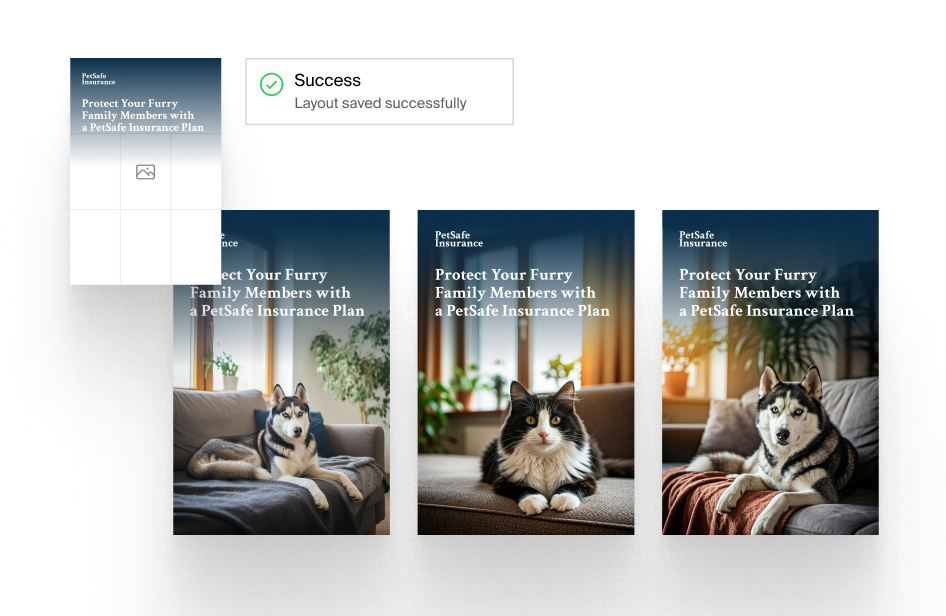
Measure which formats, imagery, or messaging resonate most: Track performance across all variants to identify what's working. Not just overall campaign performance, but which specific elements drive results.
Feed those insights back into the AI model: Use performance data to further train the AI system on what good output looks like for your brand and audiences. The system learns your specific success patterns.
Generate the next round of optimized creative: Apply those learnings to create even better variants, incorporating the messaging, visuals, and formats that performed best.
This closes the loop between creation and optimization, driving continuous improvement rather than one-off campaigns.
Building the right system
Not all AI creative tools are built to scale ad creative personalization or learn from performance insights. CMOs should look for systems that support:
Multi-channel, multi-format output: Your AI system should be able to create variants for social, display, video, and email using the same brand guidelines. This ensures consistency while adapting content for each channel's specific requirements. Typeface’s multimodal content studio is a perfect example of such a system, helping you create on-brand content for all your marketing needs.
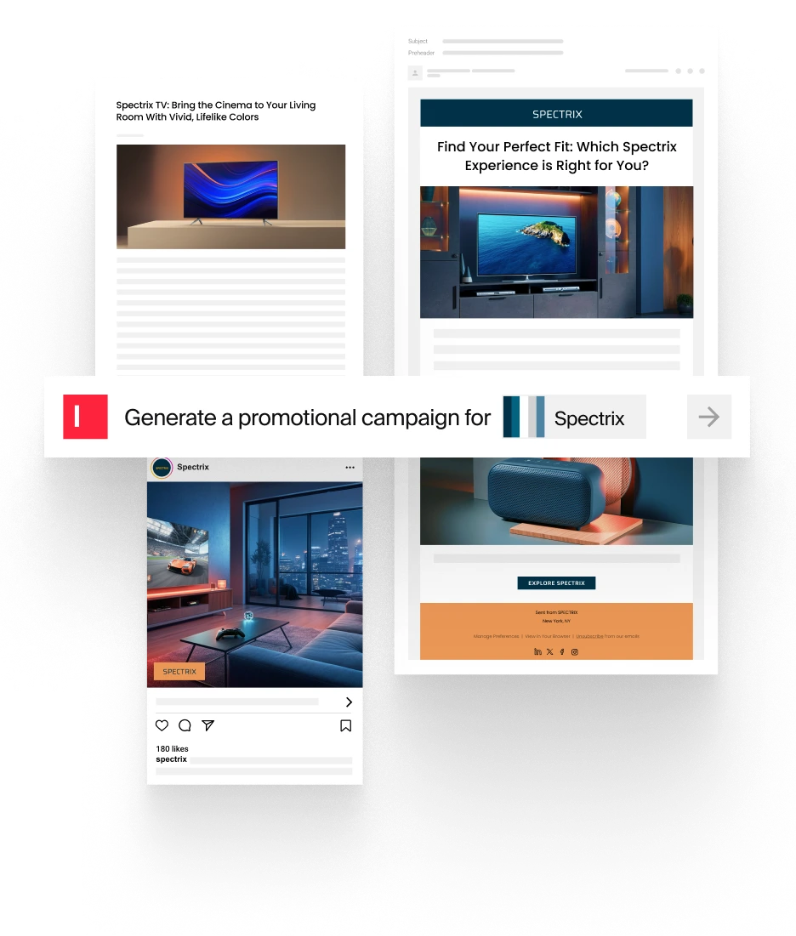
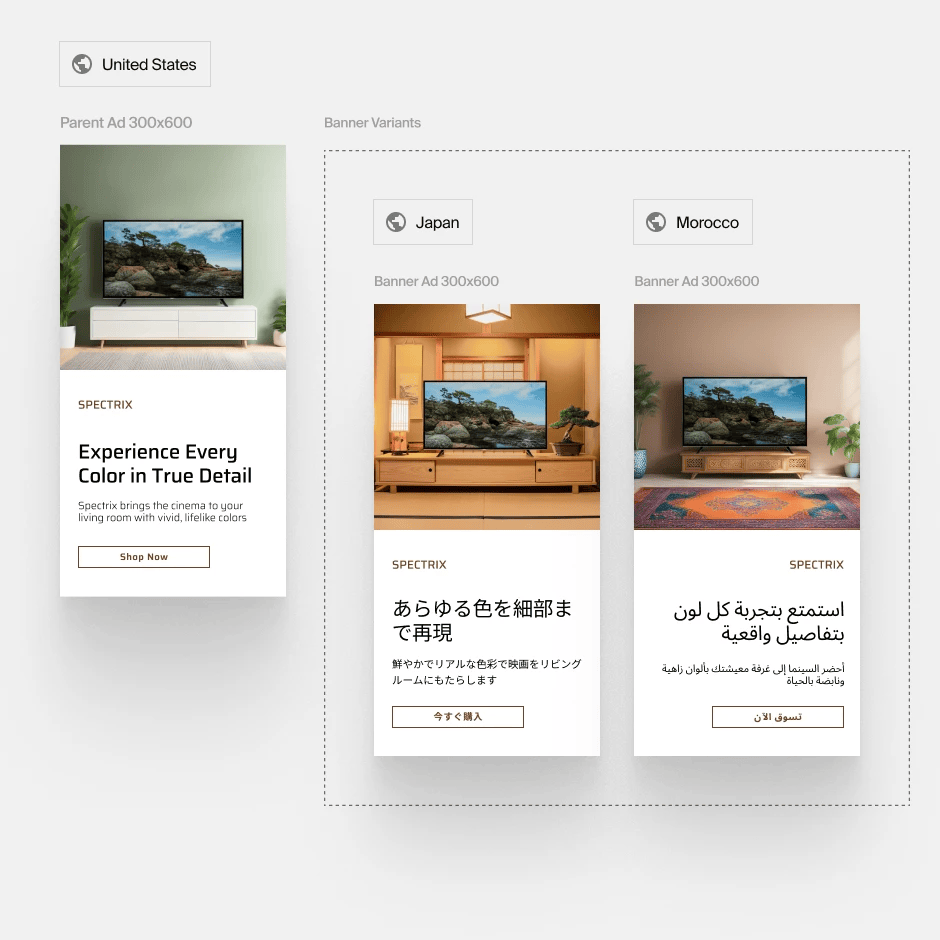
Personalization per audience segment and geography: True personalization means more than swapping names. It means understanding how different audiences respond to different messages, visuals, and offers, then creating variants accordingly. Typeface excels at creating personalized and localized ad variants for different audiences and markets, including different headlines, imagery, and CTAs.
Automated governance: As your creative volume increases, manual approval becomes impossible. Look for systems with built-in brand compliance, easy review workflows, and automatic flagging of off-brand content. Strong AI governance is built into the very fabric of our AI marketing platform. Brand Agent on Typeface can analyze your content to identify brand compliance issues and even suggest improvements, while features like Responsible AI ensures strong controls and safe use of the technology.
Real-time insights and optimization: The system should connect creative performance back to the generation process, identifying which elements drive results and incorporating those insights into future variants.
Typeface is advancing toward a full suite of these capabilities, helping marketing teams build complete performance loops rather than just faster creative production.
Frequently asked questions about AI ad personalization ROI
How do you calculate ROI on AI ad personalization?
Start by comparing your baseline metrics (production hours, cost-per-variant, and time-to-launch) against results after implementing AI. Then layer in performance gains: improvements in CTR, conversion rate, and ROAS across your AI-generated variants versus manual creative. The clearest ROI often shows up in how many more variants you can test without increasing budget.
What KPIs should I track for AI-generated ads?
Go beyond impressions and clicks. Track time-to-launch (hours saved per campaign), quality consistency (revision requests and rejection rates), variant engagement velocity (how fast you reach statistical significance), and ad fatigue metrics (how long campaigns stay effective). These reveal whether AI is driving real results rather than just more volume.
Is AI ad personalization worth it for smaller marketing teams?
Yes — and in some ways, it's even more valuable. Smaller teams face the same pressure to personalize across channels and audiences, but with fewer resources. AI lets a lean team produce the variant volume that used to require a full creative department. The key is choosing a platform that doesn't require technical expertise or complex prompt engineering.
How does AI ad testing compare to manual A/B testing?
The difference is scale and speed. Manual processes might let you test 5-10 variants per campaign. AI enables testing 50-100+ variations across headlines, CTAs, imagery, and audience segments — all in the same timeframe. More variants mean you reach statistical significance faster and learn what actually drives performance, not just what you had time to test.
Can AI maintain brand consistency while personalizing at scale?
This is actually where AI shines. Once you've set up your brand guidelines, voice, and visual standards, the AI applies them consistently across every variant — no matter how many you create. Human teams naturally introduce variation; AI trained on your brand produces more consistent output. Tools like Brand Agent can also audit content automatically, catching compliance issues before anything goes live.
What's the difference between AI ad personalization and rule-based personalization?
Rule-based systems follow predetermined "if-then" logic — e.g., "if the user is in Texas, then show this image." AI-driven personalization is more flexible and contextual. It understands your brand voice, grasps audience preferences, and generates creative that adapts to segments, channels, and markets dynamically. The result is personalization that feels tailored, not templated.
Building the business case for scalable ad personalization
The ROI of AI-driven ad personalization is more about competitive advantage than just cost savings. Digital marketing is constantly evolving and accelerating. Consumer attention spans are shrinking. Ad fatigue happens faster than ever, which is why advertisers are already using AI to serve their channels with fresh, personalized content.
If you want to stay in the game and win, you must rethink your ad campaign strategy. The old playbook of creating a few ad variants per campaign and hoping they last a month is dead. Today's winners create hundreds of variants, test them rapidly, and iterate based on real performance data.
When market conditions change, when competitors launch new campaigns, when audience preferences shift, teams with AI creative systems can respond in days instead of weeks. Ready to explore AI-driven ad personalization for your team? Get a demo of Typeface or take a quick product tour right away.
Related articles

August 18, 2025
In the race to capture attention and drive results, marketing leaders are under constant pressure to deliver ad campaigns faster and at greater scale. AI in digital advertising is taking a lot of thi
November 14, 2025
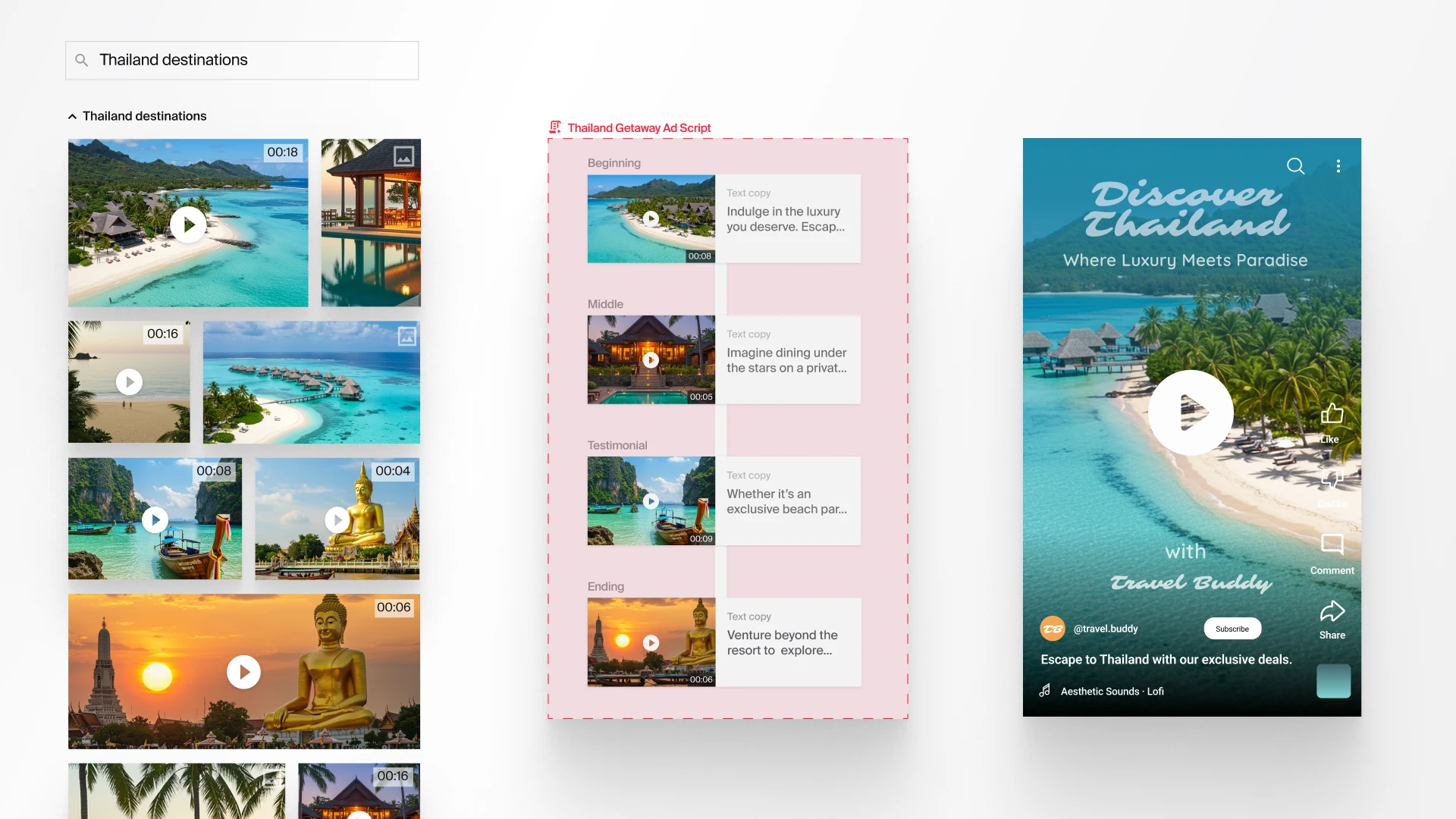
Short-form videos are everywhere right now—scroll through any feed and you’ll see them pull in your attention. The problem? Making them is a pain. One retail marketing team told us they have years of

February 27, 2026
Most marketing teams face a common challenge: create hundreds of on-brand visuals every month without hiring more designers or blowing the budget on photoshoots. This is not without reason, of course.