December 18, 2025
Co-Creation Over Command: A New Playbook for Getting AI Buy-In

Ross Guthrie
Applied AI Strategist

AI summary
AI adoption succeeds when teams are invited to co-create the rollout, shaping how AI fits into their workflows and addressing concerns collaboratively. Involving creative champions, running discovery sessions, and celebrating small wins help turn skeptics into advocates and foster genuine engagement.
You've bought the AI tool. Your exec team is excited about the ROI projections. But three months in, adoption is stuck at 30%, and the creatives on your team are quietly finding workarounds to avoid using it.
Sound familiar?
I work on AI rollouts with marketing teams every day, and I've learned something important: AI isn't usually the problem. The problem is how it’s introduced.
When you command people to use AI, you trigger some deep professional fears. When you invite them to co-create and show how AI fits into their work, you turn skeptics into champions. This article tells you what that actually looks like in practice.
What is the real reason behind AI adoption resistance?
The initial reaction to AI adoption can vary, and it depends on who you're talking to.
Performance marketers drowning in work are usually excited. I worked with a performance marketing team that had great ideas for web articles to build brand reputation. They knew exactly what they wanted to say and how to measure success. They just didn't have the time and resources to actually write everything.
For them, AI meant getting to something editable in hours instead of weeks with agency back-and-forth.
Writers and designers, however, often resist AI for an entirely different reason: they genuinely enjoy the creative process. One of our customers put it perfectly: "We need to think about how to keep the joy in creation."
It's like long-distance runners who learn to love the training, not just the finish line. Writers fear losing the satisfaction of wrestling with ideas. Designers feel the same about the joy of shaping something beautiful.
What they really want is to keep the creative core and use AI to take on the repetitive extensions (resizing, repurposing, adapting copy) so they can focus on the craft.
What happens to team morale and ROI in failed AI rollouts?
Businesses often miscalculate AI’s productivity gains. Executives think: “If AI makes people 3x more productive, we can do the same work with fewer people.” Teams recognize that implication immediately, and trust erodes.
I encourage leaders to shift the question from “How many people can we let go?” to “What can we do with 3x more creative capacity?”
How can teams use those extra hours for deeper customer insight, more creative angles, and more strategic work?
When people understand that AI is meant to elevate, not eliminate, their roles, engagement and performance both rise. Skip that conversation, and productivity drops before AI even has a chance to help.
What is the co-creation approach and why it works
Co-creation means involving your team in designing the AI rollout from the start.
You let them shape how AI gets used, what success looks like, and how their roles will evolve.
This involves:
Running discovery sessions where you surface concerns and turn them into requirements.
Piloting with a small group who helps you figure out what works before you scale.
Celebrating their wins and adjusting your plan based on their feedback.
How co-creation reduces AI adoption resistance
When you involve people early, their emotional resistance drops because they have agency in the process.
Here’s a real example.
Early at Typeface, I worked with a major travel company. The idea of generative AI was relatively new, and they were incredibly resistant at first. Their creative team didn't think AI could do what they do, and their Marketing Manager agreed.
We did 3 calibration rounds, improving outputs based on their feedback. Still skeptical. So, we generated an article without telling them it was AI-created and asked them to score it using the quality rubric they had helped design.
The lead writer was still skeptical. But their manager saw the potential and said, "I spent 15 minutes with this. Is it perfect? No. But give it another half hour and it's ready to publish."
The breakthrough came when we defined what “good” looked like together. Once they could evaluate content objectively, without the emotional lens, AI became a tool rather than a threat.
How do I get my team to adopt AI tools and address AI skepticism?
People resist change they didn’t choose. The shift happens when they move from recipients of change to architects of change. Here’s how to guide that transition.
1. Identify your creative champions (not just your tech champions)
Most companies pick the most tech-savvy people to lead AI adoption. Instead, choose people who can bridge the gap between technology and creativity. They understand both the craft and the business — people who other creatives respect and listen to.
In successful rollouts, I typically see three groups:
The totally resistant. They don't think AI has a place in creative work.
The cautiously curious. They see opportunities but wonder "I'm going to do all this work for what? How does it benefit me?" They see the value, but it isn't aligned to their goals or their bonuses.
The coalition of the willing. They're leaning in and ready to experiment.
Start with the willing. Give them resources and the authority to publish. Their wins convince the cautiously curious. Once they’re in, the resistant follow when they see creative peers succeeding.
How to spot these AI champions?
Look for people who already solve problems creatively within constraints. For instance, they figure out how to produce great work even when the budget is tight or the timeline is short.
They'll be your best co-creators because they naturally think about both the creative and business sides of the problem.
Why early skeptics make the best advocates later
When you involve skeptics early, two things happen:
Their pushback makes your implementation better, asking hard questions that help you avoid real problems down the road.
When they eventually buy in, they're your most credible advocates.
If the lead writer was resistant and now they’re using AI every day, that is way more persuasive than the biggest tech-enthusiast on the team loving it.
You need healthy tension between the technology and the people using it. No tension is actually a red flag — it means you're not really engaging with the hard questions about ROI, quality, and brand alignment.
2. Run discovery sessions, not training sessions
Your first session on AI with your team shouldn't be about how to use the tool. I repeat: The first session should not be about how to use AI.
It should be about understanding what your team actually does and where AI could help. Ask them to walk through their typical week:
What takes the most time?
What's repetitive?
What do they wish they had more time for?
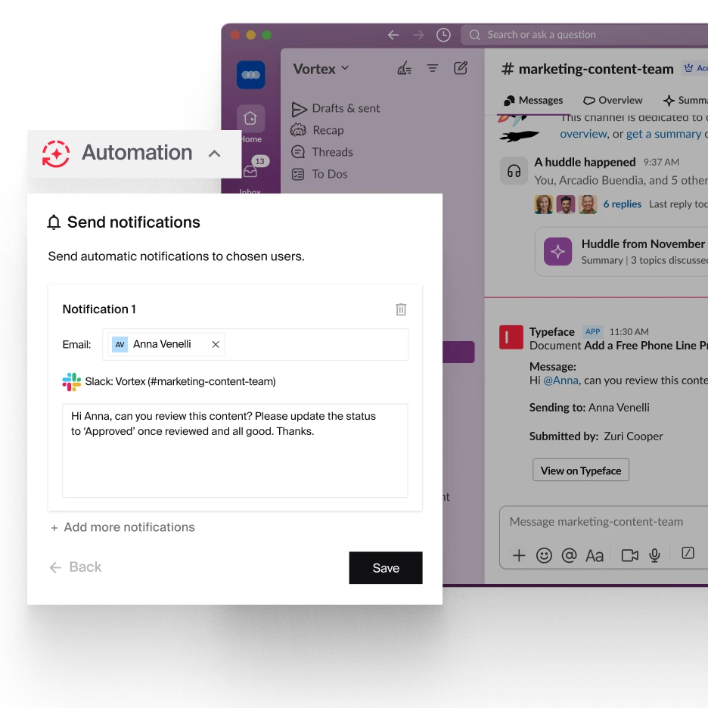
For instance, one team I worked with realized their bottleneck wasn't writing first drafts. It was the six layers of approvals across teams every time they needed to publish something. Typeface’s content workflow manager made this a lot simpler for them by automating a lot of these handoffs and approvals.
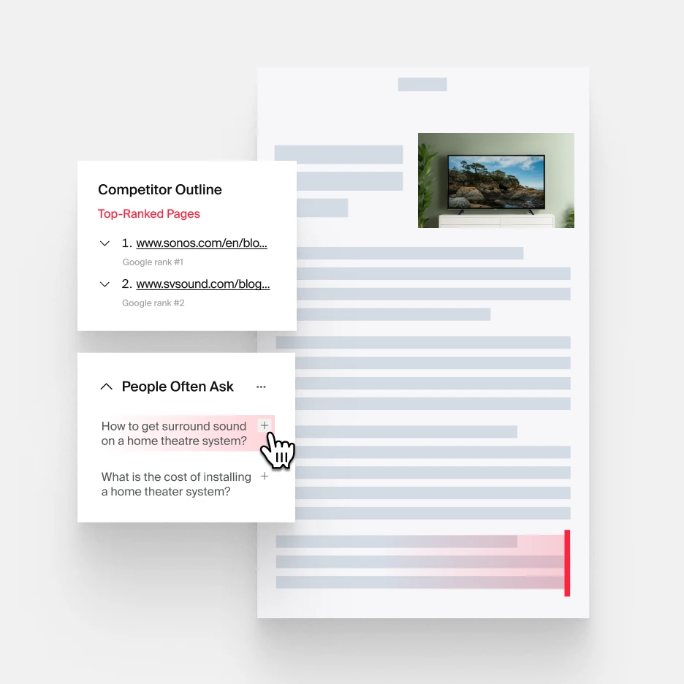
Another team discovered their writers spent hours doing research for articles but loved the actual writing part. Our AI agents sped up research and organization, letting them focus on the craft they enjoyed.
You can't design a good AI implementation without understanding the actual workflow and its challenges.
How to overcome the fear of AI productively?
Create space for people to voice their concerns without judgment.
The surfaced objections are usually about time, training, or technical issues. But underneath are deeper fears about skill relevance or output quality.
Most people tend to think, "If it's not perfect, then it's useless." They feel AI content needs to be 100% ready-to-publish, or it's not worth their time.
But the goal isn't for them to spend zero time writing. Instead, it's to make it so they can probably start at 80% instead of a blank page. AI is like a good thought partner that gives shape to their fuzzy ideas.
Defining the actual role of how AI is going to fit in their day-to-day work is essential to overcoming fear productively.
How to turn AI skepticism into design requirements?
Take every concern seriously and turn it into a requirement.
Someone worries AI won't match your brand voice? That becomes a calibration requirement. You'll spend time training the AI on your brand guidelines and testing outputs until they pass your quality bar.
Someone’s worried how the new tool will fit into their existing tech stack? That becomes a workflow requirement. You need to ensure the AI platform is connected to your CMS, DAM, and marketing automation tools for a frictionless experience.
These insights become the backbone of your AI implementation roadmap.
3. Build together, not for them
Some people have very clear ideas about what they want to create. For them, AI generating a first draft makes sense. They can react to it quickly, make edits, and get to something publishable.
Other people have vague ideas and need AI to research and condense information, helping ideas gel faster. Then they write the content themselves and use AI to organize it.
Let people experiment and find what works for their specific situation.
Forcing everyone into the same process at the same speed is where many rollouts fail.
Pick a program owner to drive the AI initiative
In successful implementations, there's usually a central owner driving the program. This person lives at the intersection of creative and technical, like I mentioned above. They establish a Center of Excellence (CoE) where teams can go to provide feedback, learn how to use the platform, understand what future processes look like, and voice concerns internally.
They socialize wins across teams and relay the team's needs to leadership. This kind of two-way communication is the key to successful rollouts.
4. Celebrate small wins publicly
Don't wait until everything is perfect to share success.
When someone from the “coalition of the willing” gets a win — faster turnaround on a campaign, better performance on content, more time for creative exploration — share that story widely. Incentivize people for adopting and succeeding with AI.
Real examples from peers are more convincing than any executive memo about the importance of AI adoption.
How to document and share co-creation success stories
Make it specific and measurable. Include both efficiency gains and creative benefits.
Don't just say, "Sarah is using AI and loving it."
Say, Sarah used to spend three days writing web articles from scratch. Now she generates a first draft in 30 minutes, spends two hours editing it, and publishes content 60% faster, which frees up time for new messaging angles."
That's concrete. Other people can picture how it would work for them.
Measuring success beyond adoption rates
What metrics actually indicate healthy AI adoption?
Usage rates tell you if people are opening the AI platform. They don't tell you if AI is driving value.
Look at these metrics instead:
Content velocity: How much faster are you publishing?
Content volume: Are you producing more without sacrificing quality?
Quality scores: Is AI-generated content performing as well as human-written content?
Creative satisfaction: Do people have more time for meaningful work?
Skill development: Are new capabilities emerging?
Career trajectory: Do people see a future in an AI-augmented world?
How to track sentiment alongside usage
Do regular pulse surveys. Ask people how they're feeling about AI with questions like:
Do you feel AI is helping you do your job better?
Do you have more or less time for creative work than you did three months ago?
Do you feel supported in learning how to use AI effectively?
What would make this implementation work better for you?
You should see sentiment improve over time as competence and results grow.
When to expand vs. when to pause and adjust
Don't force expansion on a timeline if the pilot isn't working.
If your early adopters aren’t seeing value, don’t scale yet. Pause, diagnose, and adjust your approach first.
If they are seeing value but sentiment is mixed, dig into why. Maybe the use cases aren’t right or teams need more support.
Expand when you have both strong usage and positive sentiment.
From AI adoption resistance to creative co-creation
Traditional change management doesn’t address the identity-level concerns creatives feel with AI. Co-creation does. When you involve your team in designing the rollout from day one, the entire mindset shifts.
The Typeface Customer Success team guides this process end to end — from choosing use cases to brand kit training and ongoing support. Contact our sales team or get a demo to find out how co-creation can transform your rollout.
Related articles

October 13, 2026
You’ve probably seen it happen: an AI pilot shows real promise, gets everyone excited, then never makes it past the initial team. We’ve worked with dozens of enterprise marketing teams that faced thi
June 16, 2025
Earlier this month, I wrote a white paper for Typeface called Agentic AI and the New Era of Marketing. It’s a piece I’ve been thinking about for a long time — because beneath the hype and headlines a

October 13, 2026
Implementing AI is a delicate balancing act. To transform operations, a new technology has to fit naturally into everyday workflows. Rolling it out in phases, within a limited environment, is the best