January 16, 2025
40+ AI Copywriting Prompts for High-Converting Ad Copy

Akshita Sharma
Senior Content Marketing Associate
AI summary
AI copywriting prompts help marketers quickly create high-converting ads tailored to different audiences and platforms. Here's a curated list of 40+ prompt templates to speed up ad creation, scale personalization, and improve performance.
Ad interactions can vary drastically, influenced by psychological factors, ad fatigue, and limited visibility due to ad blockers. When faced with such a complex mix, getting the elements you can control — copy, targeting, and placement — right often determines whether your campaigns succeed.
Yet improving ad performance is no small feat, especially when running campaigns across multiple channels, regions, and audiences. Between strategy, execution, and the constant pressure to deliver strong ROAS, the workload can pile up fast.
That’s where an AI ad generator helps. Integrating an AI ad copy generator into your workflow makes scaling, personalizing, and localizing campaigns far more manageable.
An AI ad copy generator works with minimal input: provide clear copywriting prompts along with your existing ad layouts, campaign assets, and audience data, and it generates relevant ads in seconds. This article will guide you through the process and provide 40 AI copywriting prompts to try.
What is an AI ad generator?
An AI ad generator helps you quickly create banner ads, social ads, and their variations for platforms like Google and Meta. It generates ad copy, images (or uses your approved images and ad layouts), and publishes them to your review or publishing platforms.
You just need to input AI copywriting prompts, and the AI system generates custom ad content (including copy, visuals, and more) based on the information provided.
But here’s the thing: you can help AI create great ads by giving it clear, specific prompts and sufficient context. When you provide your brand voice, background information, and assets that you'd normally use for manual ad creation, the AI generates much better and more targeted results — rapidly and at scale. This is how Typeface’s Ad Agent generates personalized, on-brand ads.
How it works with Ad Agent
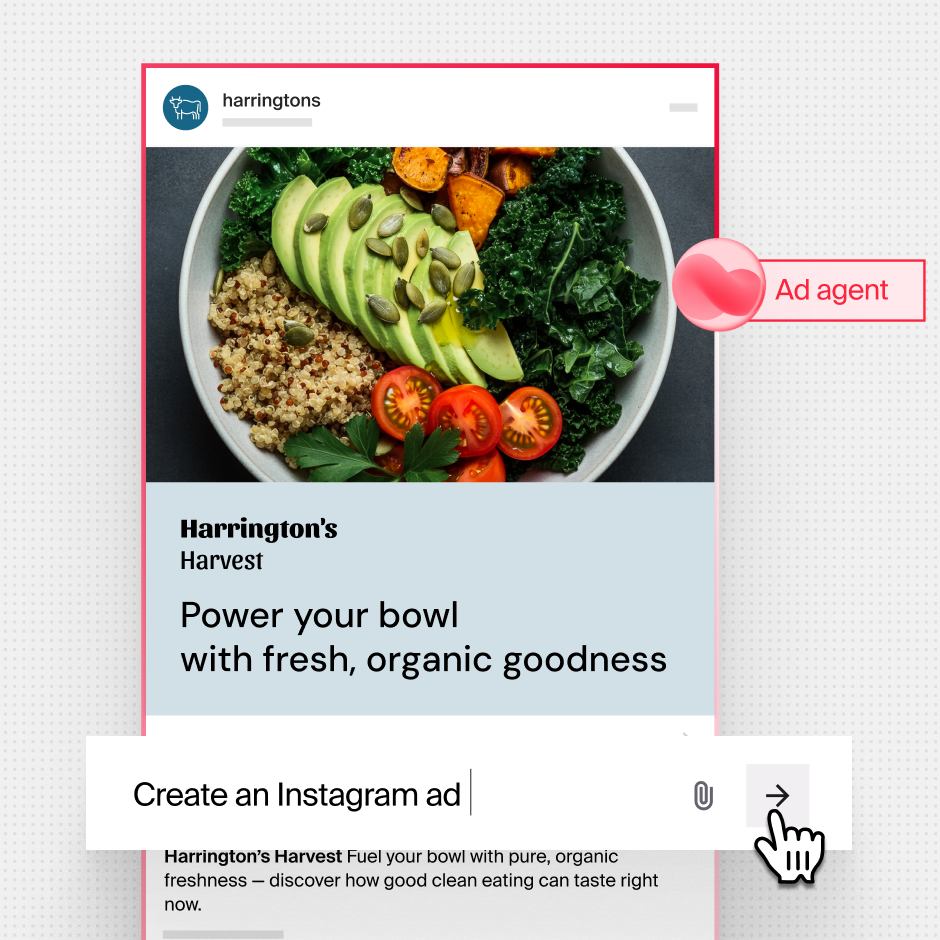
Ad Agent is an AI ad generator that lets you create ads by talking to it like you would chat with a person. Here’s how you can create an ad and its variations using Ad Agent:
Describe what you want (“Create Google display ads for our winter sale”). The agent will ask follow-up questions and build with you. Attach supporting materials to build you ad, including:
Ad layouts, images, documents, and URLs. Typeface connects across your tech stack to create a centralized asset library that teams can use when generating ads. To begin, select an ad (the parent ad) or a product image.
Connect your customer data platform (CDP) or customer relationship management platform (CRM) and select audiences to generate personalized ads. Or create new audiences manually by defining their demographics, interests, and behaviors.
Build your brand kit by teaching the AI your tone of voice and visual style preferences. Link your digital asset management platform (DAM) to access existing messaging guidelines and assets, ensuring every ad stays on-brand.

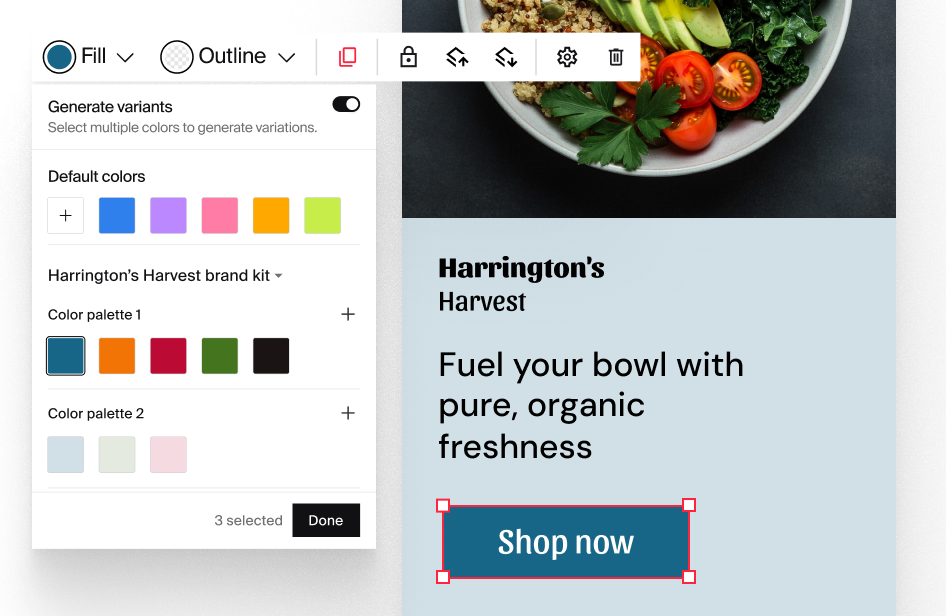
2. Your ad appears on a canvas next to the chat. You can zoom in, review, and easily edit:
Drag and drop text
Change CTA button color
Add images or logos
Make quick in-line copy edits with AI-powered suggestions
3. Hover over any ad to quickly:
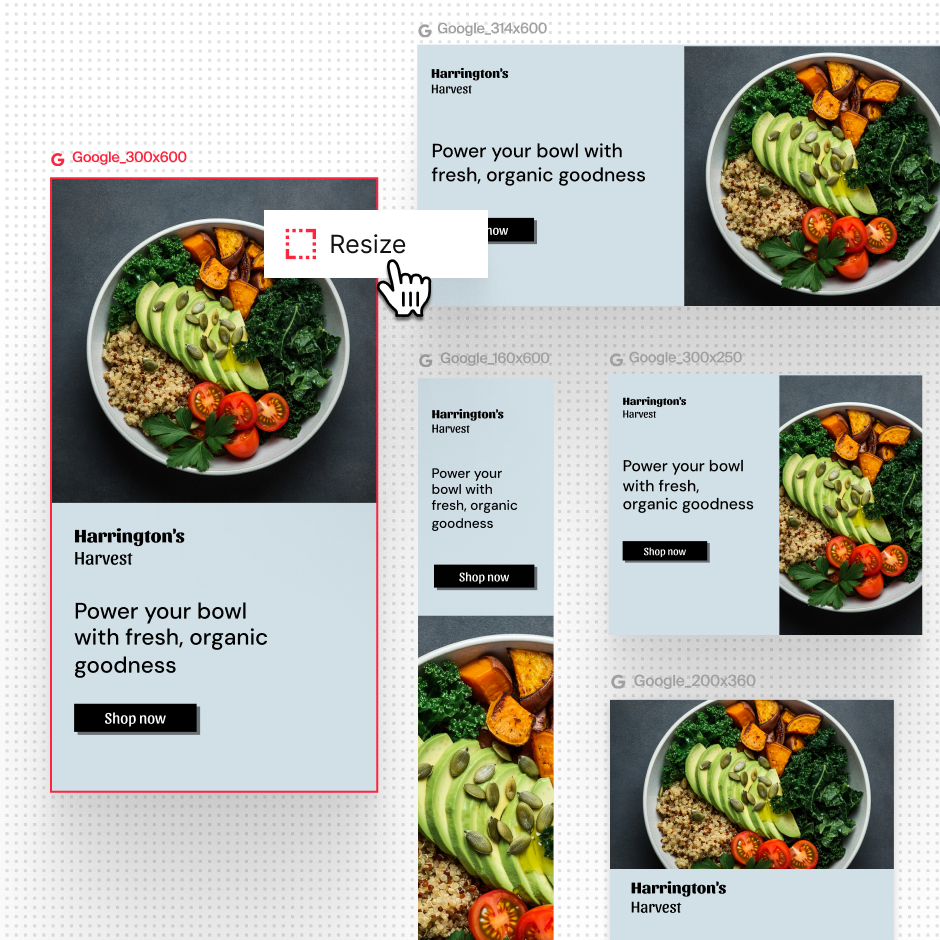
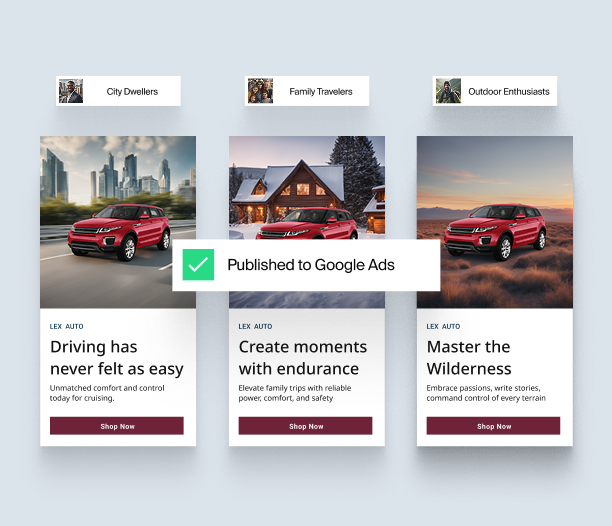
Personalize for different audience segments
Resize for various platforms and formats
Test different headlines, images, or messaging
4. Get team approvals through smart notifications and visual status tracking that keeps everyone aligned and creates a complete audit trail. Once approved, download the ads as PNG files or push them directly to your ad platforms.
Benefits of an AI ad generator
Cut weeks-long creative production to days
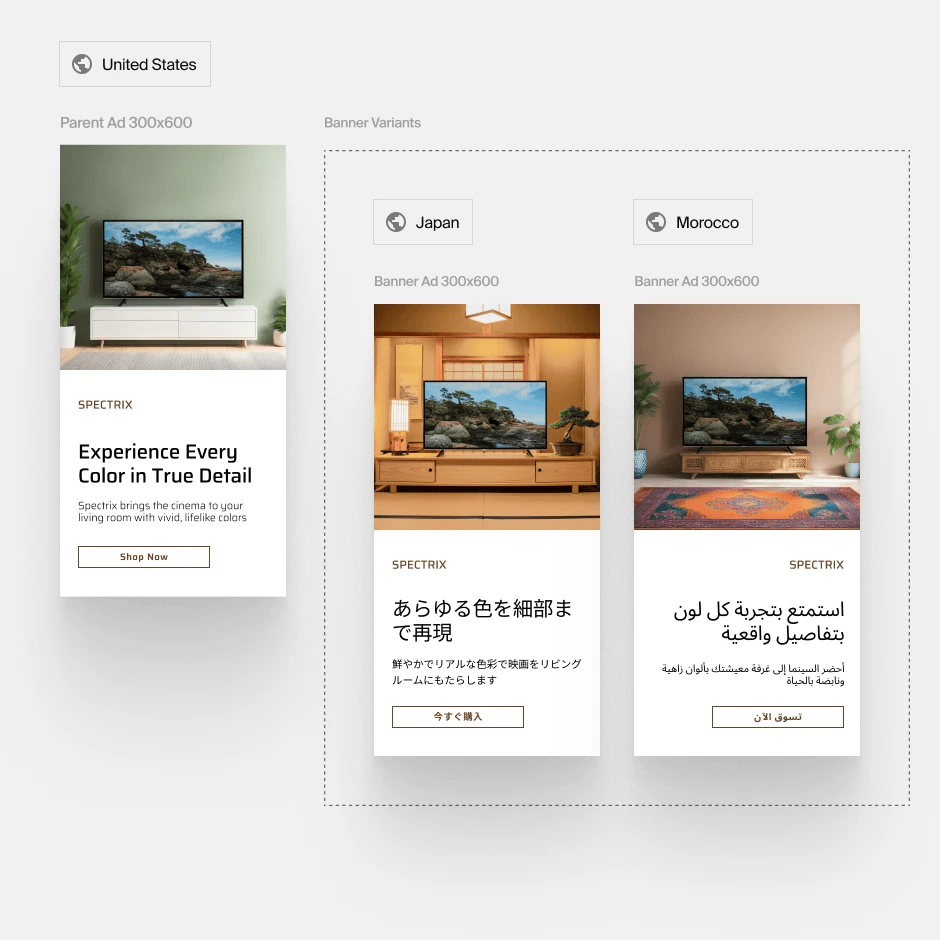
Scale personalized and localized ad variations for different audiences and markets without stretching your team thin
Run rapid A/B testing
Eliminate simple, repetitive production tasks
Customer story
Customer story
A Fortune 500 insurance provider cut production time by 64% after using Ad Agent to generate multiple display banners from a single brief and template. Asset creation time shrank from 2 weeks to 5 days, all while maintaining brand consistency. Ad Agent further scaled ad variations across different aspect ratios and formats without manual effort.
Even with advanced AI ad generators, basic prompting skills still matter. When you want to adjust the output or provide specific directions, clear prompts help you get better results. Better initial prompts mean you can get AI results that hit the mark faster.
How do you write good AI copywriting prompts?
An AI copywriting prompt is a brief instruction given to AI to generate written content (in this case for ad campaigns). It's like a starting point or guide that tells the AI ad copywriting tool what kind of content you want it to create.
A well-constructed AI copywriting prompt for ad generation typically includes these five key elements:
Ad subject: This is where you clearly state the product, service, or event you want to highlight, along with its primary value proposition.
Unique selling points (USPs): List the features, benefits, or differentiators that make your offering stand out. These could include discounts, limited time offers, innovative features, or exclusive perks.
Target audience: Define the audience for your ad by describing their demographics, preferences, or buying behavior.
Content goal: Specify the purpose of the ad. Are you looking to boost conversions, generate leads, increase brand awareness, or drive traffic? Also, specify the desired call-to-action here.
Tone: Specify the preferred tone of voice for the ad copy. Should it be bold and persuasive, friendly and approachable, or professional and informative?
This is the format you can follow for creating your copywriting template:
Create an ad for [channel or platform] in [tone] promoting [product, service, or event] by emphasizing [main value proposition]. Highlight [product features, discounts, or differentiators] targeting [target audience]. The goal of this ad is to drive [sales, sign-ups, or engagement].
With that, let's move on to AI prompts for writing ad copy for various platforms.
40 AI copywriting prompts for high-converting ads
1. AI copywriting prompts for Google ads
Product launch: Create a Google ad for [product type], focusing on keywords like ['primary keyword'] and ['secondary keyword'], and emphasizing [key feature or value proposition]. The ad should encourage [specify action].
Service promotion: Generate a Google ad for [service], targeting keywords like ['keyword 1'], ['keyword 2'], and ['keyword 3'], while highlighting [specific benefit or differentiator]. The goal is to drive [specify action].
Special offer: Write a Google ad promoting [limited time offer], targeting keywords like ['keyword 1'] and ['keyword 2'], and emphasizing [specific discount or exclusive deal]. Include a clear [call-to-action].
Local business promotion: Create a Google ad for [local business or service], targeting location-based keywords like [specify keywords], and emphasizing [unique selling points].
Event registration: Generate a Google ad for [event], focusing on keywords like [specify keywords], highlighting [value or benefit of attending]. Encourage [specify action, like registration or sign-up].
Feature update: Write a Google ad announcing [new feature or update] for [product or service], targeting keywords like [specify keywords], while emphasizing [how it enhances the user experience].
Brand awareness: Create a Google ad to build awareness about [brand or product type and name], targeting keywords like [specify keywords], while highlighting [core values or mission].
Problem-solution ad: Generate a Google ad targeting keywords like [specify keywords], positioning [product or service] as the solution by emphasizing [key benefits or outcomes].
Holiday or seasonal campaign: Write a Google ad for our [seasonal or holiday] campaign, targeting keywords like [specify keywords]. Make sure to emphasize [special offers, limited-time products, or seasonal themes].
Competitor-based ad: Create a Google ad targeting competitor-related keywords like [specify keywords], focusing on [what sets your product or service apart] and driving [specific actions like switching or upgrading].
2. AI copywriting prompts for social media ads
Product launch: Create a [social media platform] ad for [product type] targeting [demographic or interest group], emphasizing [unique feature or benefit] and encouraging [specific action].
Seasonal sale: Generate a [social media platform] ad for our [season or holiday]-themed sale, highlighting [type of deal], designed to attract [specific audience] and drive [purchases or store visits].
Event promotion: Write a [social media platform] ad for [upcoming event], targeting [specific audience], by focusing on [key value of the event].
Product differentiation: Create a [social media platform] ad promoting [product or service], focusing on [key differentiator], and appealing to [target audience].
Limited-time offer: Create a [social media platform] ad highlighting our [type of limited-time offers] on [product or service] urging [audience] to act quickly with [call-to-action].
Awareness campaign: Write a [social media platform] ad to raise awareness about [brand, product, or cause], targeting [specific audience] and emphasizing [key message or value proposition].
User testimonials: Generate a [social media platform] ad featuring this user testimonial/review for [product or service], targeting [specific audience]: [Add user testimonial/review].
Upsell or cross-sell: Write a [social media platform] ad to upsell [product or service] to existing customers or cross-sell [related items], by highlighting [additional benefits or complementary features]. Target [specific audience].
Holiday campaign: Create a [social media platform] ad for our [holiday or occasion]-focused campaign, promoting [special offers or themed products], and targeting [specific audience]. The goal is to drive [engagement or sales].
Lead generation: Generate a [social media platform] ad for [product or service], targeting [specific audience], with the aim of collecting leads and emphasizing [incentive].
3. AI copywriting prompts for marketplace or classifieds ads
Product for sale: Write a marketplace ad for [item or product type and name], emphasizing [condition, unique features, or selling points]. The ad should target [specific buyer type or demographic]. Include these details: [Add details like price, location, and availability].
Bundle deal: Create a marketplace ad for a [product bundle], emphasizing [value for money, included items, or special savings]. Target [specify target audience] and highlight [urgency or stock limitations].
Seasonal product push: Create a marketplace ad for [seasonal product], emphasizing [timely relevance, features, or holiday-specific appeal]. Target [specify target audience] and include details like [pricing, delivery times, or special offers].
Clearance sale item: Write a marketplace ad for [product type on clearance], focusing on [type of offer, like heavily discounted pricing, limited stock, or final sale opportunity]. Target [specify target audience].
Subscription-based product: Write an ad for a subscription-based [product or service type], focusing on [benefits of subscription]. Target [specify target audience] and include details about [plan tiers or free trials].
Service offering: Create a classified ad for [service type and name] by highlighting [key benefits or expertise] and targeting [specific audience]. Include [pricing or free consultation offers] to drive [inquiries or bookings].
Real estate listing: Generate an ad for a [property type] emphasizing [location, price, or unique features], and targeting [specific buyers or renters]. Include a [call-to-action].
Job posting: Write a job listing ad for [job role], targeting [specific qualifications or experience level], and highlighting [key perks, company culture, or growth opportunities]. Include a [call-to-action].
Event announcement: Create an ad for [event], targeting [specific audience], and highlighting [key benefits, location, or schedule]. Include [pricing or registration instructions] to drive sign-ups.
Community or group promotion: Generate an ad for a [community group or initiative], emphasizing [mission, activities, or benefits of joining], and targeting [specific audience or shared interest group]. Include a [call-to-action].
4. AI copywriting prompts for repurposing content for ads
Blog post to ad copy: Rewrite this content from a blog post on [topic] into a compelling series of [ad platform] ads, targeting [specific audience]. Include [strong call-to-action] to drive engagement. Here's the original content: [Add content]
Case study to ad copy: Generate content for an ad campaign from our [case study or success story], focusing on [main achievements or metrics] and targeting [potential clients]. Include [CTA]. Here's the original content: [Add content]
Whitepaper to ad copy: Convert our whitepaper on [topic] into a series of digital ads, emphasizing [critical findings, data points, or solutions], and encouraging [CTA]. Here's the original content: [Add content]
Customer testimonial to retargeting ad: Repurpose a customer testimonial about [product or service] into a retargeting ad copy, emphasizing [positive experiences or results] and encouraging [CTA]. Here's the customer testimonial: [Add content]
Social media post to ad copy: Repurpose this social media post on [topic] and adapt it into a [ad platform] ad, focusing on [engagement metrics or responses] and targeting [interested audience]. Here's the social post: [Add content]
5. AI image prompts for ad creatives
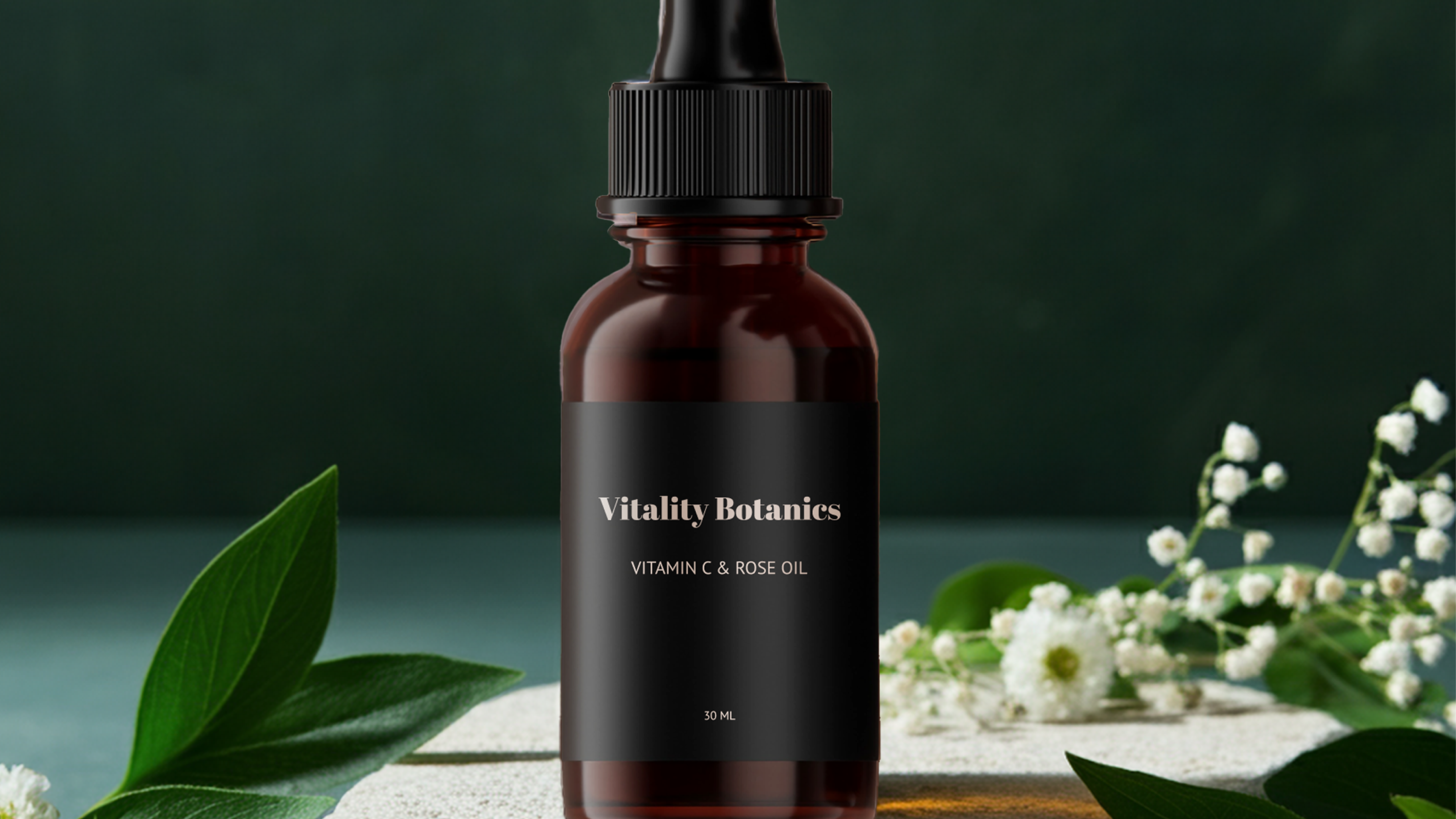
Product photo for ad: Generate product image of [product type] placed on a [specify surface type] in a [background setting], captured in a [composition style] for a product advertisement.
Product comparison for ad: Generate two [product type] photos side by side. The left shows a [generic product type with neutral branding] placed on a [surface type] against a [background setting]. The right features [your product type with special features] on a [type of surface] with a [background setting]. Arrange both in a [composition style] to emphasize their features for an effective product advertisement.
Product-in-use for ad: Generate a product-in-use image of [product type] that is being used by [people or person] set against a [background setting]. They are [describe specific action with the product]. The scene should have [mood and lighting details].
Seasonal or holiday image for ad: Generate a seasonal/holiday-theme image of [image subject] placed on a [surface type]. Add some [seasonal/holiday decoration elements], and a [background setting] that matches the [season or holiday]. Make sure the photo is arranged in a [composition style] to give it a festive or seasonal feel.
Thumbnail for video ad: A photo of [image subject] set against a [background setting] in a [composition style] with [lighting and effects] to capture attention.
Suggested reading
Create high-converting ads with AI
The prompts in this blog can spark new ideas and help you generate quality ads cost-effectively. With Typeface bringing text, image, and video creation together on one platform, building multi-channel ad campaigns becomes seamless.
Schedule a demo today to experience a smarter way to scale your paid campaigns.
FAQs
1. How do I avoid generic or repetitive AI ad copy?
Feed the AI diverse inputs: Use different types of source material, and where possible, include real customer language and feedback to get catchy ads.
Provide specific, detailed context: Include your target audience's motivations and challenges to create more relevant ads.
Iterate and refine: Ask for different approaches (e.g., "Focus on urgency"), request specific tones ("Make this sound more conversational"), or challenge the AI to give you a completely different angle on the same offer.
Set creative constraints: Request specific formats ("Write this as a question") or stylistic choices that match your brand values like sustainability ("emphasize our eco-friendly process"), innovation ("highlight cutting-edge technology"), or authenticity ("use genuine, down-to-earth language").
2. Is AI-generated ad copy safe for regulated industries?
Yes, but AI-generated content requires compliance checks to review for accuracy and regulatory requirements. Typeface's Brand Agent makes compliance reviews faster by flagging deviations from brand guidelines, including legal language requirements and industry-specific regulations.
3. How do I prompt AI to write ads that comply with platform guidelines?
Include platform-specific requirements directly in your prompts to ensure compliance from the start. For example, “Generate real estate ads without discriminatory language”, “Create Facebook ad copy staying within their 125-character recommendation for primary text", or “Create ads without using superlatives like 'best' or 'guaranteed results’”.
This extra effort is not necessary with Ad Agent, which automatically adjusts character limits for each platform and turns your static brand guidelines into an active playbook that maintains messaging standards across all your ads.
Related articles

September 7, 2026
Creating high-converting ad campaigns can take countless hours of brainstorming, crafting the right message, ensuring it resonates with the right audience and so much more. Even then, your ads may sti
August 27, 2026
Nothing drives engagement and conversions in advertising like a good product shot. According to a report by Etsy, image quality is the single biggest factor in purchase decisions, with 90% of shoppers

January 16, 2025
Enterprise marketers are facing a paradox, while social media and ad spending globally races toward $345 billion by 2029, the efficiency of that spend is declining or unclear. The days of reliable CP