January 16, 2025
How to Use An AI Social Media Ad Generator to Optimize Ad Spend and Performance

Akshita Sharma
Senior Content Marketing Associate

AI summary
AI social media ad generators boost ad spend efficiency and improve performance. See how they work and what to look for in an AI platform for ad campaigns across Facebook Instagram, and LinkedIn.
Enterprise marketers are facing a paradox, while social media and ad spending globally races toward $345 billion by 2029, the efficiency of that spend is declining or unclear.
The days of reliable CPMs and predictable audience targeting are being disrupted by privacy regulations, platform changes, and an increasingly fragmented number of platforms. With reduced reliance on third-party data, the burden of performance has shifted dramatically to the volume and relevance of ad content itself.
The stakes are particularly high for enterprise marketers, where even a 1% improvement in click-through-rates can translate to millions in recovered revenue. Its why companies are already restructuring their creative workflows around AI-powered ad generation, moving beyond simple cost reduction to achieve what was previously impossible: true one-to-many advertising at enterprise scale.
In this article, we'll examine how enterprises are leveraging AI ad generators to solve the modern marketer's dilemma of maintaining brand integrity, achieving audience-relevant creative at scale, and ultimately, improving ROAS in an increasingly complex digital ecosystem.
At a glance: The trends driving AI ad adoption
Advertising trend | The bottleneck | How AI answers it |
Scalable personalization | Personalizing for many cohorts is time-consuming | Generates targeted ad variants across cohorts in minutes |
Multi-platform reach | Manually adapting ads per platform slows deployment | Auto-adapts creatives to each platform's requirements |
Rapid format testing | Testing video, animation, and other formats is resource-intensive | Repurposes assets into new formats for freer experimentation |
Ad localization | Adapting copy and creatives to regional markets requires expert resources. | Localizes copy and visuals, aligned to your rules for cultural adaptation. |
What are AI social media ad generators?
AI social media ad generators are specialized tools that create platform-optimized ad content across major advertising networks like Meta, Google, LinkedIn, and other social platforms. Using artificial intelligence, they can automatically generate ad copy, ad visuals, and more from simple AI copywriting prompts.
Enterprise AI marketing platforms, on the other hand, build ad campaigns.
Typeface, for example, creates brand-compliant, multi-channel ad campaigns. You can generate ads from scratch or hand off repetitive, tactical tasks like personalization, resizing, and ad creative testing.
What separates Typeface from basic tools is the speed and volume it allows without compromising on your brand standards.
First, it offers multimodal functionality, handling everything from text and images to video inputs and outputs.
Second, it brings the entire ad production workflow into one place, from value propositions to visual styles, without manual prompt engineering for each variation.
Third, it trains on your brand voice and visual styles to create on-brand content automatically. No manual tagging required.
Finally, it connects to your existing stack — Google Ads Manager, DAM, and CDP — so performance data flows back in and every ad follows your latest brand rules.
Why should you use an AI social media ad generator?
An AI social media ad generator can help improve your advertising campaigns in several ways. From boosting productivity in ad creation to inspiring creativity, it can transform the way your marketing team works. Here are a few benefits:
Automate ad creation and resizing
The AI ad copy generator creates first drafts of blogs and creates short-form assets like emails and ads. AI that follows your brand standards and draws from your product documents produces copy that requires fewer refinements by your team, helping you create at volume without worrying about accuracy or consistency. Plus, letting AI reformat a generated ad into different aspect ratios gets your campaigns out faster.
Personalize across segments
The AI social media ad generator can tailor ad copy and visuals to the interests and behaviors of your audiences. Defining your audiences or bringing them into Typeface via integrations with your CDP, lets you create personalized variations of ads by selecting the audiences in one go.
Localize to regional markets
Personalization apart, an AI social media ad generator can translate copy and localize visuals to different regional markets. It uses your company and audience knowledge to adapt ads, reducing manual redesign. The more high-quality data AI has, the sharper and better-targeted your ads become.
Create and test more ad variants
AI ad generation transforms the traditional ad testing process from weeks to hours or days. Your teams can produce multiple ad variations in the time it traditionally took to create a few, and quickly identify and scale winning combinations.
How to use an AI social media ad generator for cost-effective ad campaigns
Creating high-impact social advertising demands excellence across every element – from compelling copy and visuals to precise brand alignment and audience resonance. Traditional approaches often force a trade-off between quality and volume. AI ad generators let enterprise teams have both. Here's how leading marketing teams are using these tools to build personalized campaigns while reducing production costs.
1. Create ad copy and creatives with a multimodal ad generator
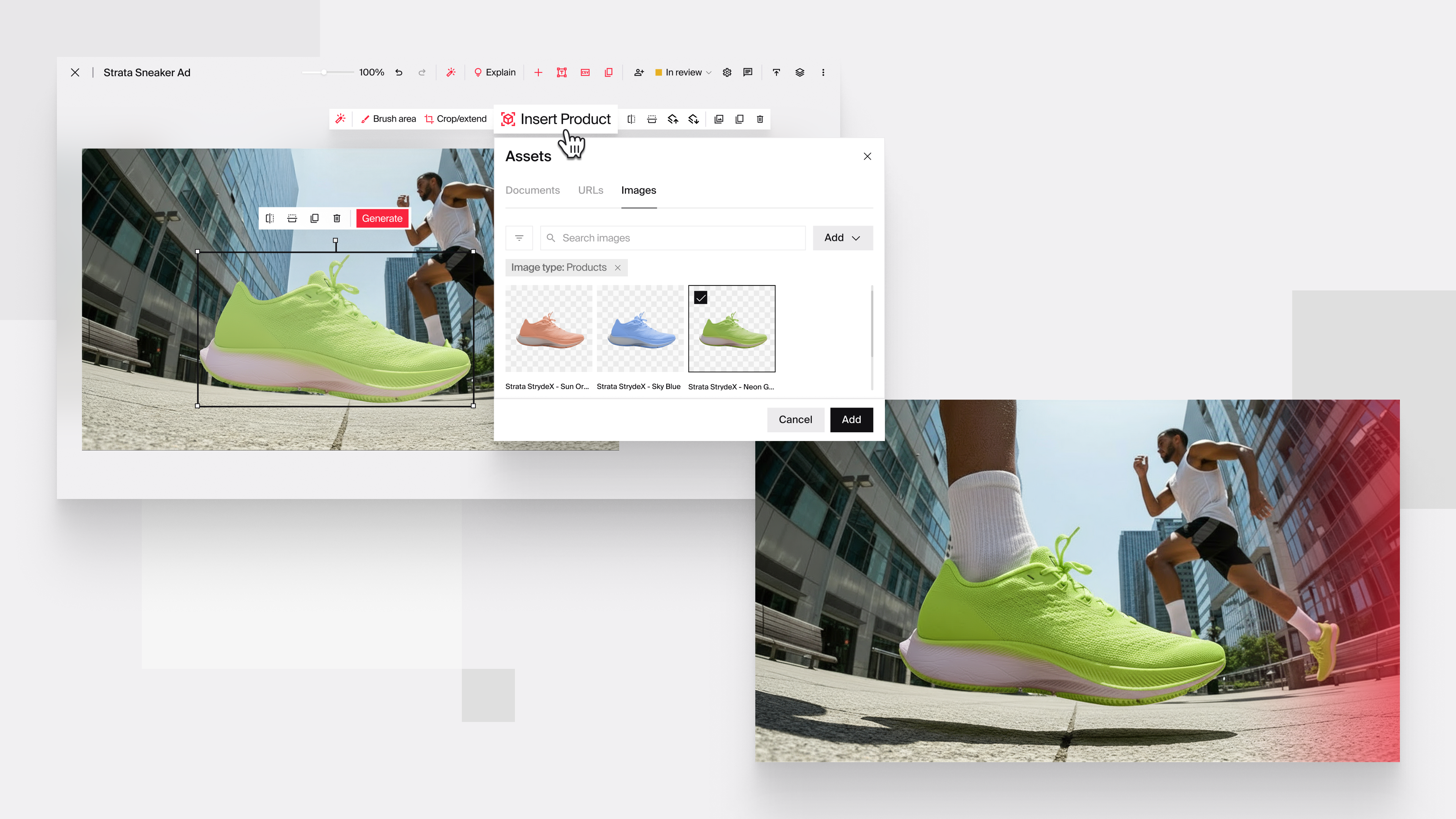
Typeface's Ad Agent creates copy and visuals tailored for your chosen social media platform. Give the agent a simple prompt, like "Create a banner ad campaign promoting our summer sale", and attach a Google, Meta, or LinkedIn ad layout, audience, campaign goal, and reference documents (called grounding content).
Ad Agent uses these inputs to generate ad copy, which you can edit manually or with our inline AI editor. You provide the inputs in a chat interface, and the ads generate in a canvas — edit them, generate variations, and view everything side by side. Then hand off the campaign to the next reviewer, right from the same place, via Slack or email notification.
Copy creation
Ad Agent uses grounding content to create messages and CTAs. Specify the audience, the campaign message, the CTA and URL — whatever’s key to the ad — in a short prompt and reuse it to create variations.
Visual creation
When it comes to ad creatives, there are two ways you can do it in Typeface:
Add product assets into compelling ad creative
When creating ads for Facebook, LinkedIn, or X, you can use the images in your existing ad layouts or replace them with one from your asset library in Arc Graph. Do a natural language search to find the image and drop it into the ad layout.
Generate a custom image from a text prompt
As Typeface is multimodal, it can create multi-format outputs. Input a prompt to generate custom ad creative. Use built-in editing tools to edit other aspects like font type and color. To test minor changes, duplicate the ad and use AI generations or the editing tool. It's fast and simple.
If you need inspiration, this blog offers 50+ AI image prompts for marketing creatives.
2. Scale ad personalization with AI
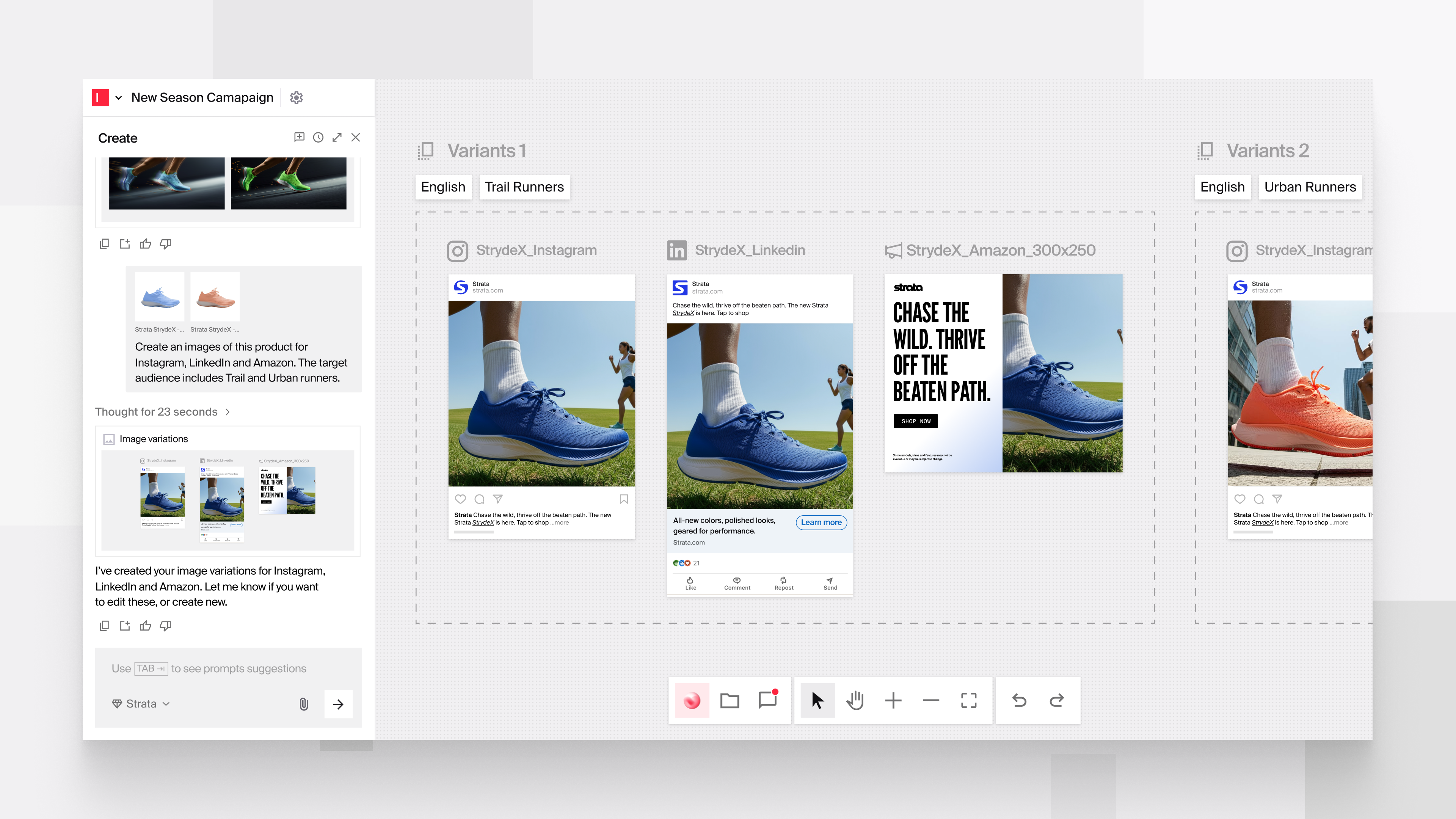
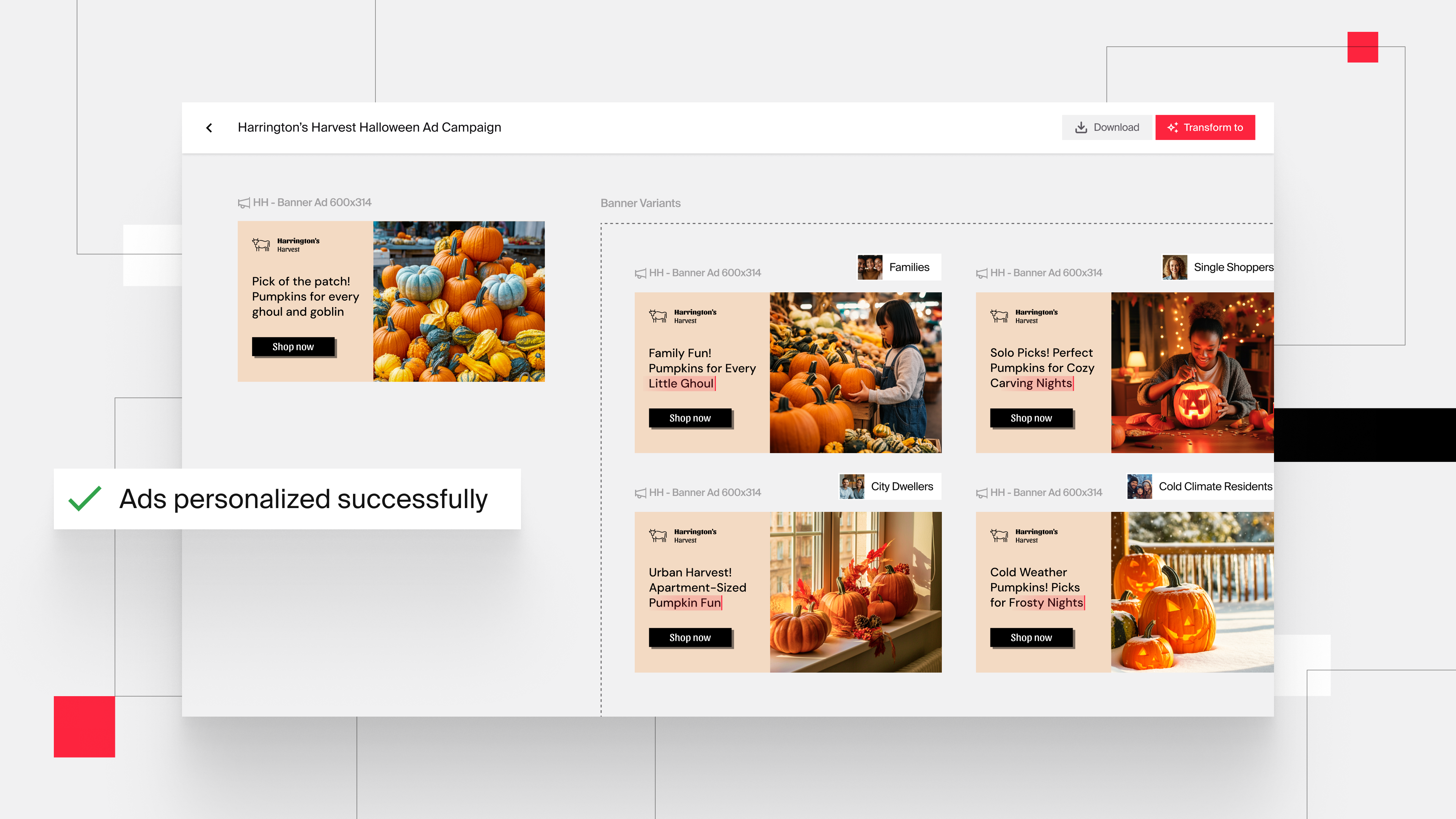
Ad personalization is faster with AI, and straightforward in Typeface. Once your ad is ready, you can create audience-personalized variations of it by selecting multiple saved audience segments at a time. Review ads side by side and make quick refinements before notifying the next reviewer.
Typeface’s deep understanding of audience segmentation means each creative variation is purposefully crafted to connect with specific audience cohorts, maintaining brand consistency while adapting messaging and visual elements to match segment-specific preferences.
Example: Say you're launching a line of running shoes. Ad Agent instantly creates tailored ad variations for trail runners, urban runners, and marathoners, with visuals, copy, and CTAs that speak to each audience.
3. Adapt or localize creatives from one ad to many
Creative testing and cross-platform optimization often create significant production bottlenecks for enterprise marketing teams. Each variation, whether it's a different aspect ratio, localized version, or A/B test variant, traditionally requires manual design work and introduces potential consistency issues.
Typeface removes these bottlenecks by allowing teams to create multiple variations from a single parent template. Start with a parent ad, then automatically generate all required format variations for each aspect ratio required for each platform, such as multiple banner images, without losing visual integrity.
Real-world examples of AI-created ad content
The application of AI in creating ad content has already shown remarkable success across various industries. Here are some examples -
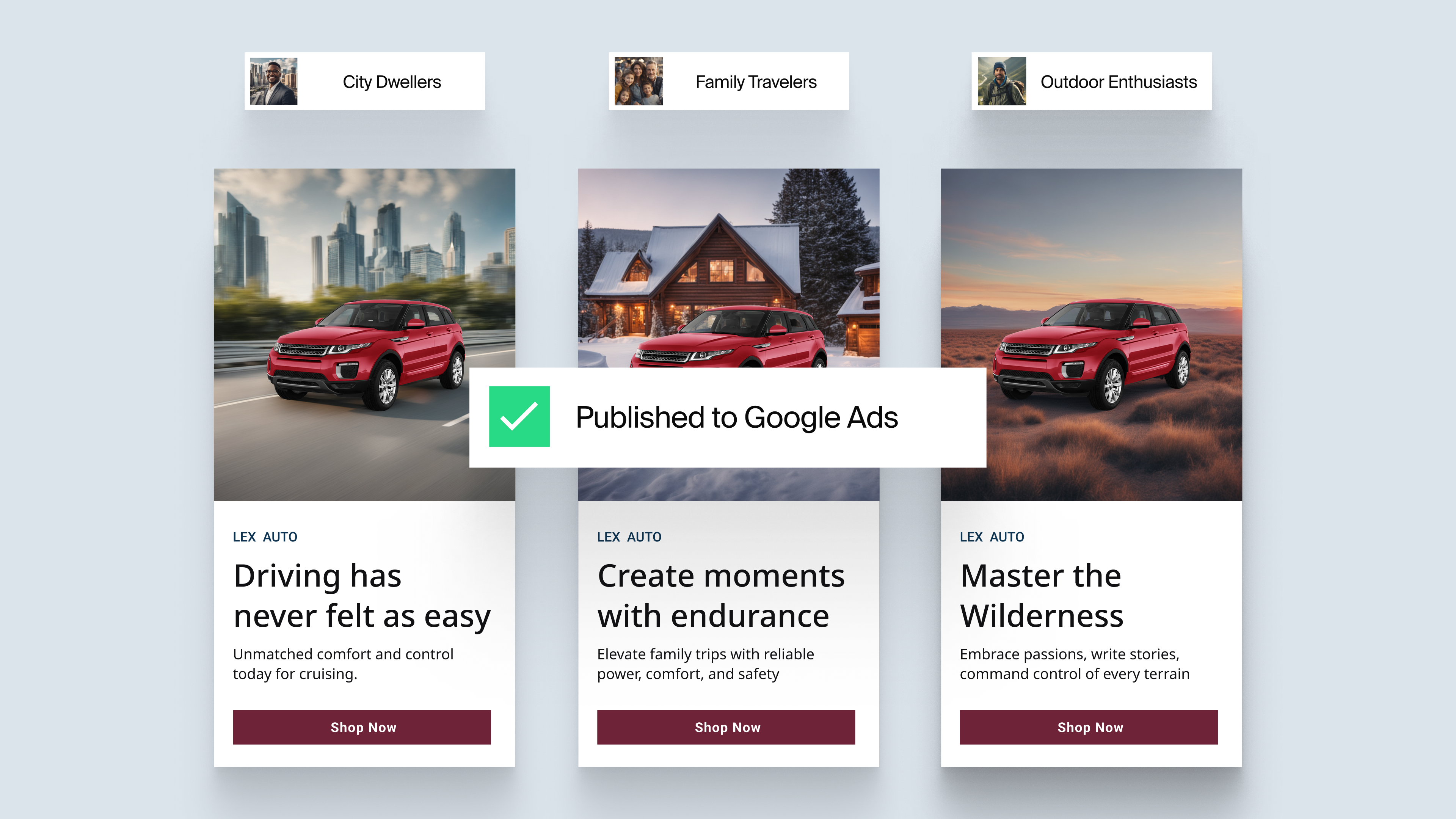
A Fortune 500 automotive company used Typeface accelerate creative production for their Year-End sales campaign creation by 52%, generating personalized ad variations across channels. Additionally, they adapted one of these ads for broadcast in just a few hours, saving the time and expense of a new photoshoot.
A Fortune 500 beverage company used Typeface to quickly create images for point-of-sale displays in Latin American markets by pairing its drinks with local foods. This localization strategy enabled them to deliver culturally relevant creative at scale, deepening market resonance.
A Fortune 500 energy management company maximized their content investment by transforming existing blog posts into high-performing LinkedIn sponsored content. By reallocating budget from content production to ad spend, they amplified the reach of their ads while reducing overall content production costs.
4. Turn static creatives into animated ads
Testing new ad formats is an effective way to learn and improve campaigns, but manually transforming a brand asset into video, animated, or native ads usually means rebriefs and long production cycles. AI streamlines this creative workflow, repurposing existing images into high-performing video ads in a fraction of the time.
Enterprises with large asset libraries have a natural advantage here. Take a product or lifestyle image and turn it into an engaging animated ad with simple prompts like "add dripping droplets on the can" or "make fries tumble next to the burger". That’s how Ad Agent works to add motion to still visuals, text, and backgrounds. Edits are just as easy with the video editor that lets you trim scenes, and add captions, overlays, and branded elements.
Features to look for in AI ad generators
When selecting AI tools for enhancing your social media ad campaigns, there are several key features to consider:
Automation and scalability: Look for tools that reduce tedious tasks and can scale up ad campaigns. They should make it easy for marketing teams to adapt a single ad creative into numerous variations. This feature enhances ad relevance through micro-targeting, ensuring the ads connect well with specific customer groups.
Brand consistency: AI ad generators should offer speed without the risk. Typeface's Arc Graph makes this possible for enterprises. It centralizes your voice, messaging, visual, and terminology, and applies them to every ad. Arc Graph connects to your existing stack and updates to ensure your ads follow your latest brand rules.
Audience integrations: The platform should integrate with your Customer Data Platform and support saved audience segments. This integration enables teams to create tailored creative variations based on defined audience characteristics, ensuring ad content resonates with specific customer segments.
Multi-channel campaign management: Enterprise marketing platforms should support the ad campaign lifecycle. They should support integrations with major ad platforms like Google Ads Manager and Meta, along with preview capabilities that ensure content meets platform-specific requirements.
Campaign improvements: The system should support systematic creative testing. Look for tools that speed up A/B testing across headlines, descriptions, CTAs, and visuals, and that learn from performance data to improve with each campaign.
Boost ad performance with Typeface
Ad Agent makes ad personalization and testing faster while ensuring that outputs represent your brand accurately. By handling tactical execution and creating time, it saves your marketing team time to focus on higher-value work. Get a demo or talk to sales to understand how Typeface can support your performance marketing teams.
Related articles

September 7, 2026
Creating high-converting ad campaigns can take countless hours of brainstorming, crafting the right message, ensuring it resonates with the right audience and so much more. Even then, your ads may sti
September 17, 2025
It's hard to ignore the innovation that's taking place in digital advertising. And in an era where everyone is constantly bombarded with information, developing creative campaigns quickly, on brand th
November 19, 2024
I recently spoke with the creative team at a major fashion retailer who shared a familiar challenge: The weather forecast showed an unexpected warm spell coming, but their winter clothing campaign was