September 22, 2026
The Next Generation of the Typeface Orchestration Engine: Closing Marketing's Open Loop

Vishal Sood
Founding Member & President, R&D
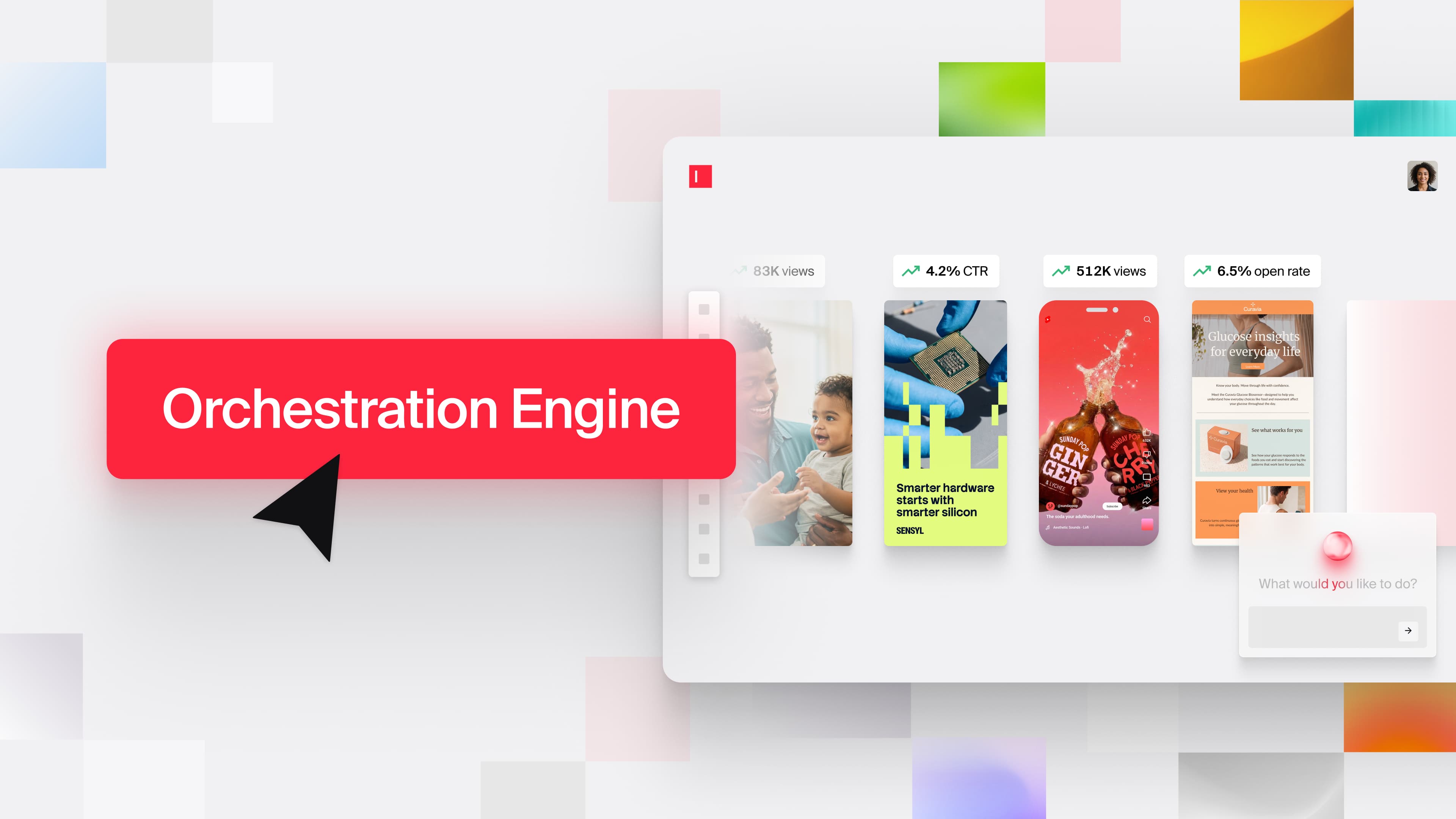
Arc Graph, Arc Fabric, and Arc Loop are the three products behind the next generation of the Typeface Orchestration Engine, built to turn brand intelligence into shipped work, then feed the results back into the next campaign.
I hear some version of this on almost every call with an enterprise marketing team: they have more customer insight than they've ever had, and most of it never makes it into a brief.
The data lives in one system, the brand in another. Performance results die in a dashboard nobody reopens after the read-out.
So the next campaign gets built the way the last one did: based on instinct, last quarter's playbook, or whoever happens to be in the room.
That gap, between what a team knows and what it can act on, is what the next generation of the Typeface Orchestration Engine closes.
Three products now work as one system: Arc Graph for brand intelligence; Arc Fabric turns that intelligence into agents built around how a team actually operates; and Arc Loop watches what those agents ship, measures how it performs, and feeds the result back into what gets made next.
An analogy I’ve been using is thinking about a guitarist learning to play a song. First, she’ll read the sheet music and even listen to examples; then she’ll work out the right frets and notes; and next, she’ll continue to practice, strengthening the feedback loop over time.
The philosophy behind the approach is to teach AI to understand a brand deeply, build agents and skills around how each team works (as well as provide a collaborative workspace), and let the system get smarter every time a campaign runs. None of that intelligence stays locked inside Typeface, either. It reaches into the tools a team already uses every day, including Claude and ChatGPT.
Arc Graph: the brand brain that makes brand intelligence actionable
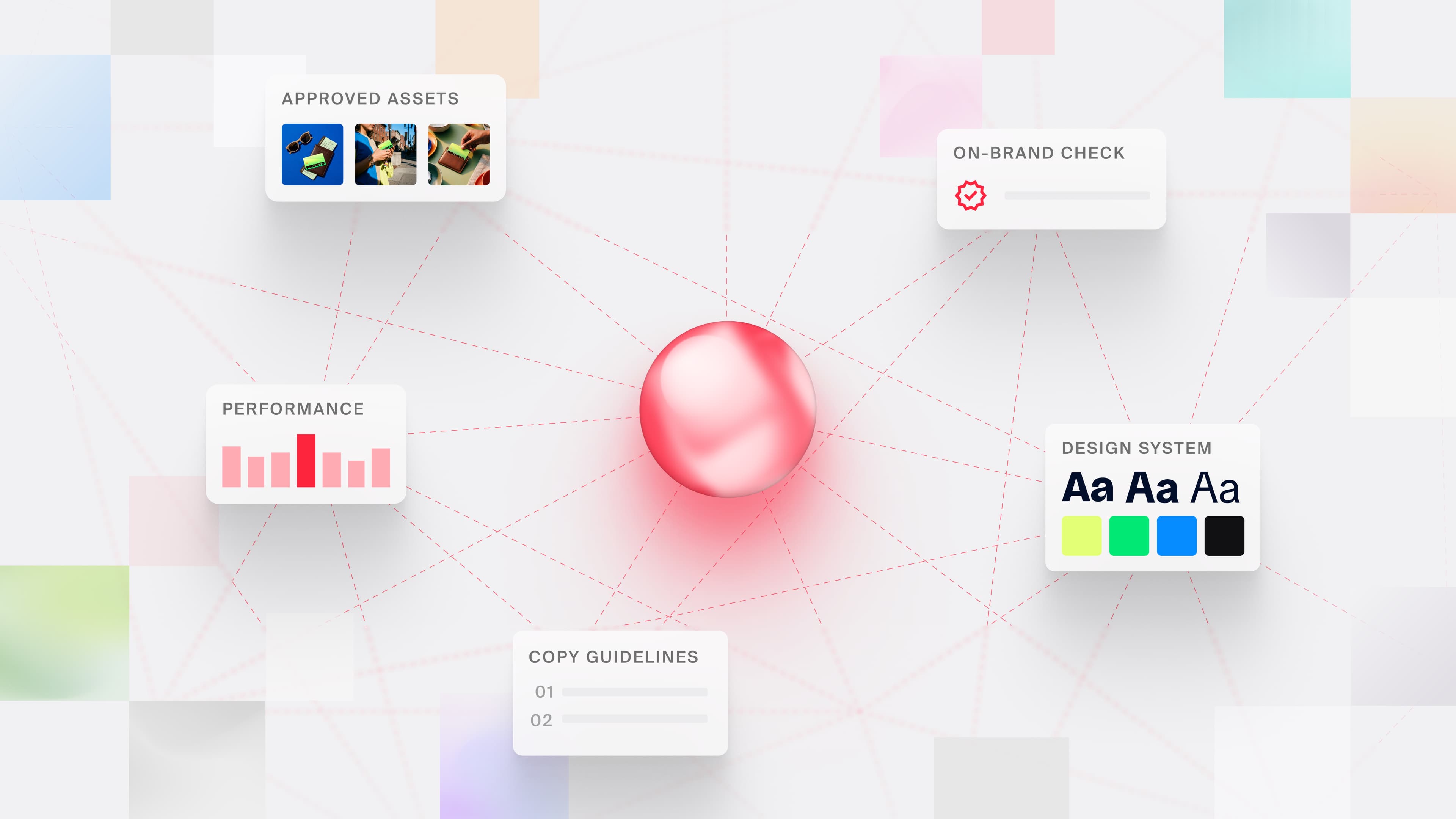
Every brand lives in a thousand places: guidelines, past campaigns, performance data, and the judgment of the two or three people who know what sounds like the brand.
Most AI tools treat all of that like a stranger asked to write in the brand's voice, rather than someone deeply familiar with your organization. And every generic agent that a team adds widens the gap between speed and quality instead of closing it.
Arc Graph is Typeface's proprietary context layer. We rebuilt it for this release: from manually managed rules into a system that extracts, validates, and enforces a brand at the moment AI creates. It turns any set of brand guidelines into structured rules that Typeface, and now outside AI tools, can apply.
Here’s how it works:
Knowledge graph — the organization's identity and what it has learned, held as structured, reusable knowledge that grows with every campaign.
Brand graph — brand compliance for every marketer, applied as content is created, showing which rule applied and why.
Brand systems, attributes, and relationships — multiple voices learned from how a brand writes, with hierarchy resolution for parent and sub-brands.
Asset management and design system — an approved content library with AI-native search (no manual tagging needed), plus colors, typography, and logos captured as enforceable structure.
Reaches users where they are — Arc Graph for Claude and ChatGPT; plugins for Word, PowerPoint, and Chrome; the same brand intelligence extends beyond Typeface into the AI tools a team already uses via our MCP and integrations.
Arc Fabric: agents tuned to how each team works, managed within a collaborative workspace
Configuring the same generic agent doesn’t make it yours. Marketing is multiplayer. Brand, legal, regional, performance, and executive communications all need the same context, governance, and learning.
When one person builds a brilliant AI workflow on their laptop, it solves for one seat. The rest of the team is still emailing PDFs.
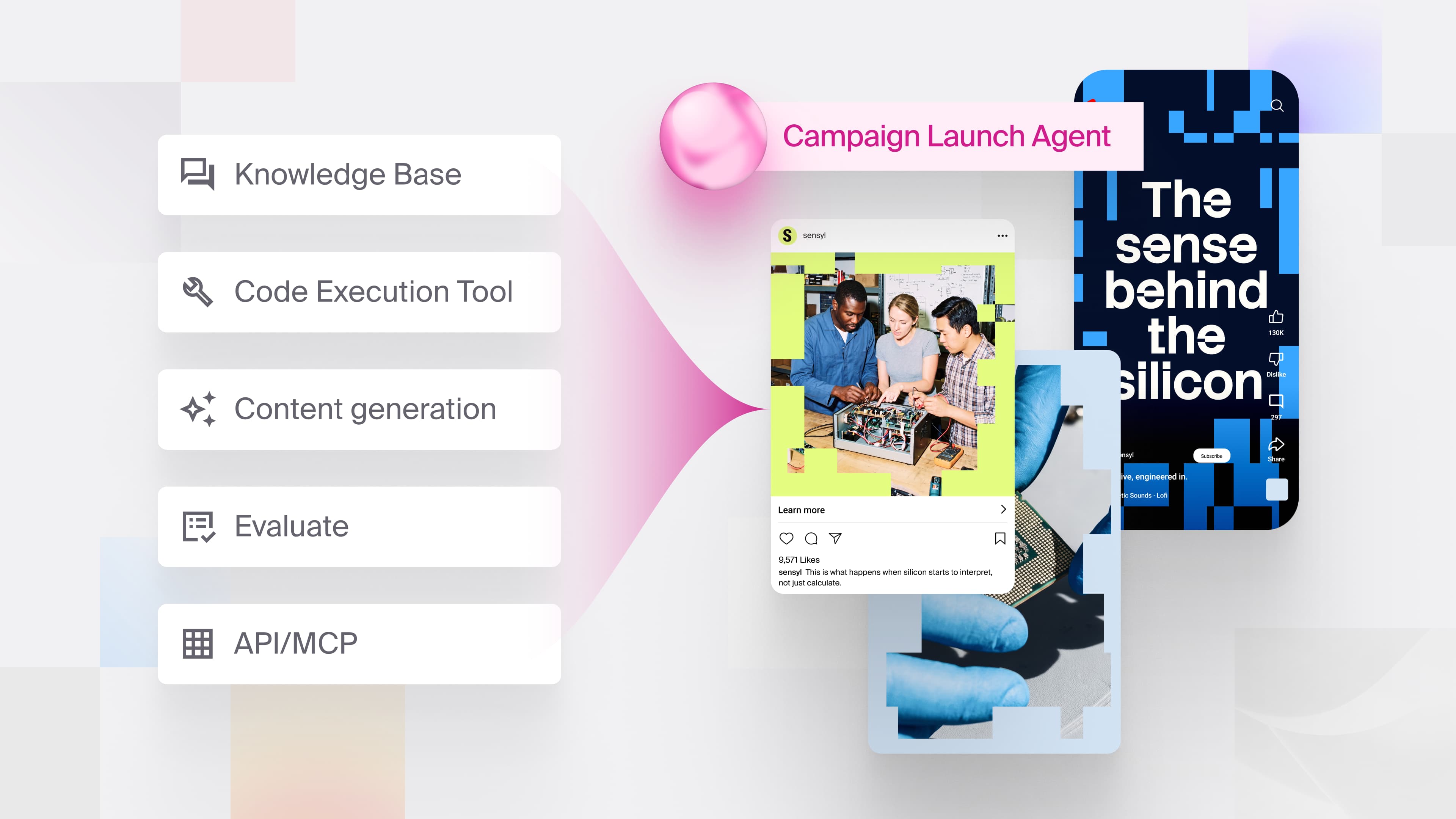
Arc Fabric is the orchestration layer. It brings the power of modern AI coding platforms to marketing for the first time.
It spans a runtime that powers agentic work, adaptive agents that carry it out across a team's channels and systems, and a collaborative workspace where people and agents create together. Instead of configuring one generic system for all, teams build agents tuned to their own workflows, systems, and channels.
For us, transformation isn’t adding AI on top of existing processes — it’s rethinking how the work gets done. Our goal is a true segment-of-one experience — where every interaction feels made for that client. Typeface helps us scale personalized content with brand intelligence and governance to drive measurable business impact.
— Rosa Rita, Global Chief Marketing Officer, J.P. Morgan Asset & Wealth Management
One platform for the whole workflow — conversational chat, out-of-the-box and custom agents, a collaborative workspace, and extensibility, so a team runs the entire workflow in one place.
Agents that finish the job — they plan multi-step work, use a team's own systems required to complete it, and check their own output before handoff.
Reusable skills — teams can turn repeatable marketing tasks and expertise into skills that agents can use again across campaigns and workflows.
Governed and extensible — teams control data access and agent autonomy, and extend through MCP, APIs, webhooks, and custom code.
Arc Loop: closing marketing's last mile
Everyone measures, but few use the measurement to decide what to make next.
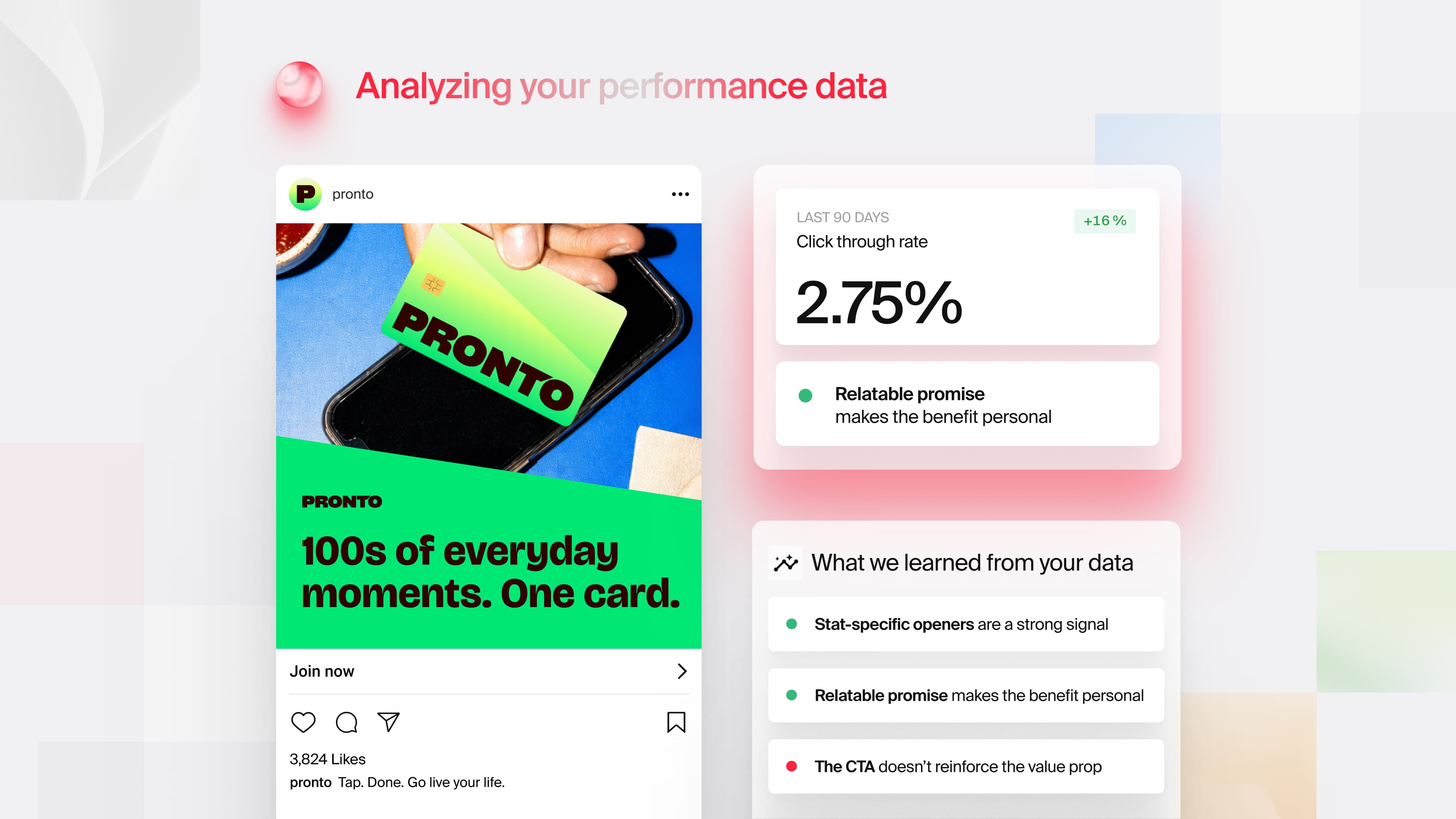
Arc Loop is the optimization layer, and it closes marketing's last mile, where performance data has long sat in a dashboard while the next campaign is built from best practices and first principles.
According to Typeface's Signal Report research, 93% of marketing leaders say creation, activation, and optimization should work as one system. Fewer than two in five have connected their content ecosystems.
Arc Loop closes that gap. It uses performance data to inform what agents create next, so every campaign builds on what you learned from the last one.
Point tools optimize delivery inside one channel. Arc Loop learns across all of them and turns what it finds into new, on-brand content.
Performance flows back automatically — ad platforms (Google Ads), marketing platforms (Salesforce Marketing Cloud, HubSpot), and warehouses (Google BigQuery, Salesforce Data Cloud) feed results in automatically, or teams can start instantly with a zero-setup CSV upload. No engineering required.
Every recommendation shows its work — real campaign signals become ranked, explainable content variants, with human approval before anything publishes.
Learnings write back to Arc Graph — every campaign starts smarter than the last, because each finding becomes reusable knowledge, so what works informs what gets created next.
At Chime, everything starts with our members. But reaching millions of people with the right message, at the right moment, while staying unmistakably Chime is an incredibly complex challenge. Typeface gives our teams the ability to move at the speed our members and culture demand — turning our brand into something they can instantly build with and scale. That means less time spent on the mechanics of content creation, and more time focused on what marketers do best: creating bold ideas and campaigns that connect with people and drive growth.
— Vineet Mehra, Chief Growth and Marketing Officer, Chime
Arc Graph, Arc Fabric, and Arc Loop are available to enterprise customers today, and are already helping enterprise teams close the gap between what they know, and what they can deliver.
If that gap sounds like the one your team is living in, talk to us.
We'll walk you through what closing it looks like for your own brand and your own workflows, not a demo built for the room. Get in touch with our sales team to get started.
You can also register now for a live webinar on Wednesday, September 30, 2026 at 10:00am Pacific Time, where we'll give you a first look at the next evolution of the Typeface Orchestration Engine — with a short introduction followed by a live walkthrough of the product.
Related articles
August 12, 2026
Welcome back to Feature Focus. July's updates are about making the work your team has already done go further: your brand guidelines, your approved email creative, and the web content you've been pub

June 15, 2026
AI has sped up a lot of the foundational work in marketing: planning, ideation, content production, SEO and keyword research, among other things. Most teams have that part down by now. What hasn't cha
March 4, 2026
Typeface has crossed a new frontier, evolving into the next generation of the Typeface Orchestration Engine — closing marketing's open loop by bringing brand context, AI agents, and real campaign perf