September 28, 2026
How Can You Address Emotional Resistance to AI?

Akshita Sharma
Senior Content Marketing Associate

AI summary
Learn practical strategies to address fear, build trust, and successfully implement AI technology with employee buy-in.
When AI tools are introduced in an organization, the ripple effects extend far beyond simple workflow adjustments. The best way to address emotional resistance to AI is by treating it as a human response, not a training problem. Name the fears out loud, frame AI as augmentation rather than replacement, normalize the learning curve, and give teams a voice in how the tools get adopted. Because resistance is rooted in anxiety, insecurity, and mistrust, the fix is trust-building and communication, rather than another feature demo.
Left unaddressed, those feelings erode trust, slow down adoption, and undermine the benefits AI is meant to deliver. So, when leadership rolls out new technology, they must also guide people through a shift in how work gets done.
To understand this resistance firsthand, we sat down with Ross Guthrie, a seasoned marketing leader and Customer Success Manager at Typeface who has guided many teams through AI adoption.
What drives emotional resistance to AI?
More than just skepticism about new technology, emotional resistance is a deeply human response to uncertainty. Unlike rational concerns about technical limits or ROI, it's rooted in feelings such as anxiety, insecurity, and mistrust, which surface whenever new tools disrupt established routines and challenge professional identities.
As Guthrie puts it: "It's natural for marketers to feel fear and anxiety as they face significant shifts in their routines. Traditional campaign processes, which once took months to develop and execute, will give way to faster, iterative models. Strategies will be developed in days, content generated in parallel, and campaigns optimized post-launch as market signals accumulate."
Teams have spent years building expertise, and AI can feel like a direct challenge to that hard-earned skill. To add to that, early AI outputs can sometimes fall short if not executed well, which fuels their mistrust.
Guthrie identifies the core psychological drivers behind this resistance:
“This shift brings emotional resistance, especially fear of obsolescence. AI tools may feel like a threat to creativity and relevance, leading to insecurity about the future of traditional roles. Marketers may also feel a loss of control, as AI takes on decision-making and risks replacing subjective, creative judgment. Trusting AI to capture brand nuance and audience sentiment may be difficult.”
He’s seen a predictable set of concerns surface:
Will the output be good enough, and why is this better than ChatGPT?
How much time will I have to spend learning it?
And, usually unspoken: if AI can do my job, what value do I bring?
Those concerns cluster into three drivers:
Job security worries (fear that automation replaces hard-won expertise)
Loss of creative control (that AI overrides subjective judgment and won't capture brand nuance)
Adaptation fatigue (constant tool-learning that makes change feel relentless).
Unaddressed, they show up as hesitation to experiment, reluctance to join pilots, defensive decision-making, and lower engagement.
Why is addressing resistance crucial for successful AI adoption?
Emotional resistance creates a double burden. It slows adoption while undermining AI's benefits. Skeptical users don't engage deeply enough to unlock AI's potential. They use it minimally and never fold it into their strategic thinking, so AI delivers mediocre results because it isn't being used well.
Resistance also spreads: one vocal skeptic can make adoption feel like something done to the team, not with it. It's likely one cause behind the MIT finding that 95% of AI pilots show no ROI.
With 92% of companies planning to increase AI use over the next three years, organizations that don't address resistance early risk falling behind.
Resistance is also one of the ground-level realities that stalls rollouts when leaders fail to set realistic expectations — the pattern behind why AI rollouts fail without clear leadership context.
How to address emotional resistance to AI?
Organizations that succeed create space for honest conversations about what AI means for people's roles. According to the IBM Institute for Business Value, blending emotional intelligence with AI literacy beats pure tech training; their mantra, "Hire for heart, train for AI."
Five strategies that can help:
1. Frame AI as augmentation, not replacement
The most effective lever is language and positioning. Focus on what becomes possible when human creativity combines with AI, and use collaborative framing such as "working with AI," "AI-assisted campaigns", etc. to reinforce partnership over replacement.
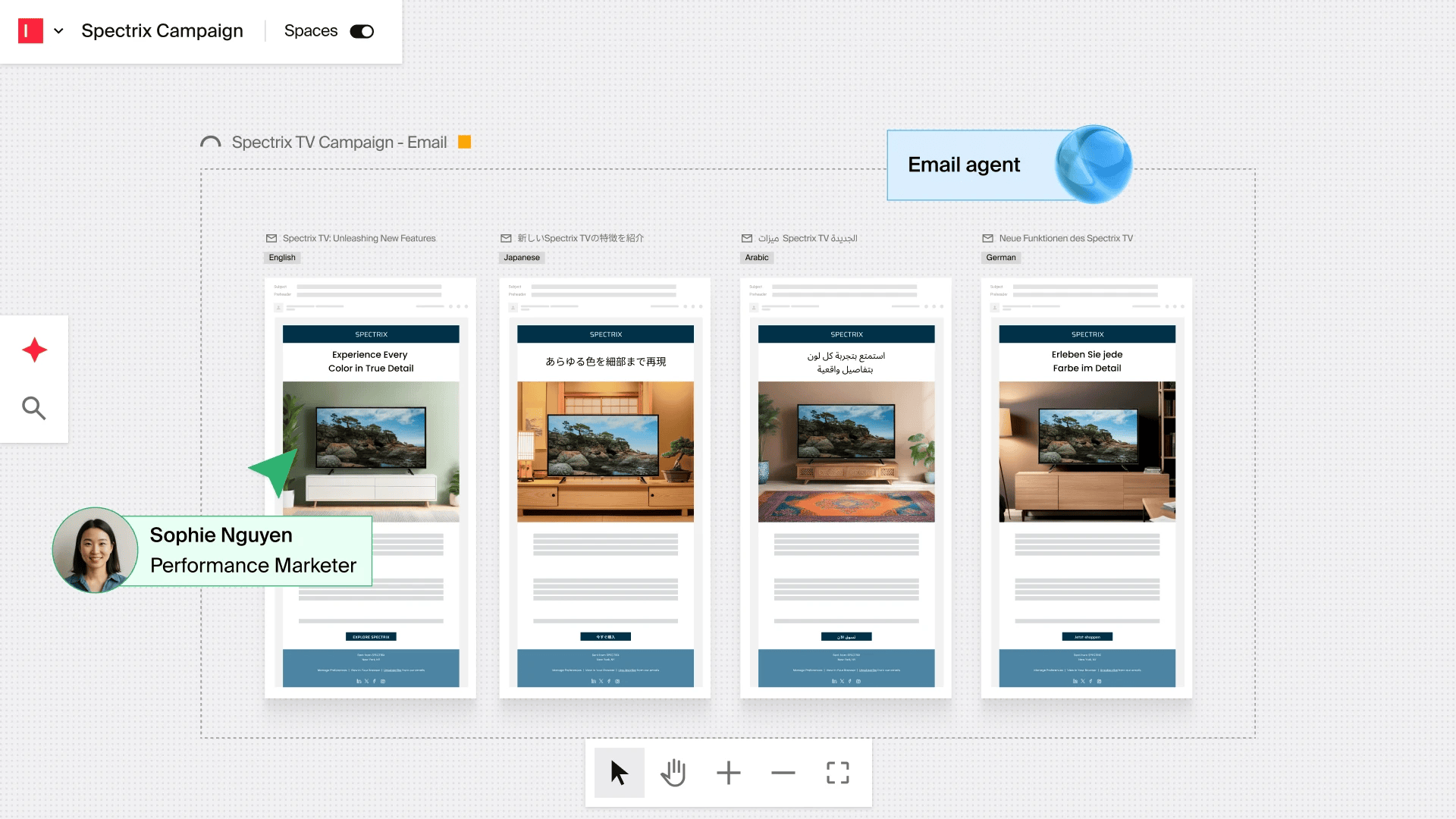
When an email specialist can generate dozens of on-brand variations with Email Agent instead of hand-crafting each one, they stop wrestling tactical problems and start doing what humans do best: refining the options that best capture brand voice and audience nuance.
2. Address employee fears about AI
Be transparent about how AI changes roles, without sugar-coating it, and show the tools working on the challenges your team actually faces. Start with individual conversations before team meetings. They surface personal concerns without public pressure.
Ask what worries people most, what would need to be true for AI to feel helpful rather than threatening, and where they spend time on repetitive tasks. Then reflect those concerns explicitly in your rollout plan, so people feel heard rather than steamrolled.
3. Normalize the AI learning curve
Acknowledge that adaptation takes time, and that struggling with new tools is normal, not a sign of incompetence. Provide ongoing resources and mentorship pairing AI-experienced team members with beginners. Guthrie emphasizes: "Education and support are crucial to ensure marketers feel empowered and in control."
4. Foster open communication and feedback loops
Involve teams in AI decisions from the outset, with clear explanations of why changes are happening and how they affect specific roles. Bring content creators into pilots from day one to test what actually works versus what sounds good in a demo.
A shared workspace like Arc Spaces on Typeface makes testing more collaborative and less intimidating.
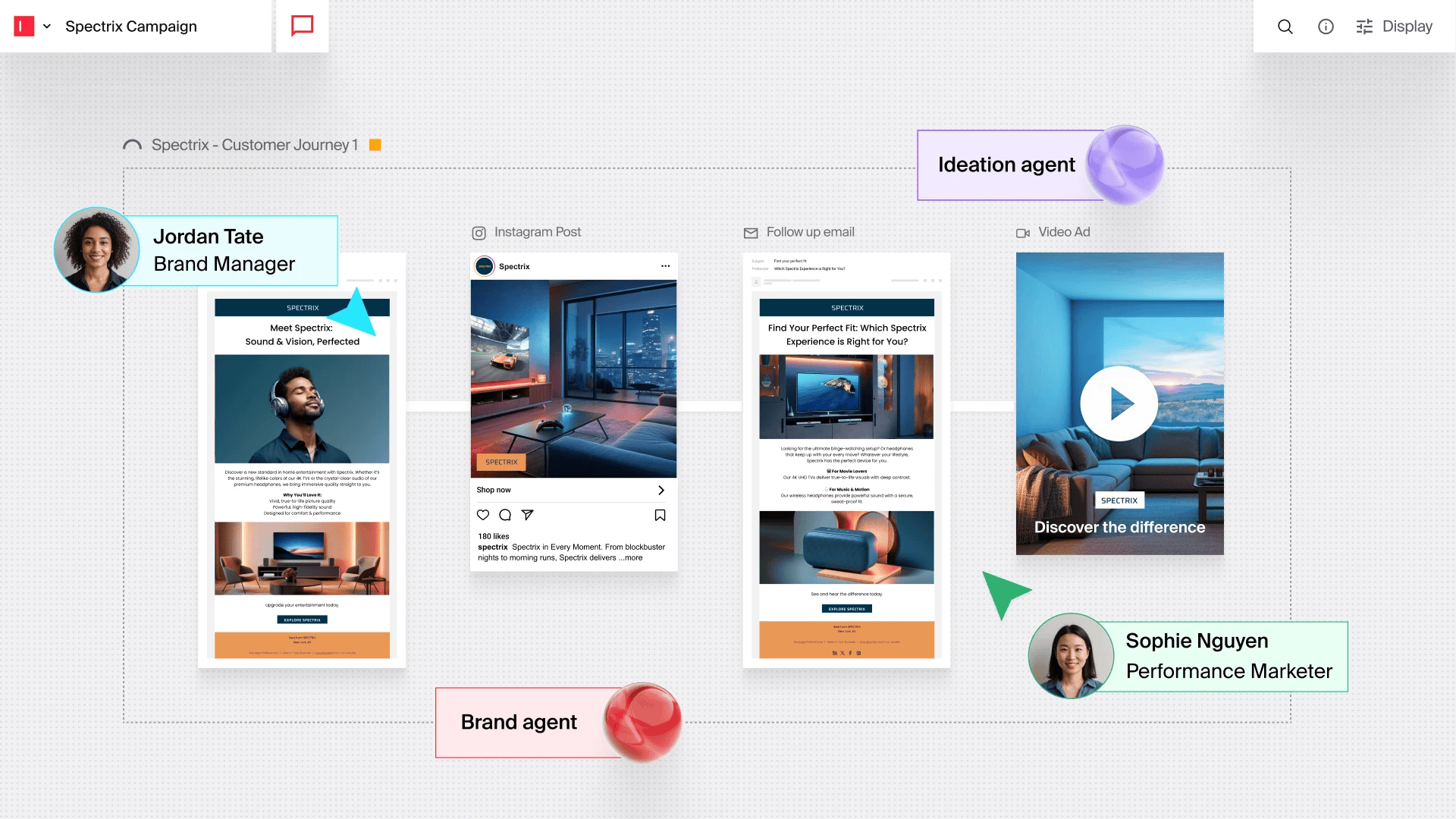
Build feedback loops that matter, from listening sessions to anonymous suggestions, and implement suggested changes visibly. When employees help shape technology decisions rather than just receive them, skepticism turns into ownership.
5. Lead with empathy
The best-planned implementation fails if your team's hearts aren't in it. Instead of leading with capabilities or efficiency gains, name what everyone's thinking but nobody's saying — "Will this change everything about how I work?" — then listen first. Behind resistance is a legitimate fear of becoming irrelevant; the goal is to redirect that fear toward what human judgment and AI can do together.
How to structure AI rollouts to minimize emotional resistance to AI?
A people-first structure moves teams from resistance to confidence gradually. Guthrie recommends a small, dedicated team consisting of an AI Product Manager who owns requirements, success metrics, and workflow design, and a Marketing Lead who knows the brand and campaign processes.
Prioritize collaboration over enforcement, and start with a phased approach whose early use cases "focus on serving the unserved", which means segments or work that just doesn't get done today. Framing AI around gaps rather than replacements lets teams see it as expanding their capabilities, not threatening their work. Build flexibility into the timeline, too. Rushed adoption creates more resistance than gradual integration.
What skills should marketers develop to work effectively alongside AI?
Guthrie identifies two distinct but equally valuable paths that marketers can pursue:
"To remain relevant and thrive in a world increasingly driven by AI tools, marketers must adapt to two key skill paths, technical or creative, that leverage the strengths of AI while maintaining human insight."
The technical path
The first career path focuses on the technical aspects of AI integration. Technical marketers become the architects of AI-driven marketing systems, ensuring tools work effectively to improve processes, streamline workflows, and enhance data utilization.
"These technical marketers are responsible for codifying the essential elements that drive AI-based solutions. They create the systems that power AI tools, ensuring the AI’s output is aligned with business objectives and consumer needs," Guthrie explains.
Key technical skills include:
Prompt engineering: Understanding how to design inputs that yield the desired outputs is essential for effective AI use. Additionally developing approaches to debugging outputs when content drifts away from intended outputs.
Understanding enterprise architecture: Developing a deep understanding of how AI tools integrate into the broader marketing technology stack. This includes ensuring seamless data flow across systems, as well as optimizing tools for scalability, security, and reliability. Technical marketers need to understand data pipelines, API integrations, security protocols, and how AI tools fit within existing CRM, marketing automation, and analytics platforms. They become the bridge between marketing needs and technical implementation.
Workflow designing: Creating and optimizing workflows that leverage AI tools to automate and enhance marketing processes. This requires both strategic thinking and operational expertise, and usually involves mapping existing processes, identifying automation opportunities to designing new workflows that capitalize on AI's speed while maintaining quality controls and human oversight points. The workflows help marketers respond faster to market shifts, increasing agility and the speed at which campaigns can be launched and adjusted.
The creative path
The second path involves what Guthrie calls "creative marketers who focus on using AI to sharpen their understanding of markets, customers, and content."
These professionals don't just rely on AI to automate tasks but create systems that help AI-driven insights enrich the human creativity behind every campaign. Their core mission is to speed up feedback loops and continuously adapt to audience needs with new campaigns.
Key skills for creative marketers include:
Competitive intelligence: Understanding that the competitive landscape is now enhanced by AI-driven insights. Marketers must be able to identify and act on emerging market trends, competitor moves, and customer shifts, feeding this information back into the campaign strategy to stay ahead of the curve.
Defining content formula: Defining the structures, styles, and templates that AI can work with to generate content. Having a strong foundation in content strategy and a deep understanding of the types of content that resonate with audiences allows marketers to guide AI to produce more effective materials.
Developing insights loops: Building frameworks to interpret and respond quickly to market signals and customer behavior is a critical skill. Marketers must use AI to sift through vast amounts of data, identifying trends that signal shifts in customer needs, preferences, and behaviors, which in turn informs campaign decisions.
Guthrie explains: "Many marketers will have overlapping skills, and that success depends on executives and leaders structuring teams with complementary capabilities that allow their organizations to remain competitive in a dynamic market."
Moving forward
Addressing emotional resistance takes proactive leadership, open communication, and a relentless focus on trust-building. As Guthrie puts it: "Over time, marketers will see AI as an augmentation tool, not a replacement, and the initial discomfort will give way to a recognition that AI can elevate their work." See how teams use Typeface to generate campaign variations in minutes — book a demo today.
Frequently asked questions
How do I tell emotional resistance apart from a legitimate objection about the tool?
Test whether evidence changes the position. A rational objection names something specific and falsifiable like an integration gap, an accuracy threshold, or a compliance concern. It softens when you address it. Emotional resistance shifts targets: solve the stated problem and a new one replaces it. Both are worth hearing, but only the first is fixed with a product answer.
What should I do about someone who's still resisting months into the rollout?
Stop treating it as a communication problem and get specific about the role. By that point the person has seen the evidence, so repeating the case rarely helps. Have a direct conversation about what their job looks like in the new workflow and what they need to do it. Most will re-engage once expectations are concrete.
How do I know if resistance is actually easing?
Watch behavior rather than sentiment scores. Useful signals are unprompted usage between mandated sessions, the share of people submitting feedback or feature requests, whether anyone is adapting workflows on their own, and how often AI output reaches a final deliverable versus being discarded. Survey results can improve long before real adoption does as people learn what answer is expected.
Related articles

October 13, 2026
You’ve probably seen it happen: an AI pilot shows real promise, gets everyone excited, then never makes it past the initial team. We’ve worked with dozens of enterprise marketing teams that faced thi

December 18, 2025
You've bought the AI tool. Your exec team is excited about the ROI projections. But three months in, adoption is stuck at 30%, and the creatives on your team are quietly finding workarounds to avoid u

October 13, 2026
Implementing AI is a delicate balancing act. To transform operations, a new technology has to fit naturally into everyday workflows. Rolling it out in phases, within a limited environment, is the best