
AI summary
With AI, brand intelligence becomes a real-time engine informing workflows, enforcing consistency across every campaign, and compounding improvements over time. In Typeface, a knowledge graph and AI brand checkers turn brand insights into consistent, scalable performance.
When brand consistency works, it's invisible. Everyone feels it. Only you know how much work goes into making your brand look and sound the same everywhere your audience meets you. And you also know this: things slip through, even with live signals and customer feedback coming in.
AI changes that by bringing real-time brand intelligence into campaign creation and upholding your brand everywhere. Static PDFs and periodic audits give way to a living brand system where inconsistencies don't get the chance to compound.
TL;DR
AI-powered brand intelligence catches deviations as they happen and acts on them before they ship.
AI works with brand signals from various channels, keeping your brand system calibrated with market reality.
Your brand knowledge — voice, visuals, and rules — lives inside the system AI generates and checks from.
A real-time brand intelligence system uses closed-loop feedback to generate campaigns that improve with time.
Typeface grounds every generation in your brand standards and enforces them at the draft stage.
What does “real-time” actually mean in brand intelligence?
Real-time brand intelligence means deviations from brand standards are caught during creation, not weeks later in a content audit or on a sales call. For a Fortune 500 company managing hundreds of asset variations across multiple markets, that capability ensures brand standards don’t become a casualty.
Brand guidelines alone don't guarantee consistency. That’s because traditional, manual review processes break under the volume and pace of enterprise content.
AI can handle that volume. It enforces standards continuously, at the speed and scale real-time brand intelligence requires.
How does AI power real-time brand intelligence?
AI creates content aligned to your brand standards and adapts when signals suggest your messaging needs to shift. When tone drifts in an email or a misleading claim surfaces in ads, there's a much better chance it gets corrected before it does damage.
Here's how it works.
An intelligence layer guides and validates every piece of content
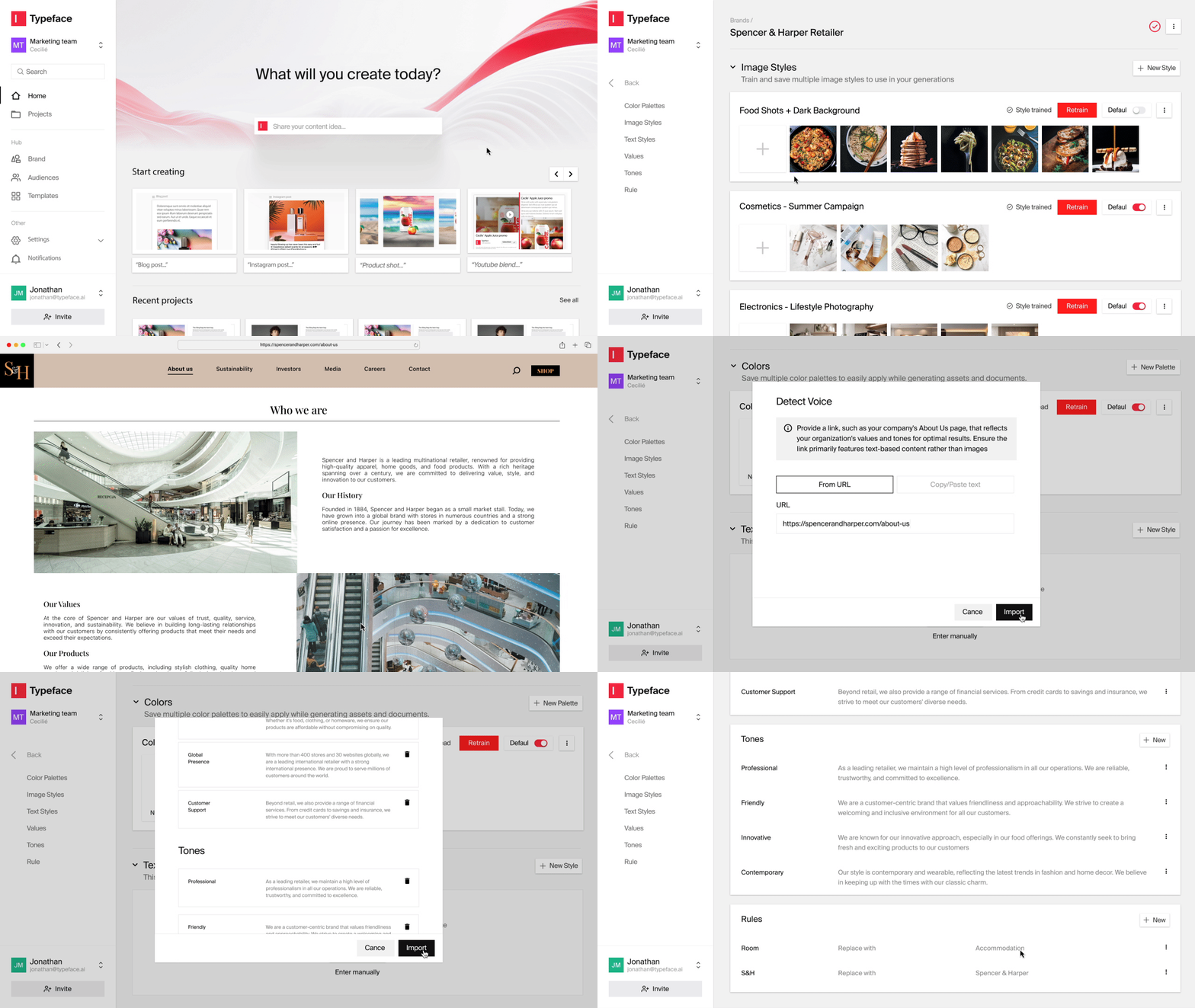
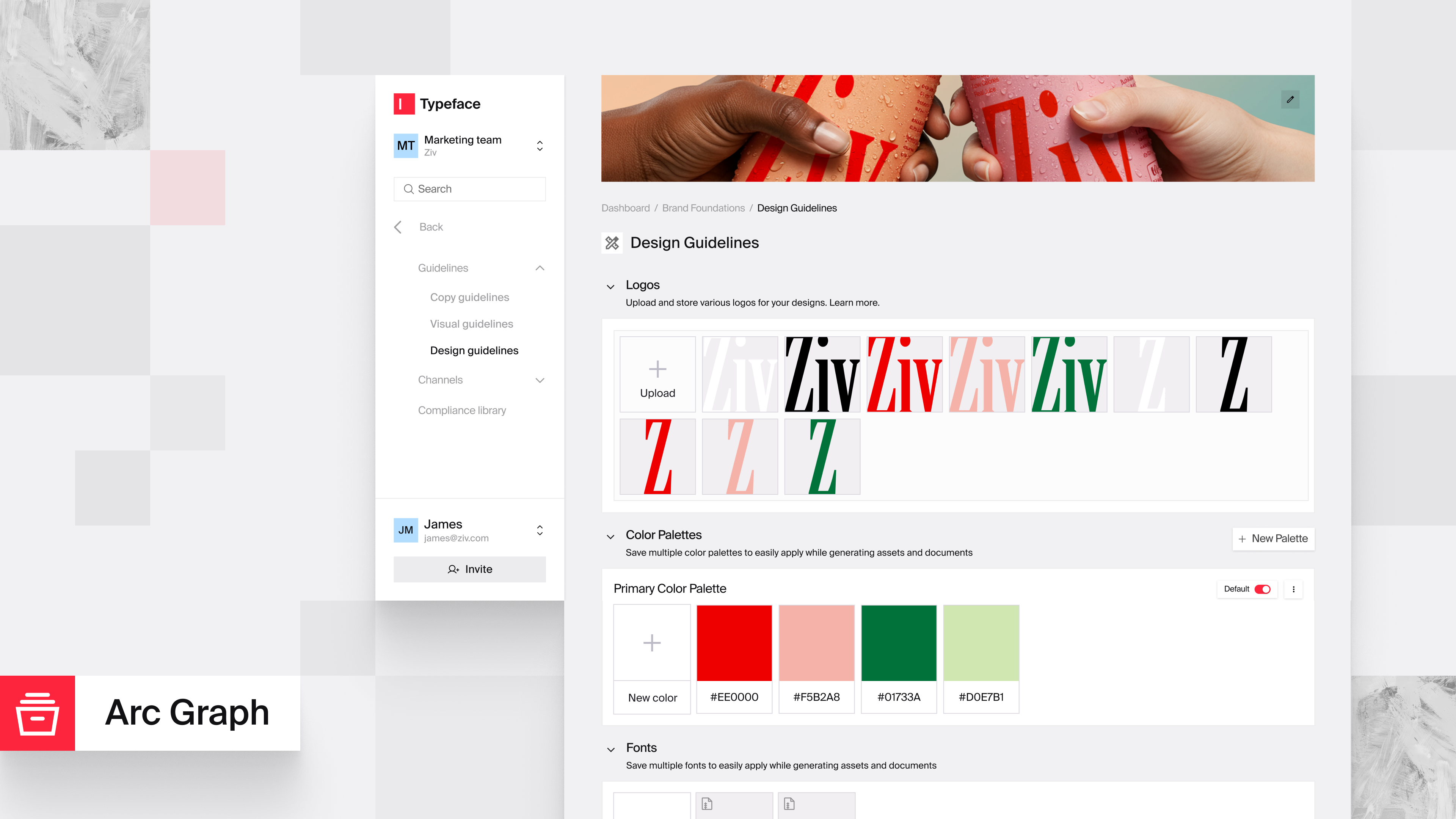
The brand guidelines in your PDFs and portals are expected to be followed. A brand intelligence layer enforces them in every piece of content your team creates. In Typeface, that's Arc Graph.
Arc Graph connects your brand standards, audience data, approved assets, and performance signals into a knowledge graph that informs content creation. It updates as your brand evolves, ensuring campaigns run on current standards.
Real-world scenarios:
A Fortune 500 CPG brand applied approved keyword guidance and retailer-specific rules automatically across every SKU, ensuring brand consistency and compliance.
A brand like ASICS, operating in multiple markets, can have every local team generate from the same brand foundation, adapting locally and keeping standards intact.
Fix deviations in text and visuals in real time
AI analyzes text, images, and video through multimodal processing. The different content types are converted into a shared format, giving AI a common language to calculate how far elements stray from the approved standard. A deviation from established color palettes gets flagged the same way as an unauthorized claim in copy.
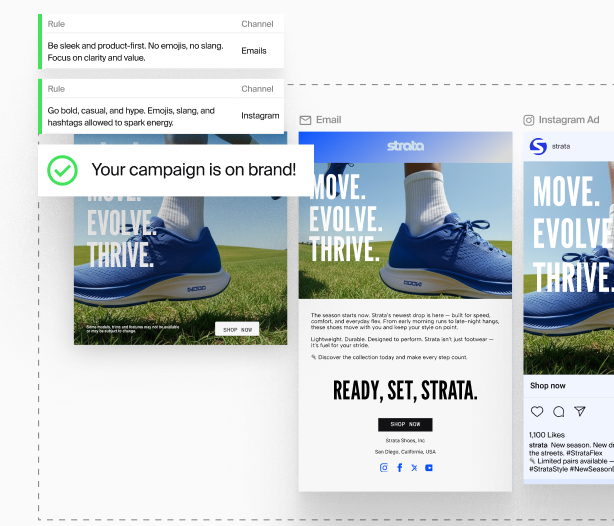
Brand Agent is Typeface's text evaluator that checks copy against your brand rules. Whether you have ten or a hundred, it applies them intelligently, flags deviations, and suggests corrections.
Visual Brand Evaluator is its counterpart for creative content. It evaluates image and ad assets against your visual brand system, and is available in Typeface Chat or as a Chrome extension sidebar to let your teams review assets while working in their daily tools, including Google Docs and Microsoft Word.
Real-world scenario:
A leading grocery retailer aligned content with phrasing do’s and don’ts, cutting back-and-forth between email and brand teams.
Close the loop back into creation
Performance signals flowing back into the brand system ensure intelligence improves with every campaign. This closed-loop feedback mechanism helps AI self-correct and improve how it plans and creates campaigns.
AI draws on brand signals from CRM sales calls, campaign performance, and AI search to sharpen its outputs. What it learns, it applies consistently across every asset.
In Typeface, Arc Loop is how that learning compounds. Currently in development, it feeds performance signals back into how AI agents create content. Each campaign starts sharper than the last, and gains become measurable quarter over quarter.
What should you look for in a real-time brand intelligence system?
A real-time brand intelligence system applies your guidelines consistently to every campaign while updating to live signals and repeating patterns. These are the essentials it’s built on:
An intelligence layer that creates a brand baseline and evolves with your brand
Continuous ingestion of brand signals across channels that matter
Integration with existing marketing tools to bring in and update brand knowledge and assets
Content governance that defines what AI can handle autonomously and what teams need to review or provide
Closed-loop feedback from campaign performance into your brand system
A generative AI marketing platform makes brand consistency a real-time activity rather than a postmortem. Your content keeps to your unique style and resonates with your audience.
Take control of how your brand shows up everywhere
Brands are shaped in every interaction. Marketing teams work hard to keep campaigns consistent, but at scale, drift is inevitable and compliance risks amplify. The misses often surface only in brand audits or a major incident, and by then, the slippage has set in.
Real-time brand intelligence with AI marks a shift in how brands maintain their identity across channels and make consistency less taxing on marketing teams. Every alert and update feeds back into the brand system and helps teams act in time.
Typeface fits into any real-time brand intelligence strategy. The platform draws from your existing tools and adapts outputs to updated guidelines. With a brand guardian working in the background, teams catch deviations early. And with performance data feeding back into AI, campaigns improve over time.
Try Typeface with a demo. For more information, talk to sales.
FAQs
How does real-time brand intelligence differ from social listening?
Social listening monitors conversations. Real-time brand intelligence uses a brand baseline to adapt campaigns as signals come in.
How quickly can AI detect brand drift?
AI can catch brand drift during creation, reducing the possibility that more of them will accumulate in further reviews or compound across assets. Instead of finding discrepancies weeks or months later in audits, you catch issues early and keep consistency high.
Won't real-time alerts just create more noise for my team?
Not every alert needs acting on. Your team is the best judge of what warrants a response. When something does, AI helps you fix it before it gets any real visibility.
Will real-time brand intelligence require replacing our existing marketing tools?
No. A real-time brand intelligence system plugs into your marketing stack, applying your brand knowledge and assets within the workflows you already use.
How does AI know what's on-brand for a brand it hasn't seen before?
AI uses your brand baseline to generate and check content. You build this baseline by training AI on your voice and visual styles, and by bringing in your assets and knowledge to keep everything on-brand.
What's the ROI of moving to real-time brand intelligence?
AI makes real-time brand intelligence a closed loop. Live signals let you optimize campaigns while they're running. Performance data feeds back into the brand system, making each campaign sharper than the last.
How does real-time brand intelligence relate to AI search visibility?
AI models prefer plain language and neutral tones, but also reward distinctive, consistent narratives. There’s nuance here, but the more aligned your content is, the more likely AI systems are to surface your brand.
Related articles

September 23, 2026
Your brand doesn't live in one place anymore. It lives everywhere, all at once, and most of it is outside your direct control. Right now, somewhere on the internet, an AI assistant is summarizing you

September 23, 2026
Marketing automation handles the tasks your team would otherwise have to do manually, on repeat, at scale. It’s useful — of course — but limited. A CMO at a financial services company I spoke to recen
March 16, 2026
Creating on-brand content that performs—across channels, teams, and regions—is harder than ever. Brand guidelines live in PDFs. Approved assets are scattered across folders. Audience insights sit in