

AI summary
If brand monitoring tells you what's being said about you, brand intelligence tells you what to do about it. There's a case for AI here — agentic workflows bridge the gap between insights and action with knowledge graphs and closed-loop feedback. Enterprise AI marketing platform Typeface turns brand intelligence into a system that gets smarter with every campaign.
Brand monitoring and brand intelligence are distinct yet connected activities that shape your company’s image and growth. Monitoring your brand is straightforward. Turning patterns into insights is harder. Applying those insights in real time is the hardest part.
That’s where AI can close the gap between what you know and how quickly you act.
Brand monitoring vs. brand intelligence
Category | Brand Monitoring | Brand Intelligence |
What it does | Tracks what’s being said about your brand across channels | Interprets what those signals mean and what to do next |
Primary goal | Awareness and visibility into brand activity | Action and decision-making based on brand signals |
Focus | Data collection (mentions, sentiment, feedback, share of voice) | Insight application (prioritization, recommendations, strategy) |
Timing | Mostly after content is published | During content creation and campaign execution |
Use of AI | Improves sentiment analysis and offers plain language insights | Drives real-time decisions and continuous learning |
Workflow integration | Often separate from execution (reports, dashboards) | Embedded directly into content and campaign workflows |
Impact on campaigns | Identifies issues after they occur | Fine-tune campaigns in real-time and maintain a consistent brand presence |
What is brand monitoring?
Brand monitoring continuously tracks what’s being said about your brand online, across social media, news sites, review sites, blogs, LLMs, and forums. It also captures customer feedback from sales calls and surveys. All this data feeds back into your campaigns and marketing strategy.
What is the primary goal of brand monitoring?
To stay aware of how people perceive your brand and act on it without delay. How you communicate shapes both perception and performance, so tracking your online presence isn't optional. Brand monitoring gives you a systematic way to do that.
What does a brand monitoring strategy look like?
A brand monitoring strategy uses tools that continuously capture your brand across the web — in text, images, and video. Aggregating this data with customer feedback and analyzing it gives a full picture of your brand health.
What is brand intelligence?
Brand intelligence interprets what’s being said about your brand and determines what it means for your brand’s position. It identifies patterns and applies context to decide which observations require immediate action and which warrant deeper analysis. Over time, that sharpens how you monitor, from the channels you prioritize to the signals worth acting on.
What is the primary goal of brand intelligence?
To respond to key signals in real-time and shape content strategy around patterns, over time. While monitoring surfaces data, brand intelligence determines what that data is telling you to do next.
What does a brand intelligence strategy look like?
A brand intelligence strategy acts on data from various monitoring tools through workflows built for action. You can respond to real-time signals like a spike in negative sentiment or any inconsistent visuals while identifying longer-term trends to adjust messaging and channel strategy. It’s reactive when it needs to be and proactive when it can be.
Bottom line: Brand monitoring tells you what happened. It’s a tactical toolset. Brand intelligence tells you what to do. It’s a strategic capability.
AI in brand monitoring
AI’s data processing muscle is a given. Where AI meaningfully improves brand monitoring is in quality:
Contextual understanding: Interprets the emotional intent and cultural nuance that keyword-based monitoring misses.
Visual compliance: Examines campaign assets for brand consistency across channels and markets.
Pattern recognition: Finds correlations across datasets and surfaces insights in plain language, from trending themes to what's attracting attention in a category.
Early warning detection: Identifies gradual shifts before they become visible problems, like a sentiment change in a specific audience segment or a competitor gaining share of voice in AI search results.
AI in brand intelligence
With AI, brand intelligence embeds in content creation workflows, allowing your team to act on key signals and patterns soon after they emerge. In practice that means:
Real-time campaign optimization: Adjust messaging or creative as signals land rather than post-campaign
Strategic pattern recognition: Identify which themes and channels consistently drive positive brand perception across markets
Brand consistency at scale: Catch deviations during content creation, not weeks later in an audit
Continuous learning: Sharpen intelligence over time as performance data accumulates
Bottom line: AI expands what monitoring captures and accelerates how teams respond to real-time intelligence.
How Typeface powers your brand intelligence strategy
When you’re managing hundreds of assets and half a dozen channels, even small changes demand hours of your time. With Typeface, brand intelligence carries into campaign creation workflows and reduces slip-ups, turning insights to action while ensuring brand consistency.
Connects to your monitoring tools for the latest brand intelligence
Typeface integrates with your marketing tech stack, including your brand monitoring and campaign analytics tools. It keeps intelligence flowing in and your brand baseline current.
Builds brand intelligence directly into content workflows
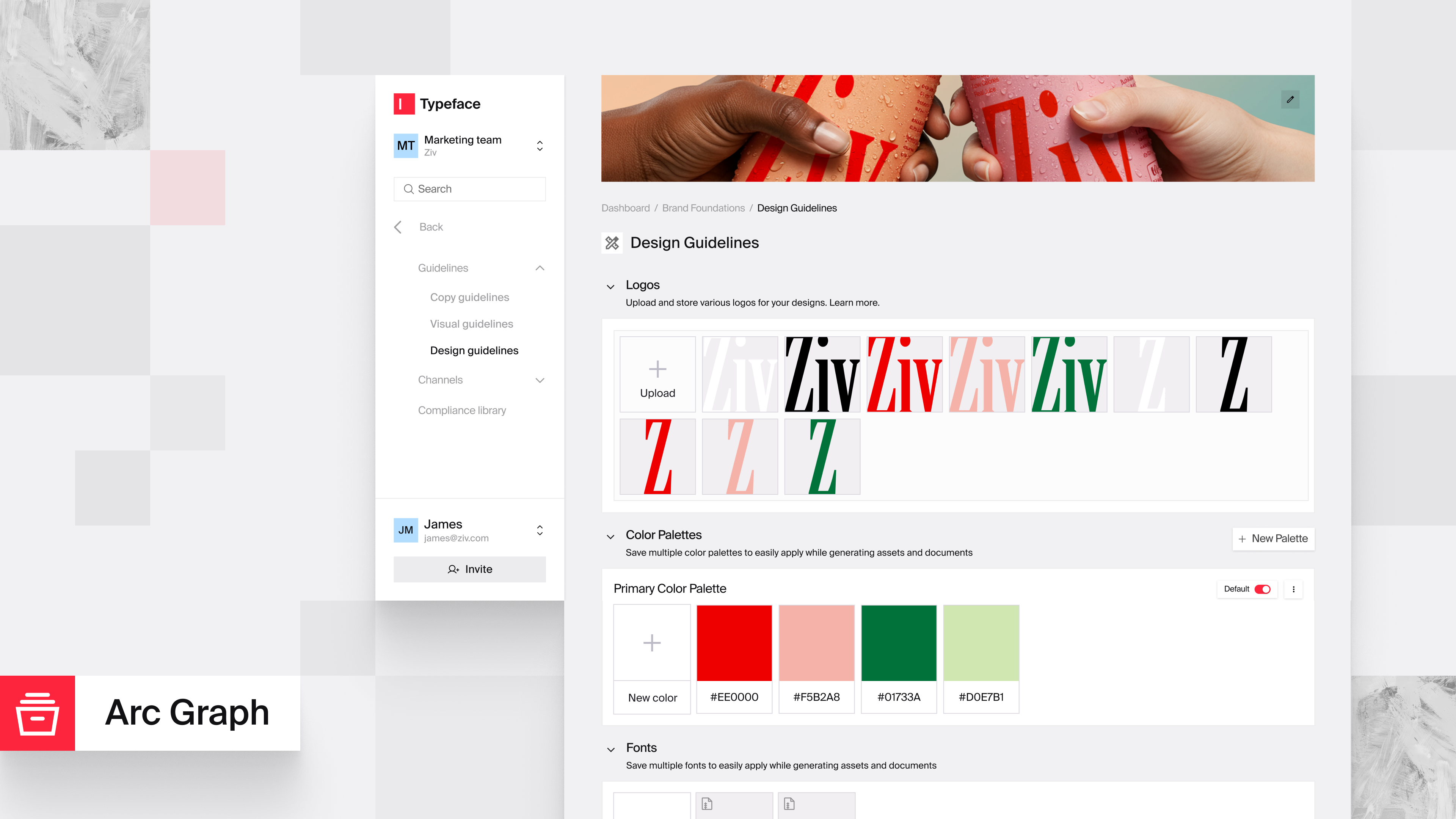
You know what good looks like for every channel and market. Typeface builds that in from the start through Arc Graph — a unified, dynamic brand system that maintains your messaging, visuals, and positioning across every asset. Arc Graph evolves as your brand does, updating as new intelligence warrants while maintaining brand consistency at all touchpoints.
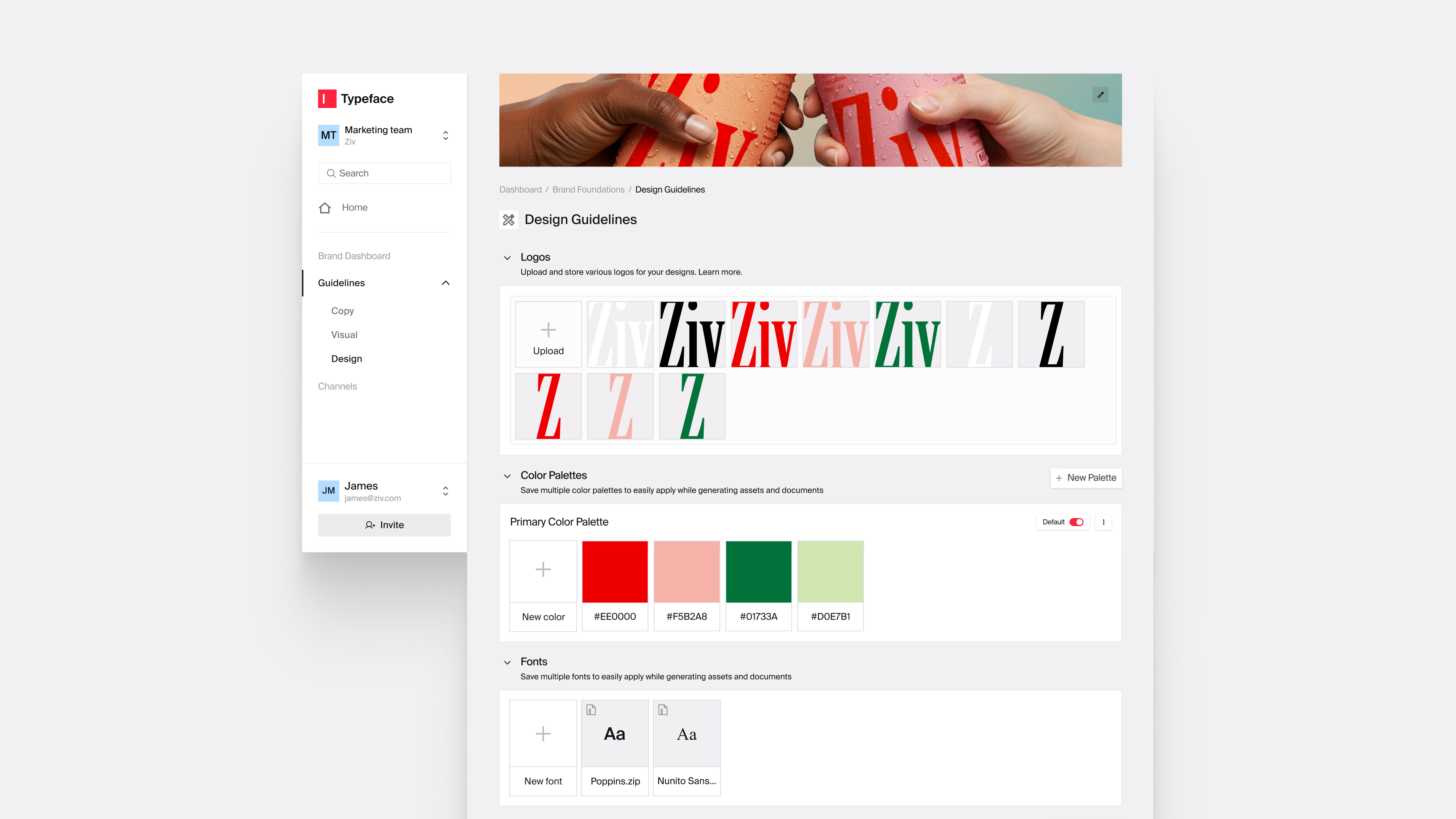
Your Brand Kit in Typeface keeps content cohesive across channels
Catches drift before it ships
Even with a strong baseline, teams juggle new formats and markets while adding their own judgment to what AI creates. When drifts occur, Brand Agent catches them by checking drafts against your brand rules in real-time. Ask, “is this on brand?” and get instant feedback on what needs fixing and why.
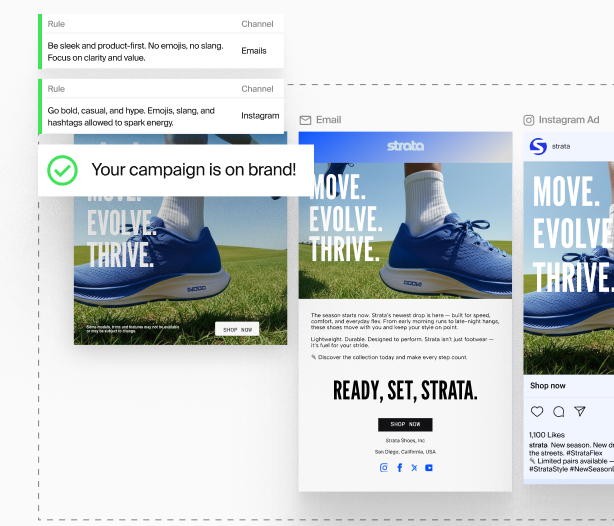
Catch brand deviations as content is created
Keeps team reviews moving
Human review of AI-generated content is non-negotiable, including mid-campaign changes, however small. Typeface keeps team reviews moving through Arc Spaces, a shared workspace where content flows through review checkpoints and audit trails keep everyone in the loop.
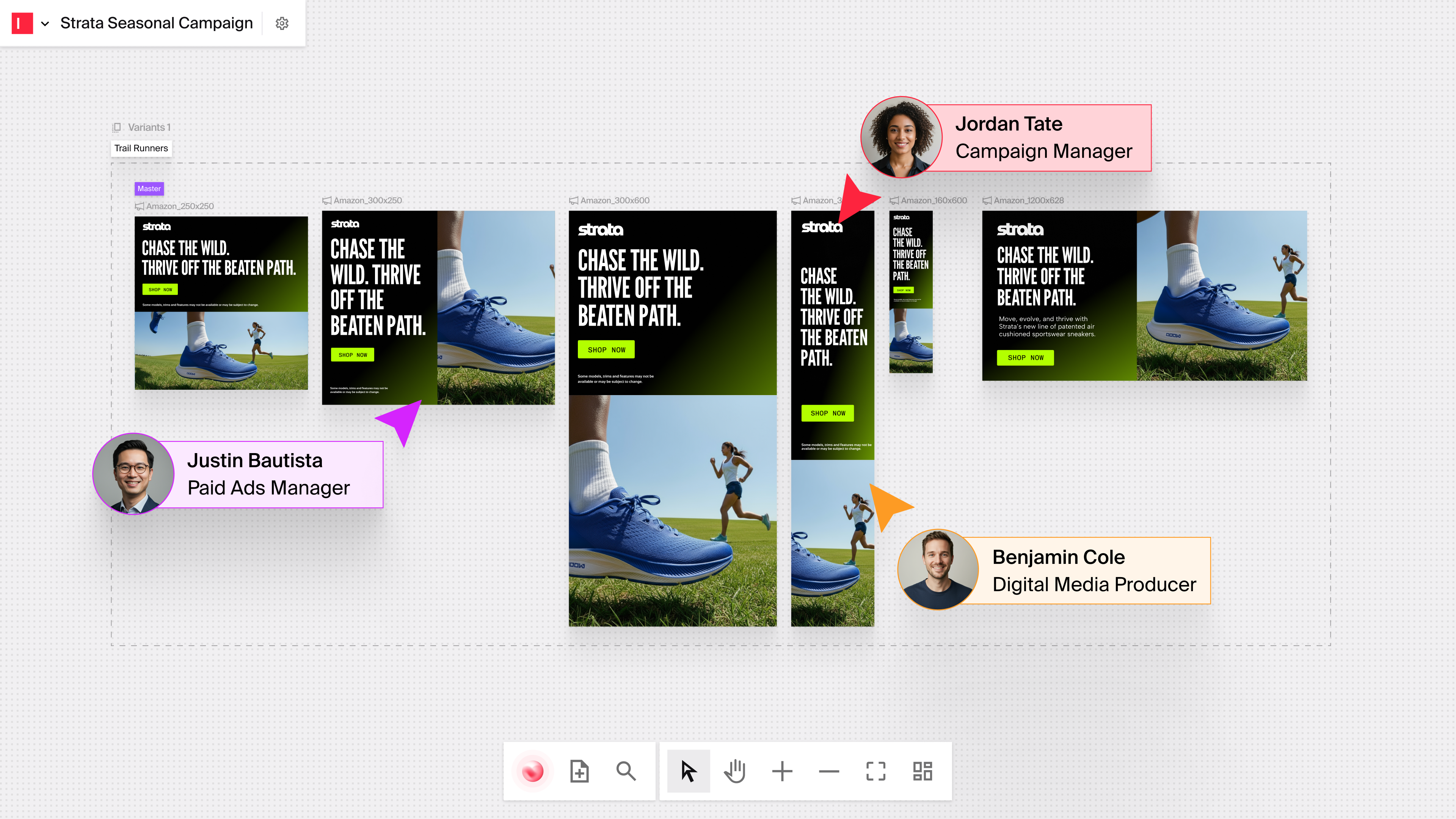
Create end-to-end campaigns in a collaborative canvas
Turns performance data into better campaigns through continuous learning
Typeface feeds performance data and engagement signals back into Arc Graph to inform how the next campaign gets built. The AI learns from every campaign, generating measurably better content each time.
Close the gap between brand insight and action
In 2026, real-time brand intelligence is the norm. But intelligence without action is just information. Once AI has learned your brand standards, it has a baseline to create from. And as it keeps receiving brand signals and campaign performance data, it can learn to refine its outputs for greater resonance and engagement.
Typeface operationalizes brand intelligence. Where monitoring gives you signals, it turns them into decisions inside content workflows, improving campaigns as they run.
See how our AI marketing platform transforms brand and campaign management. Book a demo or talk to sales.
FAQs
Where does brand intelligence come from?
Brand intelligence comes from anywhere consumers and the media talk about your brand, such as social media, review sites, customer calls, discussion boards, news sites, podcasts, and blogs. Increasingly, it covers how AI search engines describe your brand in response to relevant queries.
What does competitive intelligence mean?
Competitive intelligence tracks how often you appear on various websites and social media platforms versus your competitors. It offers insights into competitors’ marketing and consumer perception that you can use to spot opportunities and gaps in your strategy.
Why is AI brand monitoring important for marketing teams?
Users are increasingly asking LLMs for information and recommendations about brands. With AI-generated answers shaping purchase decisions and brand perception, monitoring mentions and share of voice in popular tools like ChatGPT, Perplexity, and Google Gemini has become critical.
How is AI changing brand monitoring?
AI-powered brand monitoring tools analyze different types of content across the web and trigger real-time alerts for your brand mentions. They surface patterns and turn large volumes of signals into clear, plain-language insights. Increasingly, these tools are evolving toward personalized reporting and predictive brand health scores that connect brand signals to future demand and behavior.
What is AI brand intelligence?
AI in brand intelligence shifts teams from periodic reporting to real-time campaign fixes or enhancements. It also ensures that performance data keeps improving future campaigns.
Related articles
March 16, 2026
Creating on-brand content that performs—across channels, teams, and regions—is harder than ever. Brand guidelines live in PDFs. Approved assets are scattered across folders. Audience insights sit in
June 2, 2026
Welcome back to Feature Focus! Following our recent launch of new creative team solutions and native Figma integration, May's updates keep the momentum going. This month's focus: less manual work, fe

June 4, 2026
An agentic marketing platform is enterprise software that uses AI agents (autonomous programs that can plan, act, adapt) to run content workflows from start to finish. Unlike a writing assistant that