December 21, 2025
Stop Writing Only for Google. Start Writing for Everyone (Including the AIs Reading Your Content)

Ashwini Pai
Senior Copywriter

AI summary
AI-friendly writing balances content structure for LLMs with clarity for human readers. This guide breaks down the principles of writing for both.
Although LLM searches are taking a minimal chunk out of organic SEO traffic, AI Overviews have changed how people search and competition among AI search tools has intensified. Far from being dead, organic search is evolving with distinct players and discovery methods: search engines, LLMs, AI answer features, and community platforms like Reddit and LinkedIn.
For the marketer writing SEO content, this means being curious about how AI systems select answers and websites while continuing to value SEO best practices and user experience. In this post, we share content tactics that work for Google, AI, and people.
What is AI-friendly writing?
AI-friendly (AEO-optimized) content is easy for AI systems to find, understand, and quote accurately while still being helpful for humans.
When you’re writing for AEO, you’re optimizing for:
Clear structure (titles, headings, sections)
Everyday, conversational language
Direct, to-the-point answers
Scannable formatting
Strong alignment with specific user intent
This doesn’t replace SEO. It builds on it by making your content more “snippable” and machine-readable, so answer engines can confidently use it in AI overviews and conversational responses.
How do you write AI-friendly content?
From what we know about how AI systems process information, structuring content clearly and logically helps LLMs extract key details more easily. This is the main shift in how to approach AEO writing . Beyond that, little else changes — credible, comprehensive content still wins, whether it’s read by humans or AI. In fact, long tail-focused content is likely to perform better, since this is usually closely associated with your specific expertise.
How to structure content for AI visibility?
AI doesn’t read a page like a human. It scans titles, H1s, and metadata to check for relevancy, similar to glancing at a table of contents before diving into the chapters. It then breaks the content into smaller text chunks in a process called parsing and evaluates each chunk on how well it answers a user’s query. Finally, it combines the most relevant chunks to generate a detailed response.
So, structure your content in the way AI reads it:
Relate the title, H1, and description
AI agents scan your title, H1, and description first to understand what the page is about. Make sure all three describe the same core topic.
Example structure:
Title: How to Write AI-Friendly Content for AEO
H1: A Practical Guide to Writing AI-Friendly, Answer-Ready Content
Meta description: Learn how to structure, format, and update your content so AI search engines can easily understand it, reuse it, and cite your brand in answers.
This alignment gives AI a clear, consistent signal about your page’s purpose.
Use specific, descriptive headings (H2s and H3s)
AI uses headings to map the logical flow of your page. Turn vague headings into clear statements or questions that reflect real searches or intents.
Example:
Instead of “Overview,” use, “What is AI-friendly content?” or "How to structure blog posts for AI search?" These headings help AI quickly locate the exact section that answers a user’s question.
Add Q&A sections
Q&As give users direct answers and keep them engaged, while also tailoring to the snippets and summaries of the zero-click world. The same goes for FAQs, which are great engagement (and trust) boosters as they address users' doubts and dealbreakers. To add to this, full questions and concise answers fit naturally with how people search using voice assistants.
It's worth identifying sections where you can weave in Q&A sections and to include populars FAQs, phrasing questions the way users would ask them.
Example:
Q: What is Answer Engine Optimization (AEO)?
A: Answer Engine Optimization (AEO) is the practice of structuring and writing content so AI systems can easily understand it, extract accurate answers, and reference your site in their responses.
Use lists and tables
Answer engines love structured data. By including lists and tables for step-by-step processes, pros and cons, feature comparisons, and tool checklists, you make it easy for AI to lift and recombine specific points into clear answers.
Add schema markup where relevant
Schema markup helps both traditional search and AI systems understand your content type and structure. Helpful schema types for AEO include Article, FAQPage, Product, WebPage, Author, and BreadcrumbList.
How Typeface helps
Web Agent generates structured blog outlines and drafts, organizing content into headings, bullets, and questions to make creating AI-friendly content easier.
It also embeds your target keywords in meta tags and page content, helping your search rankings while adding semantic context for answer engines.
How to signal credibility and authority to AI?
Like traditional search engines, AI systems reward content that’s reliable and helpful (just as human readers do). But while traditional search engines rely more heavily on keywords for ranking, AI systems rely more on context and intent when selecting answers. Here’s how you can help them trust and select your content:
1. Include original data, research, and POV
AI prioritizes content that adds unique value. Provide it by including:
Customer stories
Survey results
Expert commentary
Specific examples from your own experience
How Typeface helps
Uses your internal knowledge and documents to create unique blogs
Repurposes existing research, case studies, and insights into blogs, LinkedIn newsletters, and one-pagers.
2. Make author expertise visible
AI considers the credibility and reputation of a website. But that doesn’t give established sites an automatic edge. A well-structured page from a smaller site can be cited over a larger one if it provides more accurate, relevant, or detailed information.
Content type matters too. For medical topics, AI favors institutions like Mayo Clinic, WHO, or CDC, which are recognized for vetted information. For non-medical topics, personal or business blogs can still be cited if they offer unique insights, practical examples, or niche expertise.
The takeaway? Tie content to people with relevant experience.
Ways to show authority
Add short author bios with role, experience, and domain focus
Use author schema markup to help AI associate expertise with specific topics
Mention collaborations with subject matter experts and quote them directly
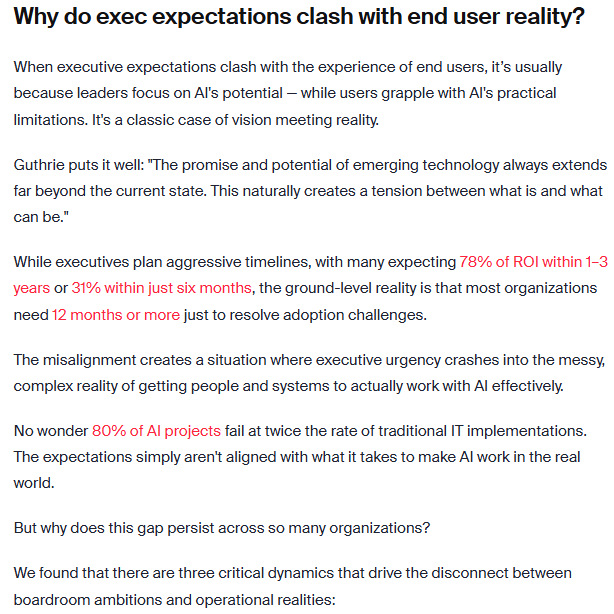
Writing for AI: Include SME quotes and statistics in content
3. Increase topical relevance
LLMs and AI search systems use a core technique called query fan-out to provide rich responses and reduce misinformation. In this technique, AI breaks a question into multiple related sub-questions, looks for content that covers each of them well, and synthesizes the retrieved information into a single, hyper-relevant answer.
How to show relevance:
Focus pages on one primary intent (e.g., "how to measure AEO performance" rather than just "AI content"). Address related subtopics: definitions, how-tos, examples, tools, pros/cons, and FAQs.
Create hyper-specific pages, for example:
By persona: "AEO Checklist for B2B SaaS Marketers"
By funnel stage: "How to Report AEO Results to Your CMO"
By use case: "How to Optimize Product Comparison Pages for AI Search"
By industry: "AEO Strategy for Healthcare Content Teams"
These focused pages map clearly to niche queries and are easier for AI to match to user intent.
How Typeface helps
You can use Web Agent to create web pages and blogs targeted to audiences, buying stages, industries, and other highly relevant use cases far more efficiently than writing each manually. As an enterprise AI writing assistant, Web Agent integrates seamlessly with your marketing stack, aligns with your content creation workflows, and operates within a robust AI trust and safety framework.
With Web Agent in your content production, you gain speed, scale, and consistency without losing quality or the unique character of your brand. Here's how:
Generate product, service, and location pages with on-brand copy, imagery, and built-in SEO keyword research
Ground every piece of content in your approved brand knowledge and source material
Maintain a consistent brand voice across pages, switch to a neutral tone for informational blogs, or create author-specific voices
Enforce brand rules automatically across all blogs and web pages
Publish faster by sending pages directly to your CMS
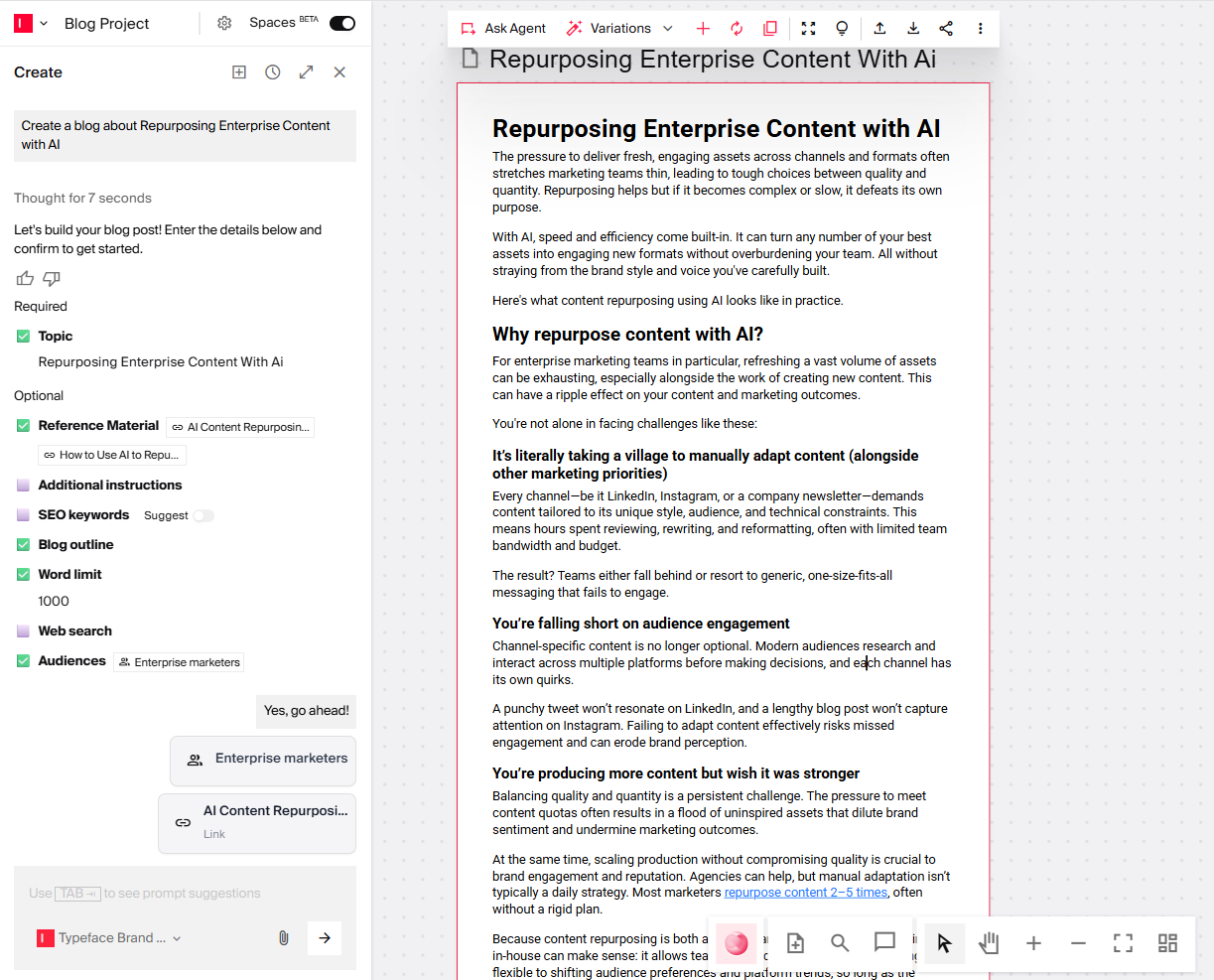
Related reading: How to create a webpage with Web Agent
4. Keep content fresh
AI prioritizes up-to-date content, especially for topics that evolve rapidly, like technology, news, and finance.
Refresh statistics, benchmarks, and screenshots
Replace outdated examples or retired tools
Add references to recent trends, products, or shifts
Display published and/or last updated dates. Update the date when you make meaningful improvements.
Is this page AEO-ready? A quick checklist.
Before publishing, ask:
Does the title, H1, and description clearly align on one main topic?
Are headings specific and phrased like real questions or statements a user might search?
Have I included Q&A, lists, or tables where they make sense?
Do I showcase unique data, examples, or expert opinions?
Is my terminology and messaging consistent with other pages?
Is the topic narrow and specific enough to match clear user intent?
Is the content recently reviewed, with visible dates and updated references?
If you can honestly say "yes" to most of these, your content is in good shape for both humans and AI answer engines.
Make quality content creation scalable with Typeface
Scale the production of structured, authoritative content with Typeface (and your expertise). Don’t stop at blogs and web pages — try Typeface for personalized email and ad campaigns, adding speed where it matters most and saving time for work that needs your creativity.
Get started now: Take a product tour or talk to sales.
FAQs
1. How do I know my AI-friendly content is working?
Look for signs that your AI-optimized content is gaining traction. You can track these manually or with AI visibility tools.
Citation frequency: How often do AI systems reference your content, and in what contexts?
Ground-level impact: How many people found you through AI searches compared to direct website visits?
Competitive share: For key topics, what percentage of AI citations go to you versus competitors?
Answer influence: When AI systems provide advice or recommendations in your domain, how often do these answers align with your perspective?
2. What are the common mistakes when writing content for AI search?
AI likes clear writing and original content. When you apply these principles, you make it easier for AI to understand and cite your content for the people it’s helping. This means avoiding common mistakes like:
Not writing in simple, everyday language (which most people prefer)
Missing opportunities to create question-based headers that mirror common user queries.
Not adding direct answers where they're needed
Over-applying AI writing rules at the cost of sounding engaging
Failing to add unique value
Failing to update outdated claims
3. Can I write for both humans and AI?
Yes! Write primarily for your users, then shape the structure for AI. Look at it this way: if people find your content easy to read and genuinely useful, AI is more likely to reuse it as well.
4. Will optimizing for AI search hurt my Google rankings?
No. As Google started shifting from keywords to semantic understanding and user-focused content long ago, optimizations that help AI agents understand your content — like direct answers, clear headers, and comprehensive coverage — also help SEO performance. It's not one versus the other; you're creating content that works for both.
5. Can I use the same content strategy for voice search and AI search?
Yes, largely. Both voice search and AI search prioritize conversational queries and direct answers. The difference is that voice search typically returns one answer while AI search engines synthesize information from multiple sources. Optimizing for user intent and clarity works well for both.
Related articles

November 6, 2025
Content drives engagement and leads. Forbes reports 74% of companies credit content marketing with boosting lead generation. But at the same time, content marketers face mounting pressure to create be

August 12, 2026
AI has quietly powered search for years, but the launch of numerous AI answer engines and Google's AI Overviews changed how people find answers for good. Search has expanded into "AI SEO," where brand

September 3, 2026
To repurpose valuable content using an AI Text Summarizer, feed the summarizer the long-form assets you already have — reports, whitepapers, transcripts, case studies — and have it extract the core in