November 18, 2025
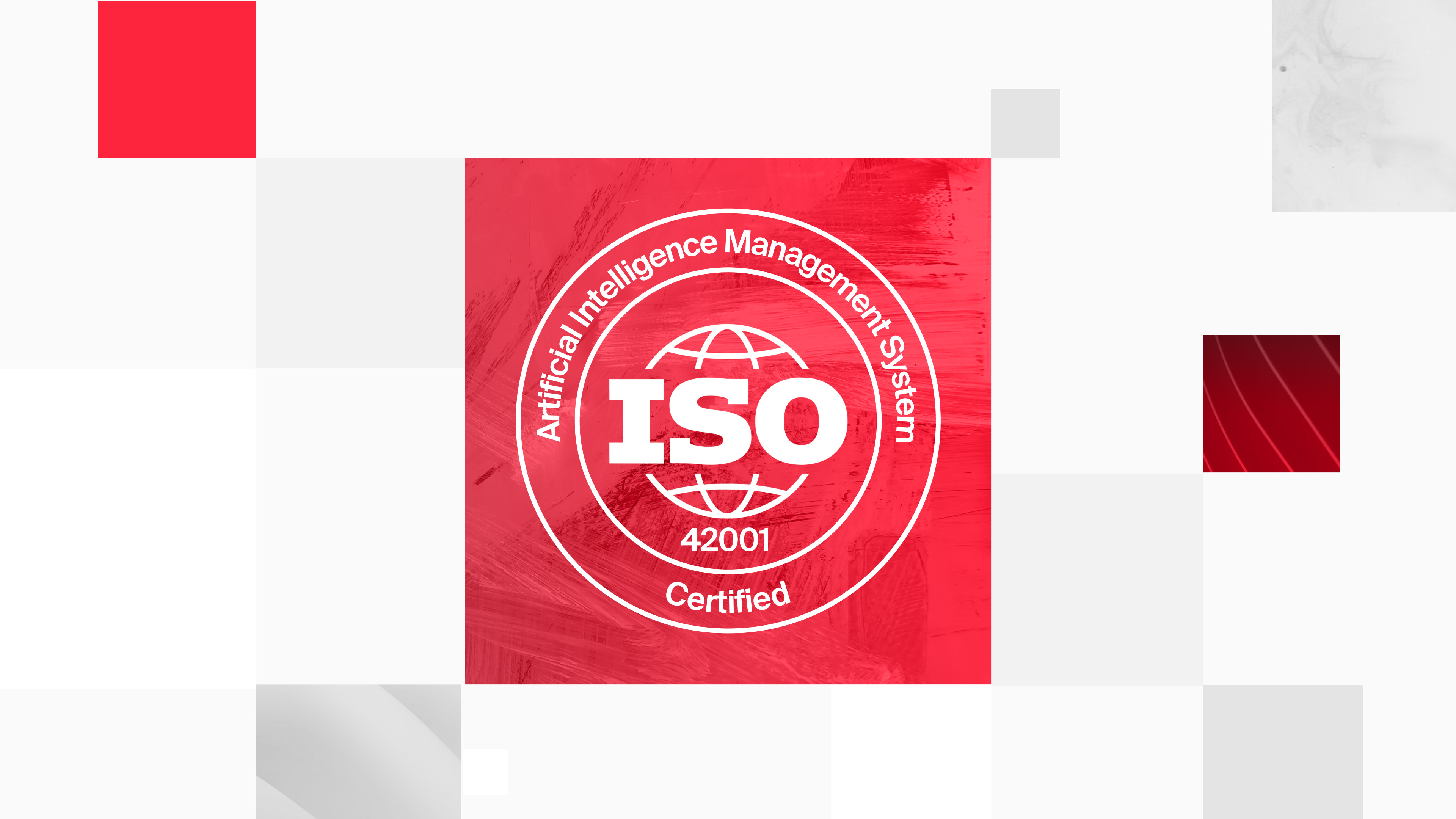
Typeface Earns ISO 42001 Certification for AI Management Systems

Mohit Kalra
Chief Information Security Officer
AI summary
Typeface has earned ISO/IEC 42001:2023 certification, the world's first AI management system standard, reinforcing its commitment to responsible and transparent AI. This assures customers that Typeface meets strict standards for governance, risk management, and oversight, especially important for regulated industries. It reflects Typeface’s continued focus on ethical AI and enterprise readiness.
With key contributions from Shuruthe Raju, Governance, Risk & Compliance Analyst at Typeface.
Building powerful AI is one thing. Building it responsibly? That's where the real work begins.
At Typeface, we've always believed that for AI to make real impact, it requires getting the fundamentals right — accountability, transparency, and a genuine commitment to doing this the right way. Today, we’re excited to share that we've achieved accredited certification under ISO/IEC 42001:2023 for our AI management systems.
ISO/IEC 42001:2023 launched in 2023 as the world's first international standard for managing AI systems. It's the first time there's been a globally recognized framework to audit how AI is built, deployed, and maintained throughout its lifecycle, not just at a single point in time.
More than being a compliance milestone for us, this certification is proof that the systems, processes, and safeguards we've built meet rigorous international standards for responsible AI management. For our customers, it means independent and unbiased verification that Typeface is built on a foundation of structured governance and continuous oversight.
Why the ISO 42001 certification matters
Our enterprise AI marketing platform has incredible potential to change how teams work. But to evolve responsibly, we've spent years building internal standards for safety and responsibility, while also meeting enterprise needs for strong controls, guidelines, and monitoring.
The ISO 42001 framework gives us a meaningful structure to manage AI and all its components throughout their entire lifecycle. It tackles the big questions around ethics, accountability, and trust — questions every organization adopting AI needs to answer, especially as regulators around the world pay closer attention.
As regulations and customer needs continue to evolve, this framework gives us a solid base to navigate those changes thoughtfully. For enterprises in regulated industries like financial services and healthcare, or anyone deploying AI in high-stakes environments, this certification shows our commitment to responsible AI practices.
What got us here
Earning ISO 42001 certification requires a comprehensive audit of how we manage our AI systems — everything from Typeface’s governance policies to data practices to technical safeguards.
A few practices were especially critical.
First, at Typeface, we maintain provenance tracking for all data that goes into fine-tuning our product features, to make sure it meets licensing requirements and quality standards. We also run bias assessments on how our systems use and surface information. It's not just about compliance but about having confidence in what we're building on.
Second, we've built safety-first validation into our integrated systems. Our testing goes way beyond "does it work?" to include safety evaluations: bias testing, fairness checks, and robustness assessments for how foundation models behave within our products. If a system configuration can't pass these gates, it doesn't ship.
These steps were implemented as mandatory checkpoints in our development process. ISO 42001 helped us formalize something we've believed all along: responsible AI requires discipline at every layer.
How we approached certification
We tackled the certification process systematically, seeing it as a chance to strengthen what we'd already built while meeting global standards.
We started by defining the scope of our AI systems and mapping them to ISO 42001's governance framework. Then we developed policies that set clear guardrails for ethical data use, model management, and meaningful human oversight. These weren't seen as checkbox exercises, but as operational principles.
Then came the hardest part: embedding these practices across every team. Governance can't live in documentation alone. It has to shape daily decisions — how we build, test, and deploy AI.
After a rigorous internal review, an accredited external auditor assessed our AI Management System and confirmed we meet ISO 42001's global standard.
The whole process reinforced our belief that responsible AI isn't a destination. Rather, it's an ongoing practice that demands transparency, accountability, and constant improvement.
What this means for you
If you're using Typeface or considering it, this certification demonstrates our commitment to several key principles:
Structured AI Governance: Clear policies and practices that guide how we develop, deploy, and maintain AI systems throughout their lifecycle.
Comprehensive Risk Management: We systematically assess and mitigate AI-related risks, including bias, fairness, and system robustness.
Regulatory Readiness: Our framework is designed to adapt as AI regulations evolve globally, helping you navigate emerging compliance requirements.
Transparency and Accountability: Our processes and controls are documented and can be independently verified and audited.
Continuous Improvement: We're constantly evaluating and enhancing our AI systems to maintain the highest standards of safety and responsibility.
As AI continues to reshape how organizations create and work together, we're committed to building technology that earns your trust through disciplined action at every layer.
Related articles
June 16, 2025
Earlier this month, I wrote a white paper for Typeface called Agentic AI and the New Era of Marketing. It’s a piece I’ve been thinking about for a long time — because beneath the hype and headlines a
October 16, 2024
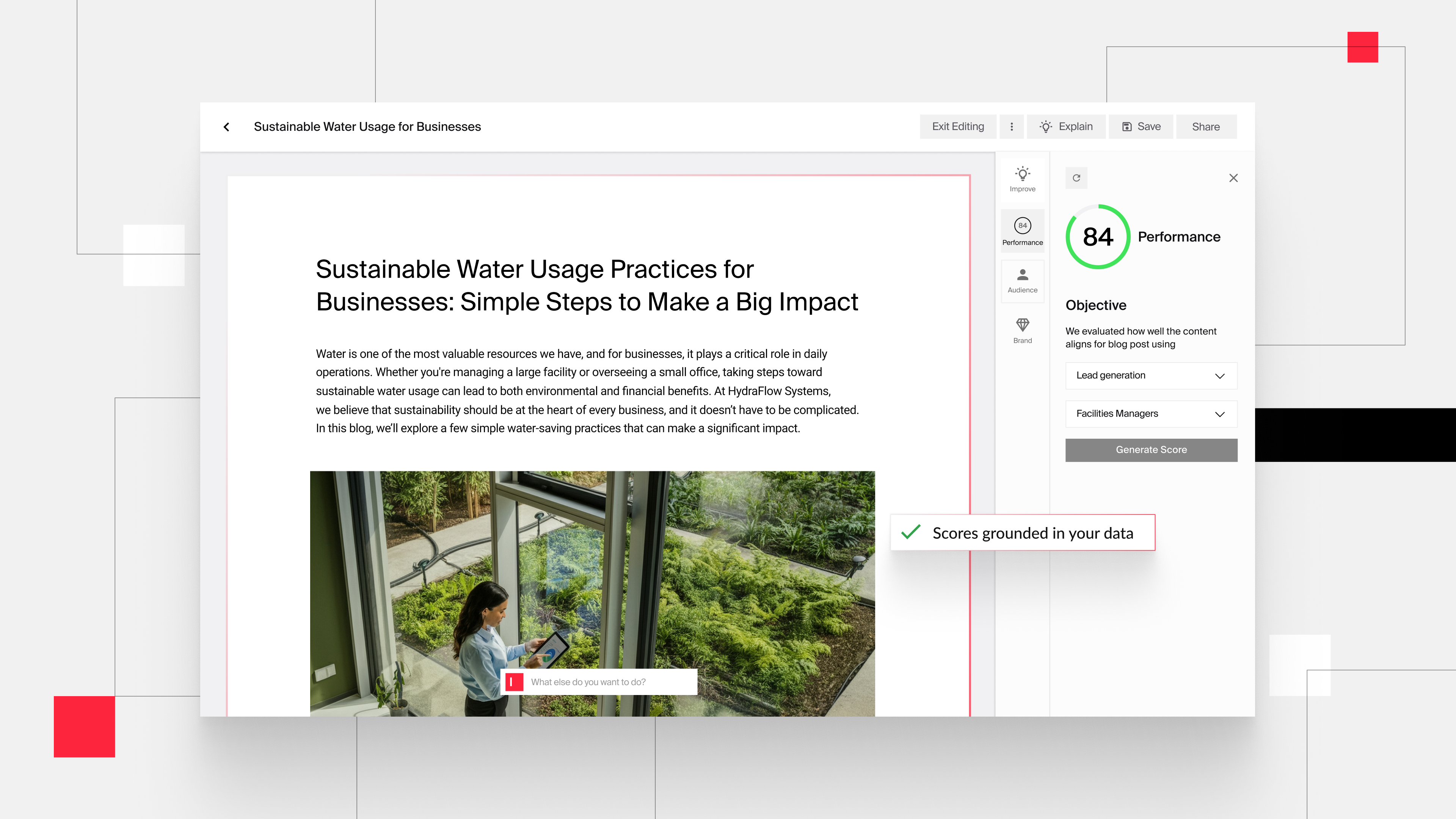
As AI becomes a crucial part of content creation, the need for AI trust and transparency has never been greater. Marketers want to know how AI evaluates content in consideration of their brand, conten

August 18, 2025
In the race to capture attention and drive results, marketing leaders are under constant pressure to deliver ad campaigns faster and at greater scale. AI in digital advertising is taking a lot of thi